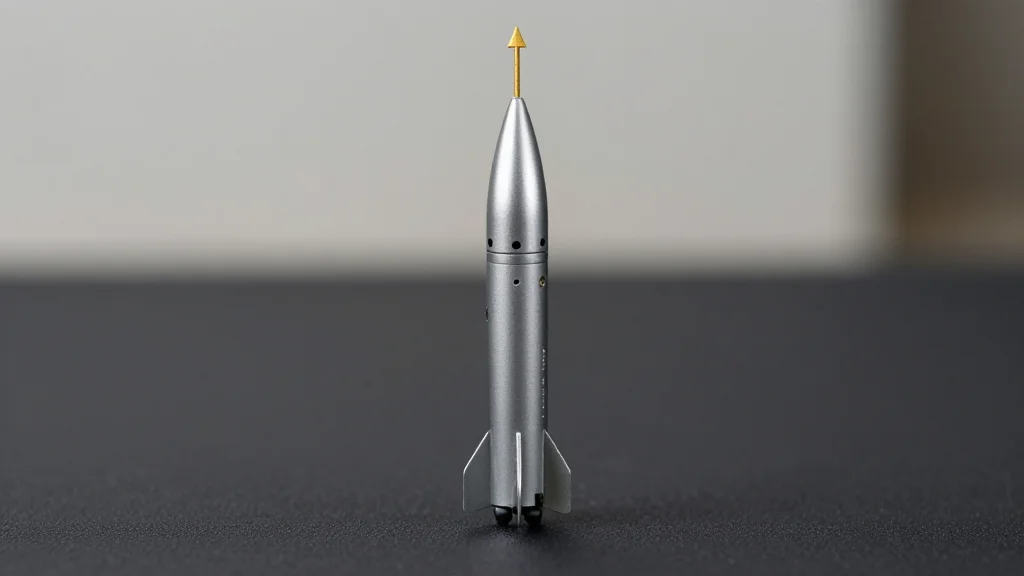
L3Harris Secures $1 Billion Department of War Investment to Scale Missile Solutions

Companies Mentioned
Why It Matters
The $1 billion DoW infusion into L3Harris’s Missile Solutions unit addresses a strategic vulnerability in the U.S. missile supply chain, where aging production lines and limited domestic capacity have raised concerns about readiness. By tying government capital to an eventual public offering, the DoW not only accelerates modernization but also creates a market‑based incentive for private firms to invest in high‑risk, high‑payoff missile technologies. In the broader context of U.S.-China strategic rivalry, ensuring a resilient, domestically sourced missile industrial base is a cornerstone of deterrence. The investment signals to allies and adversaries alike that the United States is willing to marshal both public and private resources to maintain a qualitative edge in high‑intensity conflict scenarios.
Key Takeaways
- •$1 billion Department of War investment secured for L3Harris Missile Solutions.
- •DoW receives convertible preferred security and warrants, converting to equity at IPO.
- •L3Harris plans IPO of MSL in H2 2026, retaining >80% ownership.
- •Funding will expand solid‑rocket‑motor sites in Arkansas, Alabama, and Virginia.
- •Supports key programs: PAC‑3, THAAD, Tomahawk, Standard Missile.
Pulse Analysis
L3Harris’s deal with the DoW marks a rare instance of direct government equity participation in a defense sub‑unit, blurring the line between contractor and partner. Historically, the Pentagon has relied on fixed‑price contracts and cost‑plus arrangements; this convertible security model introduces upside potential for the government while preserving private‑sector incentives. If the MSL IPO succeeds, it could unlock a new valuation benchmark for missile manufacturing, potentially attracting further capital to a sector that has been under‑invested relative to software‑centric defense domains.
From a competitive standpoint, the infusion positions L3Harris ahead of rivals such as Raytheon and Northrop Grumman, which have pursued similar modernization through internal reinvestment rather than external equity. The ability to tap public‑market liquidity may allow L3Harris to accelerate R&D on next‑generation propulsion and guidance systems, narrowing the technology gap with emerging threats. However, the success of the IPO will hinge on broader market sentiment toward defense equities, which can be volatile amid fiscal debates and geopolitical uncertainty.
Looking forward, the DoW’s approach could become a template for other high‑priority but capital‑intensive programs, such as hypersonic weapons or directed‑energy systems. By aligning government risk with private upside, the model may foster a more resilient industrial base capable of rapid scale‑up in crisis. Stakeholders will watch closely whether additional defense sectors adopt similar financing structures, potentially reshaping the capital landscape of U.S. national security.
L3Harris Secures $1 Billion Department of War Investment to Scale Missile Solutions
Comments
Want to join the conversation?
Loading comments...