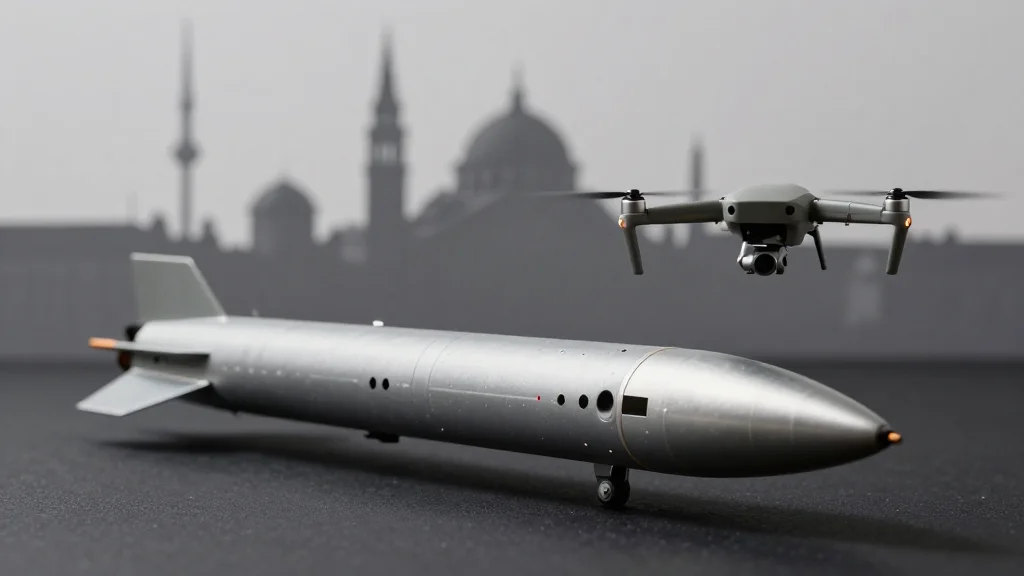
Laser Weapon Solutions Are Emerging as Europe Confronts Air Defence Cost Imbalance
Why It Matters
Laser systems can dramatically lower the cost per engagement, preserving missile stocks and ensuring sustainable air‑defence against swarms. Their adoption could reshape European procurement strategies and enhance deterrence against low‑cost aerial attacks.
Key Takeaways
- •DragonFire laser slated for UK Type 45 destroyers by 2027.
- •Missiles cost far more per shot than cheap commercial drones.
- •Laser weapons offer near‑zero marginal cost per engagement.
- •EU sees drone proliferation as budgetary pressure on air‑defence.
- •Operation Epic Fury highlighted need for scalable CUAS solutions.
Pulse Analysis
The rapid diffusion of inexpensive commercial drones, accelerated by lessons from the Russia‑Ukraine war, has exposed a glaring cost‑to‑destructibility gap in European air‑defence. While high‑value interceptor missiles can neutralise a single UAV, scaling that approach against swarms quickly erodes budgets, a reality underscored by NATO’s Operation Epic Fury exercises. Policymakers now face the strategic dilemma of protecting critical assets without exhausting expensive missile stocks, prompting a search for alternatives that can engage at a fraction of the cost.
Enter laser directed‑energy weapons, which promise near‑instantaneous, low‑marginal‑cost engagements. The UK’s DragonFire system, a high‑energy laser designed for ship‑based deployment, is slated for integration on Type 45 destroyers by 2027. Unlike kinetic interceptors, a laser’s operating expense is measured in electricity rather than expensive warheads, enabling virtually unlimited shots against low‑cost targets. Early trials have demonstrated the ability to disable or destroy small UAVs at several kilometres, offering a scalable solution that aligns with the economics of modern drone warfare.
If the UK’s rollout proves successful, it could catalyse a broader European shift toward laser‑based CUAS platforms. Defense budgets, already strained by legacy missile programs, may reallocate funds toward research, integration, and training for directed‑energy systems. However, challenges remain, including power‑generation constraints on smaller vessels and the need for robust targeting algorithms. Nonetheless, the strategic imperative to close the cost imbalance is driving a market ripe for innovation, positioning laser weapons as a cornerstone of next‑generation European air‑defence architectures.
Laser weapon solutions are emerging as Europe confronts air defence cost imbalance
Comments
Want to join the conversation?
Loading comments...