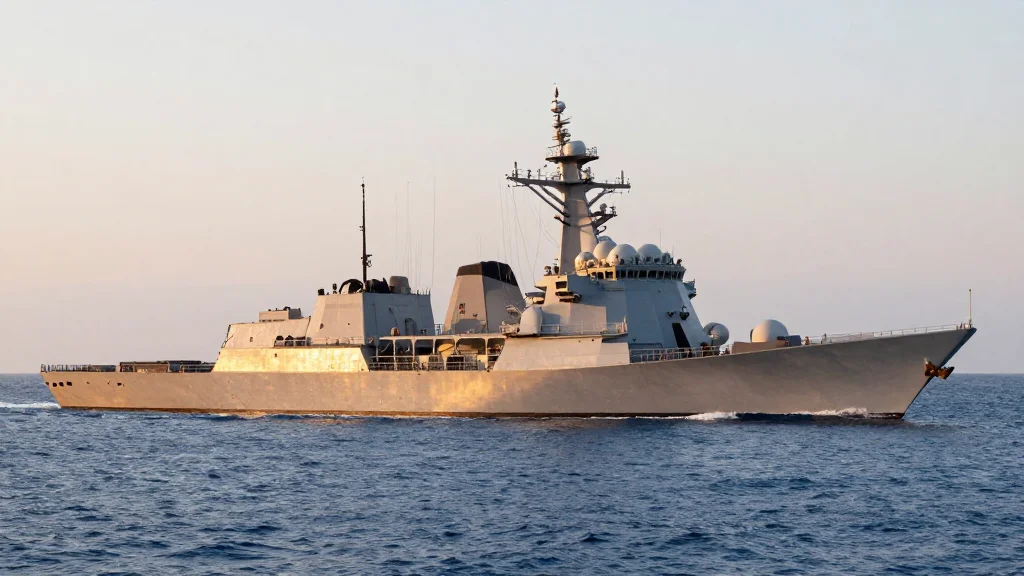
Last Arleigh Burke-Class Flight IIA Destroyer Begins Sea Trials
Why It Matters
Ensuring the last Flight IIA ship enters service preserves destroyer numbers during the transition to more capable Flight III vessels, supporting fleet readiness and strategic deterrence.
Key Takeaways
- •USS Patrick Gallagher starts sea trials, final Flight IIA ship
- •Maintains 71‑ship Arleigh Burke destroyer fleet count
- •Transition to Flight III destroyers proceeds without capability gap
- •Bath Iron Works demonstrates sustained high‑rate production
- •Sea trials validate combat systems before Navy acceptance
Pulse Analysis
The Arleigh Burke‑class destroyer has been the workhorse of the U.S. Navy for three decades, with the Flight IIA variant delivering enhanced missile capacity and a larger hangar for two helicopters. General Dynamics’ Bath Iron Works in Maine has built 71 of these ships, including the newly christened USS Patrick Gallagher. As the final hull of the Flight IIA production line, its sea‑trial schedule signals that the shipyard can sustain a high‑tempo output while the Navy prepares to replace older units with the next‑generation Flight III design.
Sea trials are the Navy’s most rigorous performance checkpoint, testing propulsion, weapons, radar and integrated combat systems under real‑world conditions. For the Patrick Gallagher, successful trials will confirm that the ship meets the Navy’s 30‑year service life expectations and can seamlessly integrate with the Aegis Combat System. The timing is critical: as Flight III destroyers—equipped with the AN/SPY‑6 radar and expanded power generation—enter the production pipeline, the Navy must avoid a dip in destroyer availability that could strain carrier strike group schedules.
Completing the last Flight IIA destroyer reinforces the United States’ industrial base at a moment when defense procurement faces budget pressures and supply‑chain challenges. It also demonstrates the Navy’s strategic foresight in overlapping legacy platforms with emerging technology, ensuring continuous forward presence in contested regions. Analysts view the seamless handoff between Flight IIA and Flight III as a model for future ship classes, where incremental upgrades and parallel production lines can sustain combat readiness without costly gaps.
Last Arleigh Burke-Class Flight IIA Destroyer Begins Sea Trials
Comments
Want to join the conversation?
Loading comments...