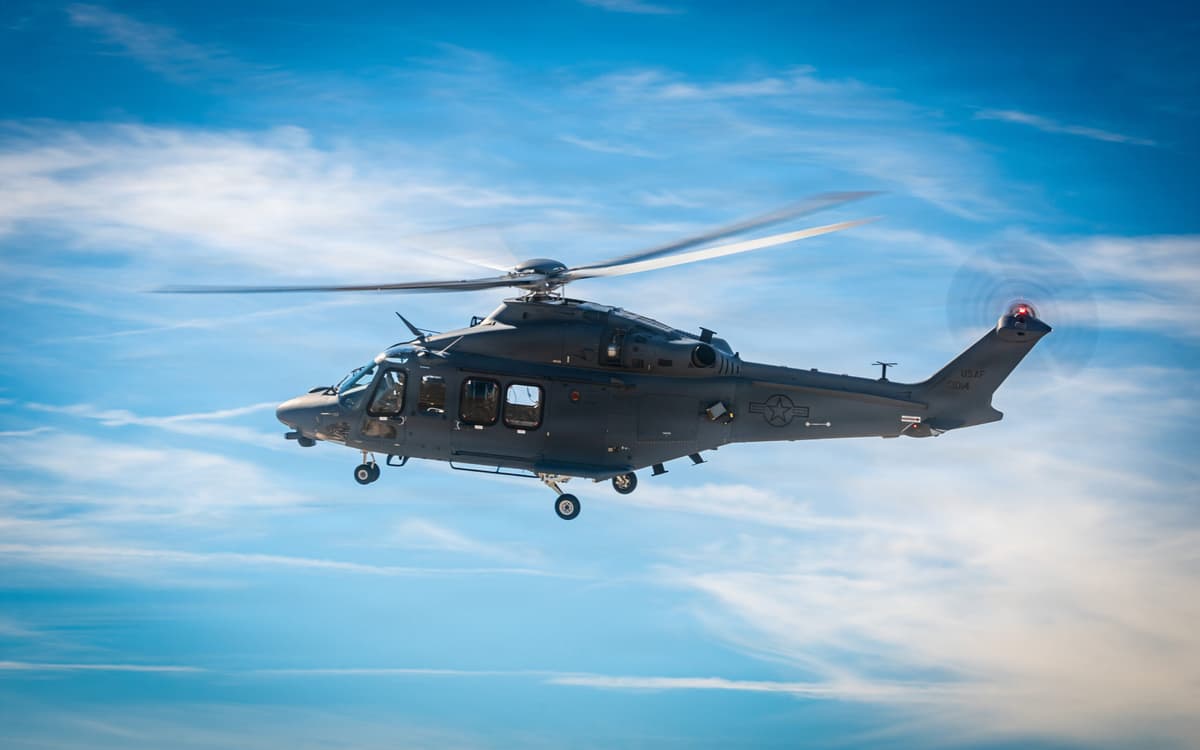
Lawmakers Push Back on Air Force’s Scaled-Down Plans for MH-139 Helicopter
Companies Mentioned
Why It Matters
A larger MH‑139 fleet could enhance security‑force coverage of the nation’s nuclear missile fields and reshape executive airlift logistics, with significant budget and readiness consequences for the Air Force.
Key Takeaways
- •Committee adds $128 M, authorizing eight MH‑139 helicopters
- •Air Force plans to cap production at 56, down from 80
- •VIP transport may shift from HH‑60W to MH‑139 pending study
- •Program cost: $2.38 B contract, 21 units delivered by Jan 2025
- •Grey Wolf offers 50% longer range, 5,000 lb higher payload
Pulse Analysis
The MH‑139 “Grey Wolf” program has been a roller‑coaster for the Air Force. Initially awarded a $2.38 billion contract in 2018 for 84 helicopters, the platform promised a modern, faster, and heavier‑lift solution for security patrols over the nation’s ICBM fields. After early delivery delays and certification hurdles, the service repeatedly trimmed the fleet—first to 80, then to 56 aircraft—while shifting focus to the older HH‑60W for executive transport. By early 2025 Boeing had delivered 21 units, but the program’s future hinges on congressional appetite and cost‑benefit analysis.
Congressional leaders have signaled a willingness to revive the Grey Wolf’s numbers. The House Armed Services Committee’s draft National Defense Authorization Act proposes an additional $128 million, bringing the authorized total to eight helicopters for FY 2027 and effectively doubling the service’s request. Lawmakers also demanded a comprehensive report on the feasibility of assigning any non‑MH‑139 platform to continuity‑of‑government and VIP missions in Washington, D.C. This move reflects broader concerns about the Air Force’s justification for abandoning the MH‑139 in favor of retrofitting HH‑60Ws, especially given the latter’s aging Huey‑derived airframes.
The outcome will reverberate across multiple dimensions. A larger Grey Wolf fleet would bolster rapid‑response capabilities for nuclear missile security, offering a 50 percent increase in range and speed, plus a 5,000‑pound payload advantage over legacy helicopters. Simultaneously, retaining the MH‑139 for executive airlift could streamline logistics and reduce the operational complexity of maintaining two distinct rotorcraft types. For defense contractors Boeing and Leonardo, congressional endorsement could translate into sustained production lines and future upgrades, while the Air Force would need to balance acquisition costs against long‑term readiness and infrastructure investments.
Lawmakers Push Back on Air Force’s Scaled-Down Plans for MH-139 Helicopter
Comments
Want to join the conversation?
Loading comments...