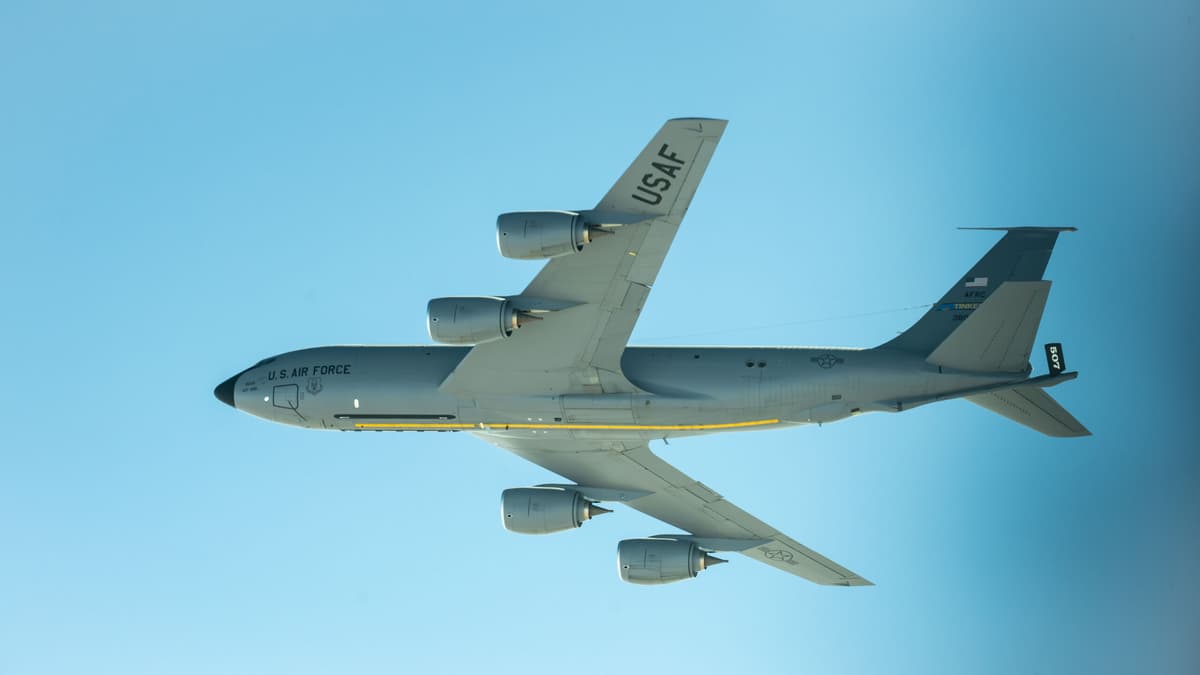
Lawmakers Want USAF to Move Faster in Arming Tankers with Active Defenses
Why It Matters
Tankers are the linchpin of U.S. global strike capability; insufficient protection threatens the entire air‑power enterprise. Accelerating LASS delivery safeguards mission continuity and deters adversary anti‑access strategies.
Key Takeaways
- •House committee demands Air Force report by Dec. 1 on LASS timeline
- •LASS program budgets $508 million through FY 2031, $68 million FY 2027 RDT&E
- •Goal: field active and passive defenses on KC‑135/KC‑46 by end‑2031
- •Failure to protect tankers could jeopardize multiple combat aircraft per strike
- •Air Force also seeks $105 million 2027 for connectivity upgrades to boost survivability
Pulse Analysis
The survivability of aerial refuelers has moved from a logistical concern to a strategic imperative. Modern anti‑access/area‑denial environments expose tankers to sophisticated missile and drone threats that can neutralize an entire strike package with a single hit. As the United States leans on long‑range bombers and fighter deployments across the Indo‑Pacific and Europe, ensuring that refueling platforms can defend themselves is essential to maintaining credible power projection.
Congressional scrutiny of the Large Aircraft Survivability System reflects both budgetary oversight and a recognition of technical hurdles. LASS integrates modular sensors, processors and effectors to provide active hard‑kill and passive soft‑kill protection. While the Air Force earmarks $508 million through 2031, the transition from research‑development to fielded capability demands rapid prototyping, rigorous testing, and supply‑chain coordination. The Dec. 1 reporting deadline forces the service to clarify technology readiness levels, cost schedules, and integration pathways, especially as the program competes for funding against other modernization priorities.
Looking ahead, tanker survivability dovetails with the Next Generation Air‑Refueler System and broader mobility modernization plans extending to 2047. Connectivity upgrades, slated at $105 million for 2027, will embed resilient data links that enable real‑time threat updates and coordinated defensive actions. Successful LASS deployment not only protects high‑value assets but also opens market opportunities for defense contractors specializing in directed‑energy interceptors, infrared counter‑measures and open‑architecture avionics, reinforcing the United States’ edge in contested air operations.
Lawmakers Want USAF to Move Faster in Arming Tankers with Active Defenses
Comments
Want to join the conversation?
Loading comments...