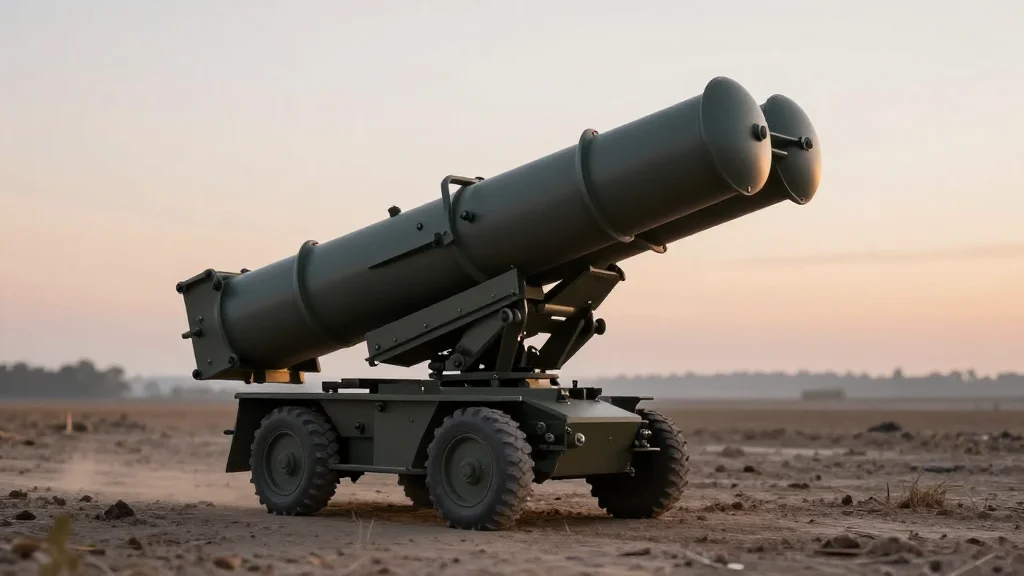
Leidos Secures $617 Million Army Contract to Build Over 100 IFPC Increment 2 Launchers

Companies Mentioned
Why It Matters
The contract accelerates the Army’s transition to a modular, multi‑layered air‑defense posture capable of countering a widening spectrum of missile threats, from low‑observable cruise missiles to swarming drones. By locking in a production line for over 100 launchers, the Army reduces the risk of capability gaps as adversaries field more sophisticated strike systems. Leidos’ growing role in the IFPC programme illustrates how defense contractors are becoming integral partners in rapid technology insertion. The financial scale—nearly $1.2 billion in total IFPC contracts—highlights the budgetary priority the Army places on adaptable, open‑architecture solutions that can evolve alongside emerging threats.
Key Takeaways
- •Leidos awarded $617 million to produce >100 IFPC Inc 2 launchers.
- •Total IFPC production contracts now near $1.2 billion, including $356 million in 2025.
- •Launchers will carry AIM‑9X Sidewinder and AGM‑114L Longbow Hellfire missiles.
- •Open‑architecture design enables future integration of lasers, microwaves, and new missiles.
- •Funding supports R&D and testing through 2029, paving the way for full‑rate production.
Pulse Analysis
Leidos’ latest contract marks a decisive step toward operationalizing the Army’s vision of a plug‑and‑play air‑defense ecosystem. Historically, fielding new missile systems has been a protracted process, hampered by stovepiped development tracks. IFPC Inc 2’s open‑architecture approach breaks that mold, allowing the Army to swap effectors as technology matures, which could compress acquisition cycles by years. This agility is crucial as near‑peer competitors invest heavily in hypersonic glide vehicles and autonomous swarm attacks that can overwhelm legacy point‑defense systems.
From a market perspective, the nearly $1.2 billion IFPC portfolio positions Leidos as a dominant supplier in the emerging niche of modular air‑defense launchers. Competitors such as Raytheon and Lockheed Martin have focused on single‑purpose systems, but Leidos’ emphasis on a common launcher chassis could set a new industry standard. If the Army proceeds to full‑rate production, Leidos stands to secure a steady revenue stream that may fund further innovations, including integration of directed‑energy weapons.
Looking ahead, the success of IFPC Inc 2 will likely influence the Army’s procurement strategy for the other IFPC variants—HEL and HPM. Demonstrated performance and cost‑effectiveness of the launcher platform could accelerate the transition of high‑energy laser and microwave effectors from lab to field, reshaping the U.S. military’s layered defense architecture for the next decade.
Leidos Secures $617 Million Army Contract to Build Over 100 IFPC Increment 2 Launchers
Comments
Want to join the conversation?
Loading comments...