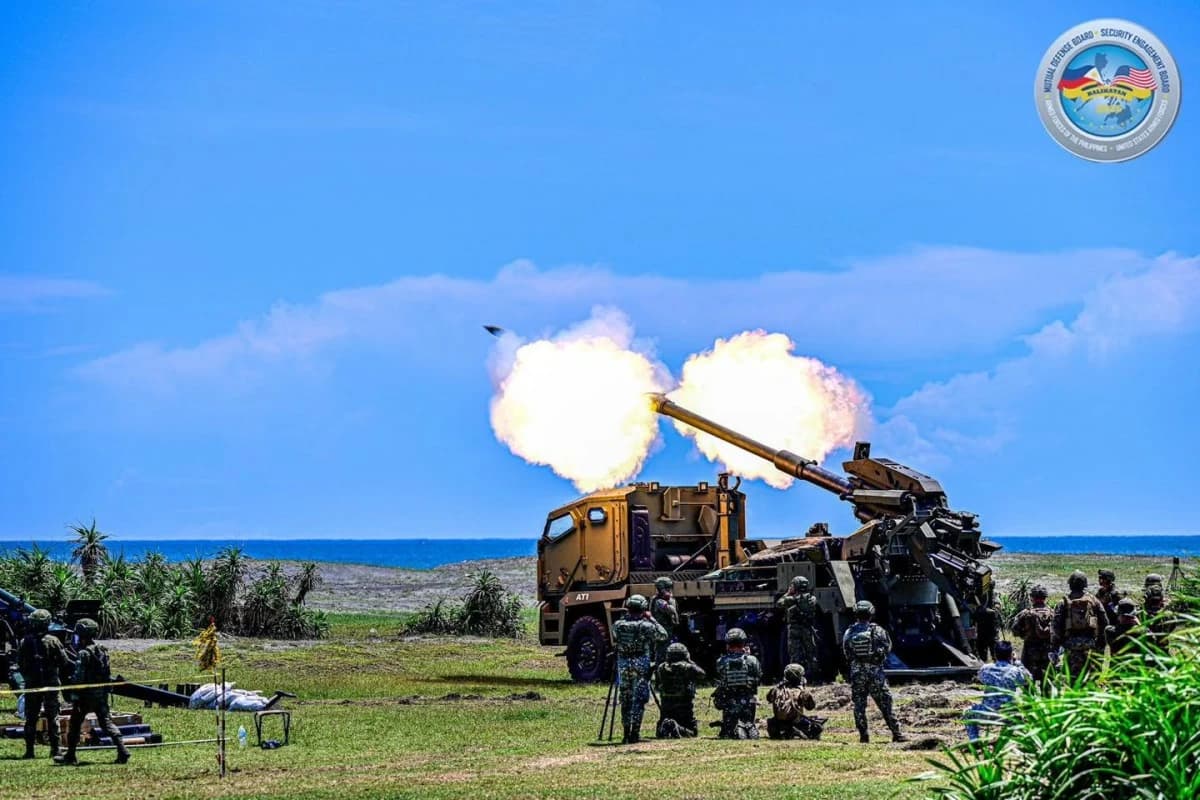
‘Let the Games Begin!’ Biggest Balikatan Drills Commence April 20
Why It Matters
Balikatan signals deeper multilateral defense integration and deterrence against coercive actions in the South China Sea, while domestic opposition raises questions about sovereignty and resource allocation.
Key Takeaways
- •~17,000 troops from Philippines, US and five allies join Balikatan
- •Exercises now cover land, air, sea, cyber and space domains
- •Live‑fire missile drills feature Japan's Type 88 and US Tomahawk
- •Protesters warn drills could turn Philippines into a forward‑operating base
Pulse Analysis
Exercise Balikatan, the Philippines‑U.S. joint war game, has evolved into a multilateral showcase of all‑domain capabilities. The 2024 iteration brings together 17,000 personnel from the Armed Forces of the Philippines, the United States and five additional allies—Japan, Australia, Canada, New Zealand and France—reflecting a strategic pivot toward integrated operations that span land, air, maritime, cyber and even space. By incorporating live‑fire missile drills, such as Japan’s Type 88 and the U.S. Tomahawk, and a sinking exercise (SINKEX) targeting a decommissioned Philippine Navy vessel, the exercise tests interoperability of cutting‑edge weapon systems and command‑and‑control networks, sending a clear deterrent signal to regional actors, especially China, which has intensified its claims in the West Philippine Sea.
The expanded scope of Balikatan is not merely symbolic; it addresses practical challenges in joint communications and cultural coordination that have historically hampered coalition effectiveness. U.S. spokesperson Col. Robert Bunn highlighted the need to overcome technical barriers—ensuring that radar, satellite and cyber platforms can seamlessly exchange data—and human barriers, such as language and procedural differences. By rehearsing missile defense, anti‑ship strikes and cyber‑resilience drills, the participating forces improve readiness for potential flashpoints, reinforcing the United States’ Enhanced Defense Cooperation Agreement (EDCA) and bolstering Manila’s defensive posture under the 2016 arbitral ruling that invalidated expansive Chinese claims.
Domestically, the drills have sparked vigorous debate. Activist groups like Bagong Alyansang Makabayan and the League of Filipino Students argue that the presence of foreign troops and large‑scale live‑fire exercises threaten sovereignty, strain local communities, and divert funds from essential social services. Their protests, scheduled for the opening ceremony at Camp Aguinaldo, underscore concerns that the Philippines could become a forward‑operating base in a great‑power rivalry. Policymakers must balance the strategic benefits of deeper alliance integration with the political cost of perceived foreign encroachment, a tension that will shape the country’s defense trajectory in the coming years.
‘Let the games begin!’ Biggest Balikatan drills commence April 20
Comments
Want to join the conversation?
Loading comments...