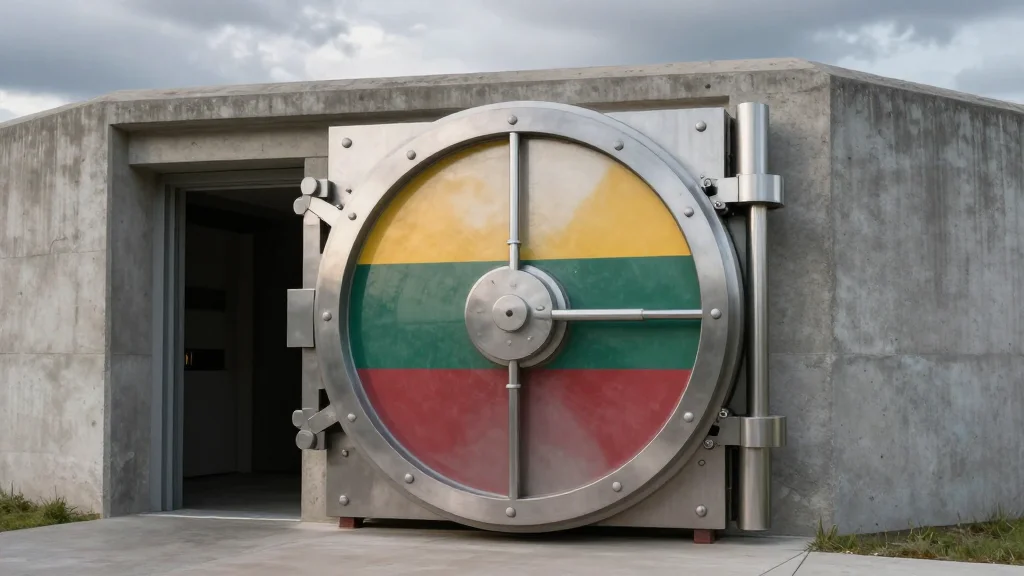
Lithuania Raises Alert After Foreign‑State Breach Exposes 600,000 Records

Why It Matters
The breach illustrates how cyber‑espionage can directly threaten a nation’s defence posture by exposing the personal data of military and intelligence personnel. For NATO, the incident raises alarms about the vulnerability of member‑state registries that, if compromised, could be weaponised for targeting, blackmail or disinformation. It also reinforces the perception that Russia’s hybrid‑war toolkit now includes large‑scale data theft, compelling allies to prioritize credential security, rapid response capabilities, and cross‑border intelligence sharing. Beyond the immediate fallout, the episode may prompt a reassessment of cyber‑defence funding across the Baltic region. Lithuania already allocates 4 % of its GDP to defence, higher than the NATO 2 % guideline, but the leak suggests that cyber‑budget allocations must keep pace with evolving threats. The incident could accelerate EU‑wide initiatives to standardise security protocols for state registries and to create a joint rapid‑response cyber‑team for member states under attack.
Key Takeaways
- •Over 600,000 entries from real‑estate and legal‑entity registers were leaked.
- •The breach was executed using compromised institutional login credentials.
- •Adrijus Jusas, head of the State Enterprise Centre of Registers, resigned following the incident.
- •Lithuanian prosecutors suspect a foreign state, likely Russia, behind the attack.
- •NATO’s eastern flank faces heightened cyber‑threats as hybrid warfare intensifies.
Pulse Analysis
Lithuania’s data breach is a textbook case of hybrid warfare where the line between kinetic and digital aggression blurs. Historically, the Baltic states have invested heavily in conventional defence to deter Russian incursions, but this incident shows that cyber‑vulnerability can erode those hard‑won safeguards. The use of legitimate credentials points to a sophisticated supply‑chain attack, a tactic that adversaries have refined since the 2016 Estonian cyber‑attack.
From a market perspective, the breach could spur a wave of spending on identity‑and‑access‑management (IAM) solutions across Europe, as governments scramble to retrofit legacy systems with multi‑factor authentication and zero‑trust architectures. Vendors specializing in credential‑hardening and security‑information‑and‑event‑management (SIEM) platforms may see a surge in demand, especially from NATO members seeking to close the gaps exposed in Lithuania.
Strategically, the incident may accelerate NATO’s push for a unified cyber‑defence doctrine. While the alliance already treats cyber‑incursions as an Article 5 trigger in principle, operationalizing that commitment requires interoperable tools, shared threat intel, and joint training exercises. Lithuania’s experience could become a case study in upcoming NATO cyber‑war games, reinforcing the need for rapid credential revocation mechanisms and real‑time cross‑border alerts. In the longer term, the breach underscores that cyber‑resilience is now as vital to national security as tanks and missiles, reshaping defence budgeting priorities across the alliance.
Lithuania Raises Alert After Foreign‑State Breach Exposes 600,000 Records
Comments
Want to join the conversation?
Loading comments...