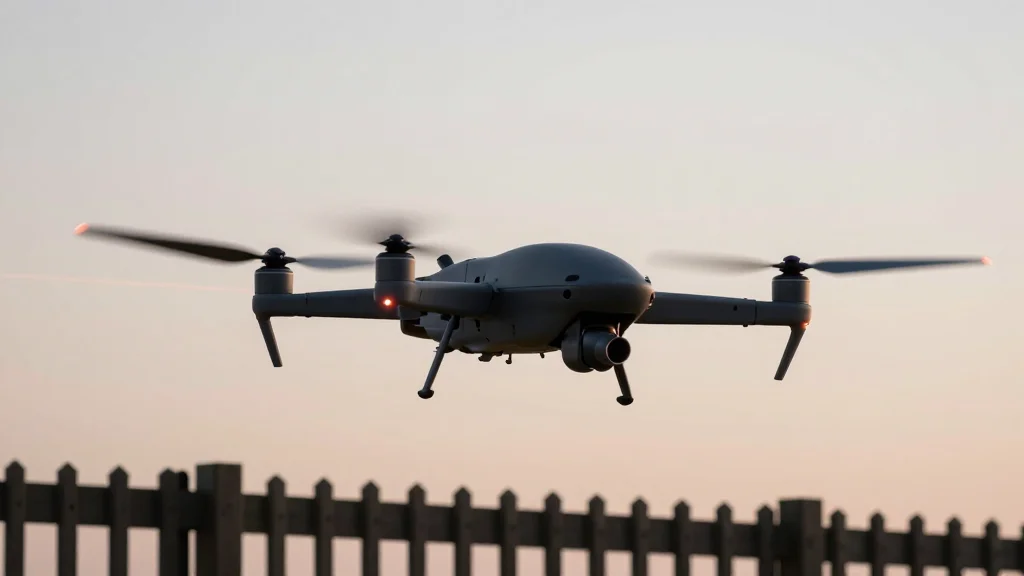
Lithuanian President and PM Sheltered as Drone Alert Near Belarus Raises NATO Tensions

Why It Matters
The alert highlights a growing vulnerability for NATO members bordering Russia and Belarus, where unmanned systems can be weaponised or used for psychological pressure. By forcing the evacuation of a head of state and a prime minister, the incident demonstrates how low‑cost aerial threats can disrupt civil governance and test the alliance’s rapid‑response protocols. If such incursions become more frequent, they could compel NATO to allocate additional resources to short‑range air‑defence and electronic‑countermeasure capabilities, reshaping defence budgets across the Baltic states. Moreover, the episode may intensify diplomatic friction between the alliance and Moscow, as each side accuses the other of exploiting drone technology to provoke or justify escalatory measures.
Key Takeaways
- •Lithuanian president and prime minister moved to shelters after a drone alert near the Belarus border
- •Airspace over Vilnius Airport was closed for about one hour; no drones were sighted over Lithuania
- •Foreign Minister Kęstutis Budrys accused Russia of deliberately redirecting Ukrainian drones into Baltic airspace
- •Recent Baltic drone incidents have led to NATO fighter scrambles and the collapse of Latvia’s government
- •The event may trigger increased NATO air‑defence spending and joint exercises in the eastern flank
Pulse Analysis
The Lithuanian drone alert is less about a single aircraft and more about the erosion of the perceived security buffer that NATO’s eastern members have relied on since 2014. Historically, the alliance has focused on conventional deterrence—tank battalions, artillery, and forward‑deployed troops. The emergence of low‑observable, cheap drones, especially when combined with sophisticated electronic‑jamming, forces a doctrinal shift toward layered, multi‑domain defence. Countries like Lithuania, with limited air‑defence budgets, now face a cost‑benefit dilemma: invest in expensive missile systems that may be overkill for small UAVs, or develop a network of cheaper, point‑defence solutions and robust detection networks.
Politically, the incident amplifies the narrative that Russia is willing to weaponise ambiguity, using proxy drone activity to keep NATO on edge without crossing a clear threshold of armed aggression. This gray‑zone strategy can strain alliance cohesion, as member states grapple with differing tolerances for risk. The swift evacuation of top officials, while a prudent safety measure, also signals to Moscow that NATO capitals are vulnerable to disruption, potentially emboldening further provocations. In the coming months, we can expect NATO to prioritize rapid‑response protocols, invest in counter‑UAS technologies, and perhaps revisit the rules of engagement for airspace violations, all of which will reshape the defence posture of the Baltic region.
Lithuanian President and PM Sheltered as Drone Alert Near Belarus Raises NATO Tensions
Comments
Want to join the conversation?
Loading comments...