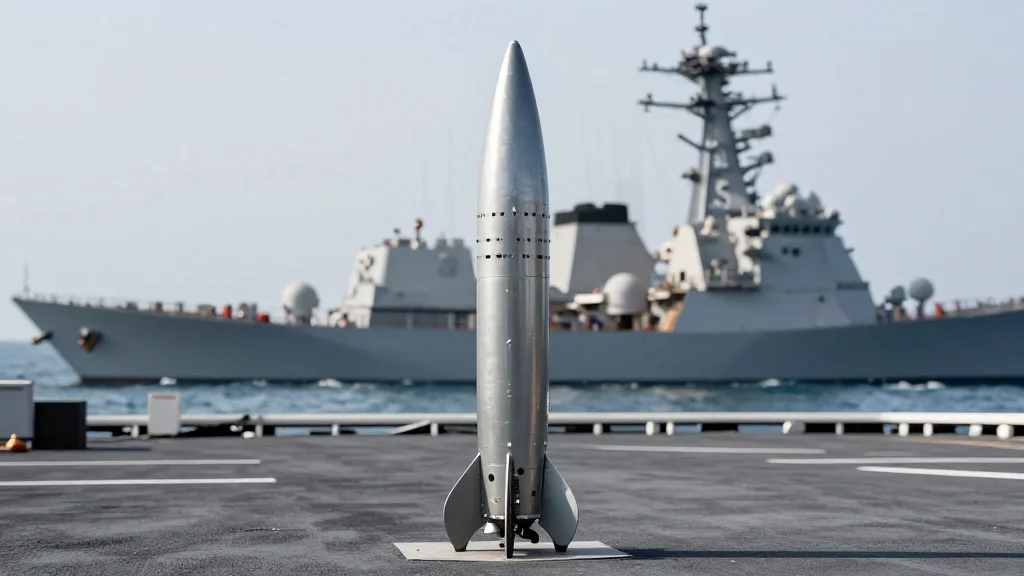
Lockheed Martin Confirms 2029 Target Date for US Navy’s Aegis/PAC-3 MSE Integration
Companies Mentioned
Why It Matters
The integration expands the Navy’s layered missile defense, strengthening deterrence against emerging hypersonic threats and reinforcing U.S. maritime superiority in a contested Indo‑Pacific environment.
Key Takeaways
- •Lockheed Martin awarded $90 M contract to start integration
- •Integration targets fielding PAC‑3 MSE on Aegis ships by 2029
- •Program total development budget could reach $200 M across phases
- •Enhances USN capability against maneuverable hypersonic missiles
Pulse Analysis
The Aegis Ballistic Missile Defense (BMD) system has long been the backbone of the U.S. Navy’s sea‑based missile shield, protecting carrier strike groups and forward‑deployed forces from ballistic threats. However, the rapid emergence of hypersonic weapons—capable of maneuvering at speeds exceeding Mach 5—has exposed a gap in existing defenses. By marrying the proven PAC‑3 MSE interceptor, originally designed for land‑based Patriot batteries, with the Aegis combat system, the Navy gains a versatile, high‑speed kill vehicle that can engage these agile targets both in the upper atmosphere and near‑space, closing a critical vulnerability.
Lockheed Martin’s $90 million contract marks the kickoff of a multi‑phase program that could total $200 million, reflecting both the technical complexity and strategic priority of the effort. The first phase focuses on hardware modifications, software integration, and live‑fire testing aboard an Arleigh Burke‑class destroyer, likely the USS Jack H Lucas. Engineers must reconcile differing data links, fire‑control architectures, and sensor suites while ensuring the PAC‑3 MSE’s seeker can operate seamlessly with Aegis’s radar and command modules. The 2029 fielding target suggests an accelerated development timeline, driven by the urgency of countering China’s hypersonic missile programs and Russia’s similar capabilities.
Beyond the immediate tactical advantage, the Aegis‑PAC‑3 MSE integration signals a broader shift toward modular, cross‑domain defense solutions. It positions the U.S. Navy to rapidly field upgrades across its fleet, leveraging existing ship platforms rather than awaiting new vessel classes. This approach not only preserves budgetary resources but also reinforces the United States’ deterrence posture, reassuring allies in the Indo‑Pacific and Europe that the U.S. can adapt its missile defense architecture to evolving threats. As other services and allied navies observe the program’s progress, the integration could set a precedent for joint, interoperable missile defense architectures worldwide.
Lockheed Martin confirms 2029 target date for US Navy’s Aegis/PAC-3 MSE integration
Comments
Want to join the conversation?
Loading comments...