The deal anchors a Japan‑based supply chain for next‑generation naval radars, influencing the competitive landscape of Aegis‑compatible systems and bolstering Japan’s defense self‑sufficiency.
The February agreement marks a pivotal shift toward domesticizing high‑tech naval components in Japan. By appointing Fujitsu as the supplier of the Power Supply Line Replaceable Unit, Lockheed Martin secures a reliable, locally produced power source for the SPY‑7 radar’s Subarray Suite. This move not only shortens lead times for the ASEV program but also aligns with Japan’s broader strategy to reduce reliance on overseas parts, enhancing logistical resilience for its growing fleet of Aegis‑equipped vessels.
Technologically, the SPY‑7 leverages a scalable gallium‑nitride (GaN) AESA architecture that promises superior power efficiency, higher output, and better thermal performance than legacy radars. Its design supports ballistic missile defense and integrated air‑and‑missile defense missions, making it a strong candidate for the upcoming DDGX destroyers. However, Raytheon’s SPY‑6, backed by Mitsubishi Electric, remains a formidable rival, offering a parallel path for Japan’s next‑generation radar upgrades. The competition underscores a broader industrial race to embed advanced semiconductor and radar technologies within Japan’s maritime defense ecosystem.
Strategically, the contract dovetails with Japan’s FY2025 defense budget, which earmarked roughly ¥2 billion for technical studies on ASEV successors. As the ASEV vessels approach operational status in 2027‑28, the SPY‑7’s successful integration could set the standard for future retrofits of Atago‑ and Maya‑class destroyers. The partnership also signals to regional actors that Japan is rapidly advancing its layered missile‑defense architecture, reinforcing deterrence amid escalating security challenges in the Indo‑Pacific.
On February 12, Lockheed Martin and Japanese technology company Fujitsu signed a contract for the initial procurement of components that supply power to the modular Subarray Suite (SAS), a critical element of the SPY-7 radar selected for the Japan Maritime Self-Defense Force’s (JMSDF) Aegis System Equipped Vessels (ASEV).
A signing ceremony held in Tokyo formalized Fujitsu as a supplier of the SPY-7 Subarray Suite Power Supply Line Replaceable Unit (PS LRU). The PS LRU is a mission-critical naval radar assembly that delivers stable and regulated electrical power to the radar’s SAS modules, supporting reliable performance in demanding maritime operating conditions.
The contract follows a Memorandum of Understanding (MOU) signed in May 2025 covering supplier selection and industrial partnership arrangements for the SPY-7 program. Under that framework, this marks the first procurement agreement between the two companies.
The SPY-7 radar, developed by Lockheed Martin, is based on a scalable gallium nitride (GaN) Active Electronically Scanned Array (AESA) architecture designed to support ballistic missile defense (BMD) and integrated air and missile defense (IAMD) missions. The ASEV program is expected to serve as a core maritime component of Japan’s layered missile defense architecture.
“Fujitsu is honored to commence mass production of the PS LRU, a critical component of the SPY-7 radar system, and to contribute to strengthening Japan’s domestic defense production and maintenance infrastructure,” said Kenichiro Miyazaki, SVP and Head of Fujitsu’s National Security Business Unit.
“Fujitsu remains committed to enhancing Japan’s long-term defense capabilities through this partnership with Lockheed Martin,” he added.
For Lockheed Martin, the agreement underscores steady progress in development and production of the SPY-7 for the ASEV program. It also comes as Japan evaluates radar options for its next-generation surface combatants.
“Lockheed Martin’s collaboration with Fujitsu cements our commitment to establishing a Japan‑based supply chain for ASEV’s SPY‑7 radar that will keep the fleet mission‑ready for decades,” said Chandra Marshall, Vice President and General Manager at Lockheed Martin. “This is a continuation of our contribution and Fujitsu’s shared commitment to strengthening Japan’s defense capabilities,” she added.
In 2024, Japan’s Ministry of Defense signed contracts with Mitsubishi Heavy Industries and Japan Marine United for construction of two ASEVs. The vessels are scheduled for commissioning in fiscal years 2027 and 2028.

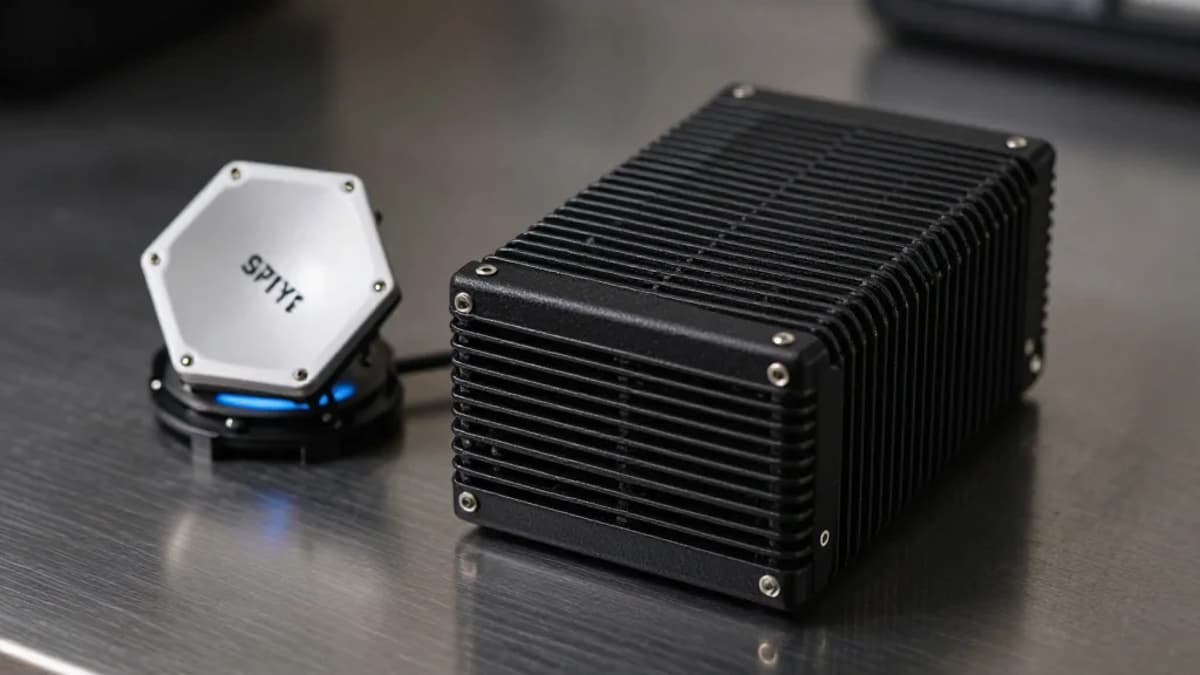
A full-scale mock-up of the SPY-7 Radar Subarray Suite (SAS) and the SPY-7 Subarray Suite Power Supply Line Replaceable Unit (PS LRU). Photo by Kosuke Takahashi.
Fierce Competition for Japan’s Future Aegis Destroyers
Attention is increasingly focused on radar selection for the JMSDF’s planned DDGX destroyers, which are intended to replace the aging Kongo-class Aegis ships.
Lockheed Martin’s SPY-7 is expected to compete with the SPY-6 radar developed by Raytheon, a business unit of RTX Corporation. In July 2024, Raytheon signed an agreement with Mitsubishi Electric for the supply of SPY-6 components for U.S. Navy vessels, strengthening its industrial presence in Japan. Mitsubishi Electric is also expected to participate in future technical enhancements of the system.
Beyond the DDGX program, both SPY-6 and SPY-7 are viewed as potential candidates to replace the legacy SPY-1D(V) radars aboard the Atago-class and Maya-class destroyers during future major modernization programs.
For the competing industrial teams — Lockheed Martin and Fujitsu on one side, Raytheon and Mitsubishi Electric on the other — the coming year is likely to be decisive in shaping Japan’s next-generation Aegis fleet architecture.
Fleet Context and Budget Outlook
The JMSDF currently operates eight Aegis destroyers: four Kongo-class, two Atago-class, and two Maya-class vessels. As of February 2026, the lead ship JS Kongo has been in service for 32 years, followed by JS Kirishima (30 years), JS Myoko (29 years), and JS Chokai (27 years). The Kongo-class, modeled on the U.S. Navy’s Arleigh Burke-class destroyers, marked Japan’s first adoption of the Aegis combat system.
In its fiscal year 2025 defense budget, Japan’s Ministry of Defense allocated approximately 2 billion yen (around $13 million) for technical studies related to successor vessels to the Kongo-class, signaling that formal replacement planning is gaining momentum.
The post Lockheed Martin, Fujitsu Sign Initial Contract for SPY-7 Radar Power Supply Units for Japan’s ASEV appeared first on Naval News.
Comments
Want to join the conversation?
Loading comments...