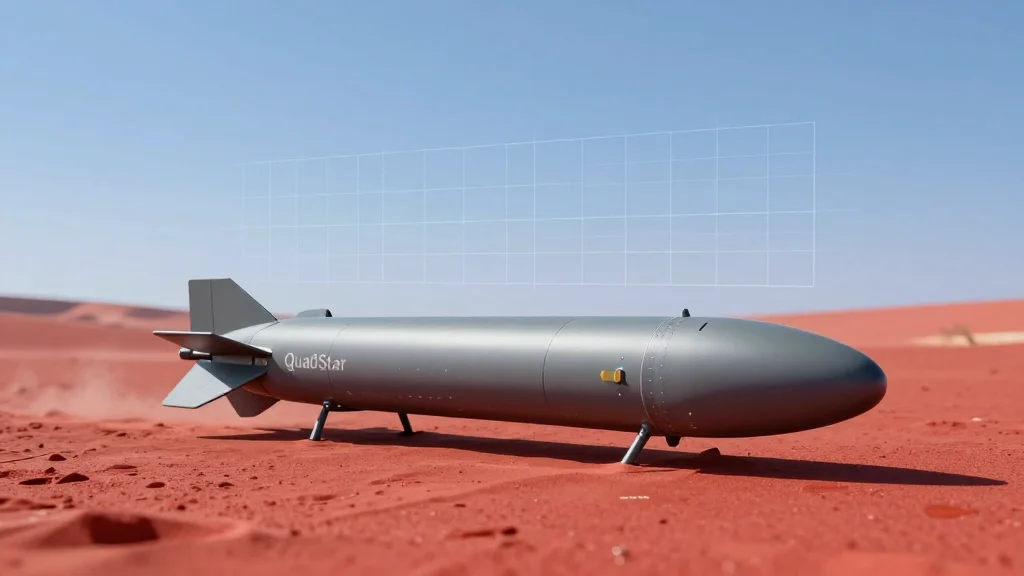
Lockheed Martin’s QuadStar Seeker Hits 100% Success in Army Interceptor Test

Companies Mentioned
Why It Matters
The QuadStar test marks a pivotal point in the Army’s effort to modernize its short‑range air‑defense capability, a sector that has struggled to keep pace with proliferating low‑observable drones and swarm tactics. By proving an AI‑enabled seeker that can out‑range the Stinger, Lockheed positions itself to set new performance benchmarks for man‑portable missiles, potentially influencing procurement standards across NATO allies. Beyond the immediate contract, the demonstration underscores a broader industry trend toward modular, software‑driven weapons. Successful integration of AI and open‑system architectures could lower life‑cycle costs and enable rapid field upgrades, a capability the Army deems essential for future contested environments.
Key Takeaways
- •Lockheed’s QuadStar seeker achieved 100% target acquisition in a White Sands flight test.
- •Seeker performance exceeded the range of the legacy Stinger missile.
- •Test completed in under six months, highlighting rapid development pace.
- •QuadStar competes against Raytheon in the Army’s NGSRI program.
- •AI‑driven, open‑system seeker aims to reduce sustainment costs and enable modular upgrades.
Pulse Analysis
Lockheed Martin’s rapid demonstration reflects a strategic pivot in U.S. defense acquisition toward speed and software agility. Historically, short‑range air‑defense systems have been upgraded in incremental cycles, but the QuadStar approach—marrying AI‑enhanced sensing with an open‑systems framework—signals a shift to more iterative, capability‑focused development. This aligns with the Army’s broader push for “digitally enabled” weapons that can be updated in the field without costly hardware overhauls.
The competition with Raytheon also illustrates a market where legacy defense contractors must reinvent their product lines or risk obsolescence. Raytheon’s traditional strength lies in proven hardware, yet the Army’s stated priorities—affordability, rapid software refresh, and counter‑measure resilience—favor Lockheed’s more flexible architecture. If QuadStar secures the contract, it could set a precedent for future missile programs, encouraging other vendors to adopt similar AI‑centric designs.
Looking ahead, the NGSRI decision will likely influence the Army’s procurement roadmap for the next decade. A successful QuadStar fielding could accelerate the retirement of the Stinger fleet, freeing budget for next‑generation platforms across the air‑defense spectrum. Conversely, any delays or performance shortfalls could reinforce the Army’s cautious stance on AI‑driven weapons, prompting a re‑evaluation of risk thresholds. Stakeholders should watch the upcoming prototype evaluation phase closely, as it will reveal whether the promised software agility translates into operational reliability under combat conditions.
Lockheed Martin’s QuadStar Seeker Hits 100% Success in Army Interceptor Test
Comments
Want to join the conversation?
Loading comments...