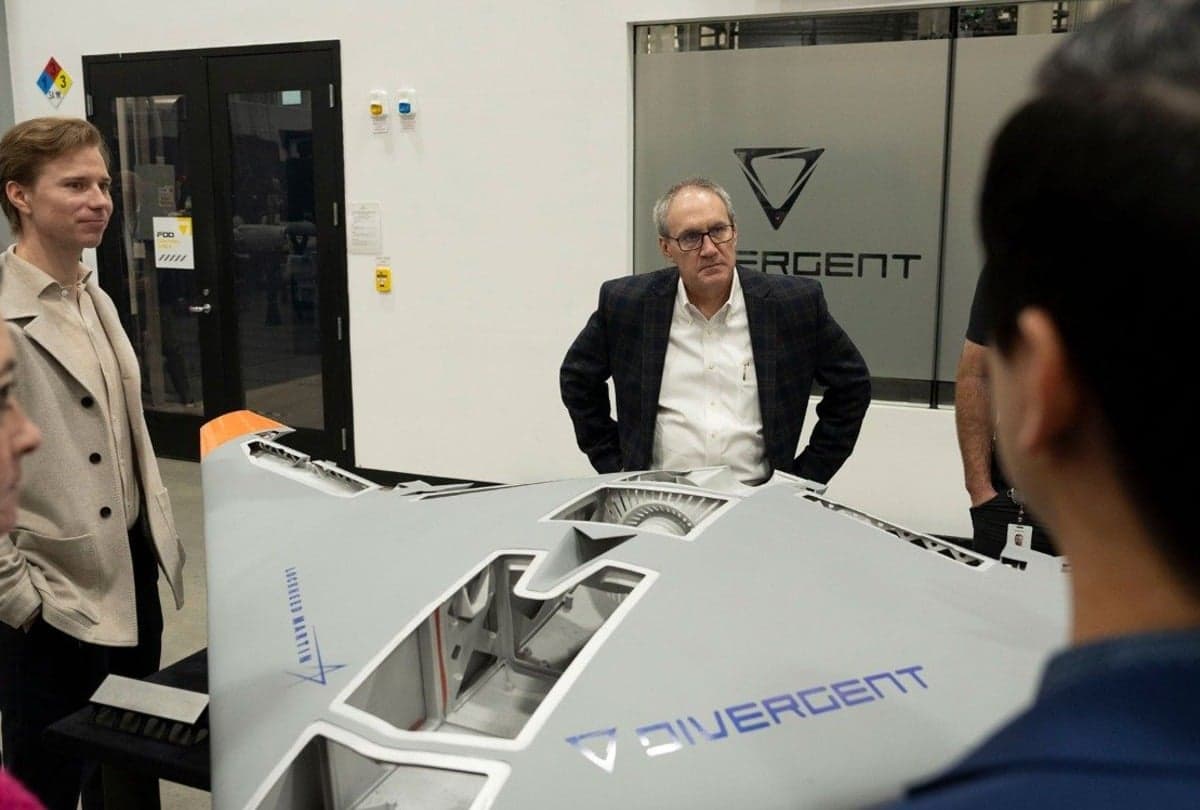
Lockheed Skunk Works Built New Drone Using 3D Printing
Companies Mentioned
Why It Matters
Accelerating drone development shortens the time to field critical capabilities, strengthening U.S. defense readiness and reducing reliance on traditional, bottleneck‑prone supply chains. The approach signals a shift toward digital‑first manufacturing across the defense industrial base.
Key Takeaways
- •Replicator drone built in under 12 months using DAPS 3D printing.
- •Lockheed invested $25 million in Divergent to accelerate additive manufacturing.
- •Digital workflow eliminates hand‑offs, cutting design‑to‑production time dramatically.
- •Rapid prototyping could shrink defense supply‑chain bottlenecks.
Pulse Analysis
The Replicator prototype illustrates how additive manufacturing is reshaping defense acquisition. Historically, military aircraft programs have taken years to move from sketch to flight, hampered by sequential engineering stages and costly tooling. By leveraging a fully digital workflow, Lockheed’s Skunk Works bypassed those delays, printing structural components directly from integrated design files. This not only slashes lead times but also opens the door to geometries that traditional machining cannot achieve, delivering lighter, stronger airframes that can be iterated in days rather than months.
At the heart of the speed gain is Divergent’s Adaptive Production System (DAPS), which fuses CAD, finite‑element analysis, production planning and quality assurance into a single environment. When a designer tweaks a part, the change propagates instantly through analysis and manufacturing instructions, eliminating manual data transfers and reducing error risk. The result is a supply chain less dependent on specialized machining shops and large‑scale tooling, which are typical choke points during rapid scale‑up. For the defense sector, this translates into more agile response to emerging threats and the ability to field niche capabilities without the overhead of traditional procurement.
Lockheed’s $25 million stake in Divergent reflects a broader corporate strategy of partnering with nimble startups to inject cutting‑edge technologies into its portfolio. Similar investments in Saildrone and Fortem underscore a focus on autonomous systems that can be fielded quickly. While the Replicator remains a prototype, its rapid development cycle offers a template for future programs, suggesting that digital‑first, 3D‑printed solutions could become a standard pathway for delivering next‑generation unmanned platforms. Challenges remain, including certification, material performance at scale, and integration with legacy systems, but the momentum indicates a decisive move toward faster, more resilient defense manufacturing.
Lockheed Skunk Works built new drone using 3D printing
Comments
Want to join the conversation?
Loading comments...