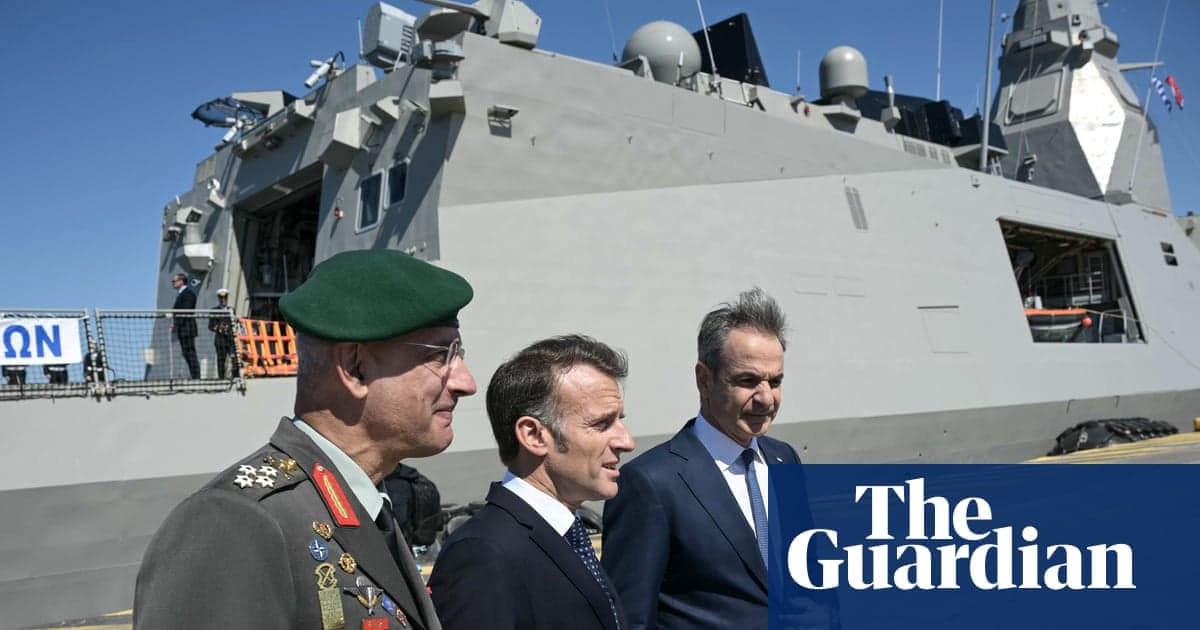
Macron Says EU’s Mutual Defence Clause ‘Not Just Words’
Why It Matters
The move signals a shift toward European strategic autonomy, potentially reshaping NATO dynamics and influencing future EU defence funding and joint operations.
Key Takeaways
- •EU's Article 42(7) invoked after drone attack on Cyprus
- •France, Greece, Spain, Italy, Netherlands, Portugal sent aid to Cyprus
- •Macron claims EU defence clause stronger than NATO's Article 5
- •EU leaders drafting handbook to operationalize mutual assistance
- •Cyprus aid seen as game‑changer for European security autonomy
Pulse Analysis
The EU’s mutual assistance provision, codified in Article 42(7) of the Maastricht Treaty, has long been a legal curiosity with limited operational precedent. The recent drone attack on a British base in Cyprus forced several member states to coordinate air and naval support, providing the first concrete test of the clause. By framing the response as a collective European effort, policymakers are moving the provision from theory to practice, laying groundwork for a more cohesive security architecture that can act independently of external actors.
Macron’s emphasis on the clause’s superiority to NATO’s Article 5 reflects growing skepticism about U.S. reliability under the current administration. Washington’s recent reluctance to back NATO actions in the Iran‑Israel conflict has amplified calls within Europe for a “European pillar” of the alliance. If the EU can demonstrate consistent, rapid assistance to a member under threat, it could recalibrate transatlantic expectations and give European capitals greater confidence to invest in joint capabilities, from air‑defence systems to cyber‑resilience programs.
The next phase involves translating political rhetoric into operational detail. European Council President António Costa announced the creation of a handbook that will outline decision‑making protocols, resource allocation, and command‑and‑control structures for Article 42(7) activations. Regular joint exercises, standardized rules of engagement, and a shared logistics pool are expected to follow. Such institutionalization not only strengthens deterrence but also opens market opportunities for defence firms across the bloc, potentially spurring a new wave of European‑led procurement and technology development.
Macron says EU’s mutual defence clause ‘not just words’
Comments
Want to join the conversation?
Loading comments...