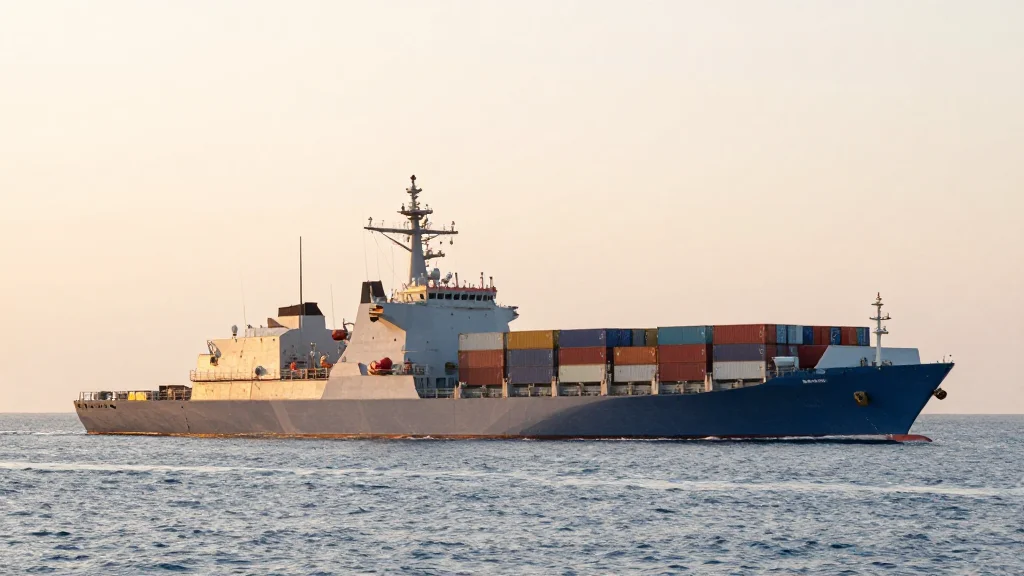
Macron, Starmer Rally Allies to Mull over Hormuz Mission
Why It Matters
Securing the Hormuz corridor is vital for stabilising oil supplies and curbing inflationary pressure worldwide; a coordinated multinational mission could reduce dependence on unilateral US action and limit broader economic disruption.
Key Takeaways
- •Macron, Starmer convene 30-nation video summit on Hormuz security
- •Mission planned only after US‑Israel‑Iran conflict ends
- •Goal: defensive force guaranteeing free navigation and mine‑clearance
- •Requires Iran’s non‑engagement pledge and US lifting its blockade
- •EU leaders signal desire for strategic autonomy beyond US diplomacy
Pulse Analysis
The Strait of Hormuz, a narrow waterway that funnels roughly a fifth of the world’s oil, has become a flashpoint after Iran’s blockade in response to the February 28 war involving the United States and Israel. The chokehold sent crude prices soaring, prompting concerns about higher consumer inflation, food supply strain, and a looming jet‑fuel shortage for airlines. By restricting a critical artery for global trade, the blockade illustrates how regional conflicts can quickly ripple through worldwide markets, making swift diplomatic and security responses essential.
In Paris, Macron and Starmer are leveraging the summit to position Europe as a proactive security actor. The meeting, set for April 17, will bring together about 30 nations—mostly European, with representation from Asia and the Middle East—via video link, while German Chancellor Friedrich Merz and Italian Prime Minister Giorgia Meloni attend in person. The proposal calls for a strictly defensive multinational force, contingent on a cease‑fire and clear commitments: Iran must agree not to fire on passing vessels, and the United States must cease its own blockade of Iranian ports. By tying deployment to these conditions, the allies aim to craft a “third way” that avoids the maximum‑pressure tactics of the United States while still protecting commercial shipping.
If realized, the mission could reshape the post‑war security architecture in the Gulf. A credible, multilateral presence would reassure shipping companies, lower insurance premiums, and help stabilize oil prices, benefitting both consumers and energy‑intensive industries. Moreover, the initiative signals a growing European appetite for strategic autonomy, reducing reliance on U.S. unilateral actions and potentially influencing future coalition‑building efforts, such as the pending European force for Ukraine. However, the plan faces hurdles, including securing unanimous political will, coordinating naval assets, and navigating the delicate balance of Iranian and U.S. interests. Success would demonstrate that coordinated, rules‑based interventions can mitigate economic fallout from regional conflicts without escalating military tensions.
Macron, Starmer rally allies to mull over Hormuz mission
Comments
Want to join the conversation?
Loading comments...