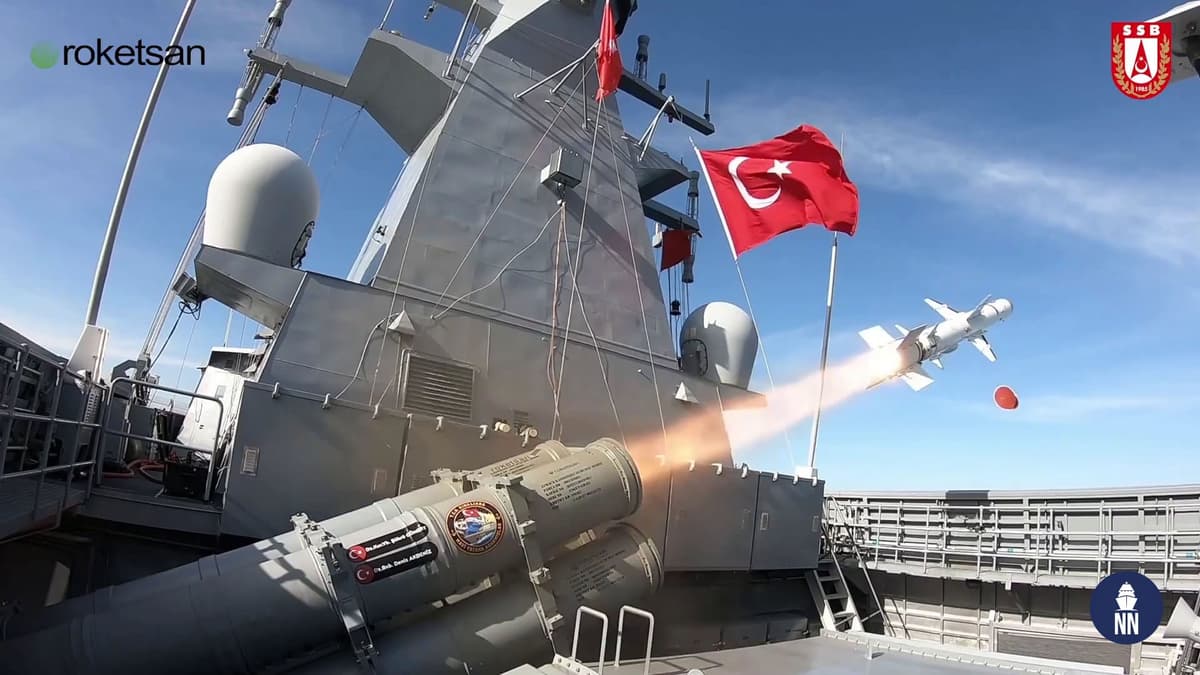
Malaysia Taps Roketsan for Atmaca Anti-Ship Missiles
Companies Mentioned
Why It Matters
The acquisition equips Malaysia’s new warships with advanced, indigenous Turkish missile technology, enhancing its maritime deterrence in the contested South‑China Sea. It also expands Turkey’s defence export footprint in Southeast Asia, a key growth market.
Key Takeaways
- •Malaysia orders 24 Atmaca missiles worth about $86 million
- •Missiles will equip LMS Batch 2 corvettes built in Turkey
- •Atmaca offers 250 km range and active radar seeker
- •Deal strengthens Turkey‑Malaysia defence partnership amid regional naval buildup
- •Atmaca replaces older Harpoon missiles in Turkish fleet
Pulse Analysis
The contract between Roketsan and Malaysia’s Ministry of Defence marks a pivotal step in Kuala Lumpur’s LMS Batch 2 program, which calls for three Ada‑class‑derived corvettes built by Turkish shipbuilder STM. By sourcing the Atmaca missile, Malaysia aligns its new surface combatants with a proven, all‑weather, sea‑skimming weapon that integrates GPS, inertial navigation and an active radar seeker. This choice not only modernises the Royal Malaysian Navy’s strike envelope but also signals a shift toward non‑Western suppliers for critical armaments.
Atmaca’s technical profile—under 800 kg, 250 km range (with a future KARA variant exceeding 280 km), and a 250 kg high‑explosive warhead—places it on par with the U.S. Harpoon while offering enhanced guidance flexibility, including GPS‑free modes for contested electronic environments. The missile’s data‑link capability enables in‑flight retargeting, a feature increasingly valued in littoral theatres where fast‑moving surface threats and asymmetric tactics dominate. For Turkey, the export bolsters the commercial viability of its indigenous missile programme, which has progressed from initial sea‑launch tests in 2019 to full operational capability in 2021.
Regionally, the deal reflects the broader naval arms race in Southeast Asia, where nations are upgrading fleets to counter growing Chinese maritime activity. By integrating Atmaca, Malaysia gains a credible deterrent that can project power across the Strait of Malacca and the South China Sea. For the Turkish defence industry, the contract opens a gateway to further Southeast Asian sales, leveraging the LMS platform as a showcase for Turkish shipbuilding and missile technology. As more navies seek cost‑effective yet sophisticated alternatives to legacy Western systems, partnerships like this are likely to accelerate.
Malaysia taps Roketsan for Atmaca anti-ship missiles
Comments
Want to join the conversation?
Loading comments...