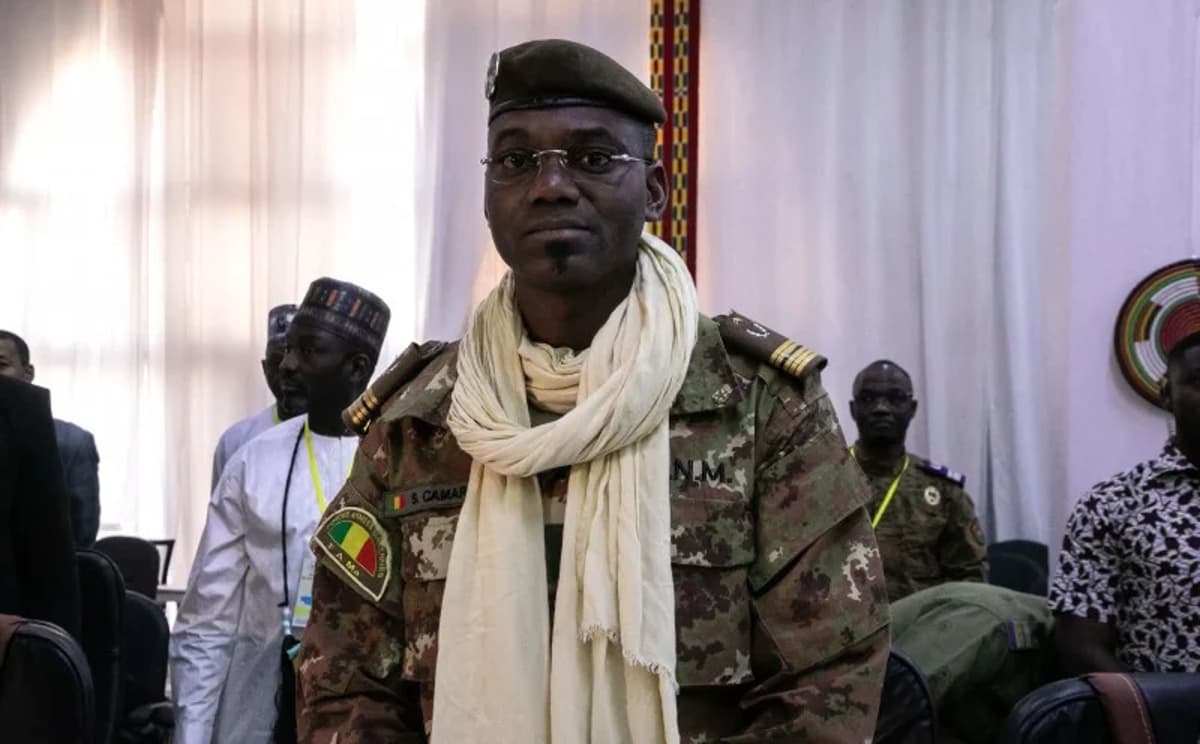
Mali Defence Minister Killed, Fresh Fighting Between Army and Rebels
Why It Matters
The killing of a senior defence official and the rebel‑driven push to expel Russian forces destabilise an already fragile security environment, threatening regional stability and foreign investment in Mali’s mineral sector.
Key Takeaways
- •Defence minister Sadio Camara killed in car bomb attack
- •Tuareg rebels and JNIM coordinated strikes in Kati, Kidal, Gao
- •Russian-backed Africa Corps may withdraw from Kidal per rebel agreement
- •Fighting wounded 16 civilians and soldiers, raising security concerns
- •Junta under severe pressure as insurgents target symbolic northern cities
Pulse Analysis
Mali’s security crisis deepened dramatically after the car‑bomb that killed Defence Minister Sadio Camara and members of his family. The attack, executed in the junta‑controlled town of Kati, was not an isolated incident but part of a broader, synchronized offensive by the Azawad Liberation Front (FLA) and the jihadist Group for the Support of Islam and Muslims (JNIM). By striking multiple locations—including Kidal, Gao and other northern towns—the insurgents demonstrated an ability to coordinate across vast distances, challenging the junta’s claim of control and exposing vulnerabilities in its intelligence and counter‑terrorism apparatus.
The rebels’ announcement that Russian‑backed Africa Corps forces could withdraw from Kidal marks a potential shift in the balance of external influence. Russia’s involvement, initially channeled through the Wagner mercenary group and later through the state‑run Africa Corps, has been a cornerstone of Mali’s strategy to counter jihadist groups after Western partners reduced assistance. A retreat from Kidal could embolden other armed factions, weaken the junta’s military capabilities, and open the door for renewed French or EU engagement, albeit under a different diplomatic framework.
Beyond the immediate security fallout, the violence threatens Mali’s economic prospects. The country sits on significant gold deposits and other mineral resources that attract foreign investors seeking stable extraction environments. Persistent instability, high‑profile assassinations, and the possible loss of Russian security support raise the risk premium for investors, potentially delaying projects and reducing revenue streams vital for the nation’s fragile economy. International bodies, including the UN and EU, have condemned the attacks and called for coordinated humanitarian and security assistance, underscoring the broader geopolitical stakes of Mali’s turmoil.
Mali defence minister killed, fresh fighting between army and rebels
Comments
Want to join the conversation?
Loading comments...