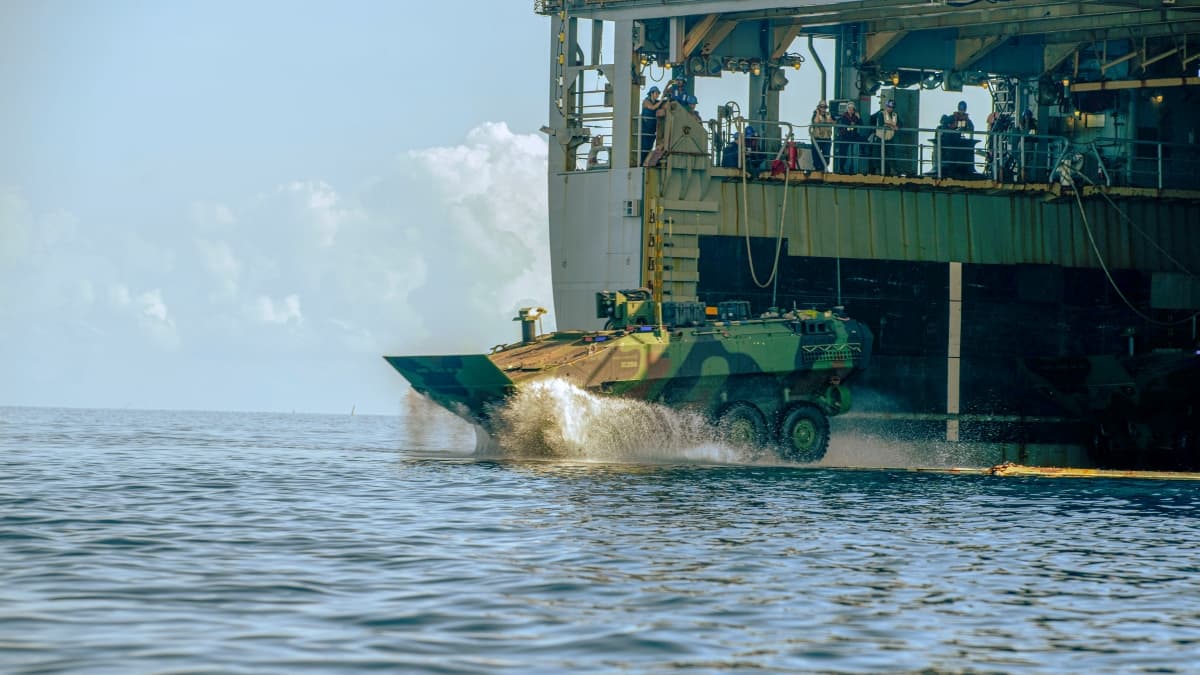
Marine ACV Crews to Face ‘Thinking Adversaries’ in New VR Simulator
Companies Mentioned
Why It Matters
The immersive VR trainer closes lethal training gaps, boosts crew readiness, and cuts live‑fire costs for the Marine Corps’ next‑generation amphibious platform. AI‑driven adversaries provide adaptable, realistic scenarios that better prepare crews for contested littoral operations.
Key Takeaways
- •XR Training secures $5.1M Marine ACV gunnery VR contract
- •System replicates three crew positions with synchronized VR headsets
- •AI generates unpredictable adversaries for land and water scenarios
- •Addresses training deficiencies that caused 2020 amphibious vehicle deaths
Pulse Analysis
The Marine Corps’ Amphibious Combat Vehicle represents a leap in capability, but its complexity has exposed training shortfalls that contributed to a tragic 2020 accident involving legacy amphibious craft. In response, the service has turned to immersive technologies to ensure crews master both navigation and fire‑control tasks without risking lives or expensive live‑fire ranges. By leveraging an OTA contract, the Corps can fast‑track prototype development, a strategy that mirrors broader defense trends toward rapid acquisition of cutting‑edge training tools.
XR Training’s new VR trainer recreates the ACV’s three‑person crew layout, complete with synchronized headsets and a 3D‑printed weapon‑station joystick. A digital twin of the ocean reproduces wave impacts, sandbars and even crab pots, delivering a tactile sense of motion that traditional simulators lack. Crucially, the platform embeds AI‑driven adversaries that adapt to changing terrain and tactics, moving beyond scripted drills to simulate the chaotic decision‑making of real‑world opponents. This level of realism prepares Marines for both dry‑land engagements and littoral operations, where water‑borne threats can emerge unexpectedly.
The broader implication for the defense sector is a shift toward modular, AI‑enhanced virtual training environments that reduce costs while improving readiness. Live‑fire exercises are expensive, logistically intensive, and carry inherent risk; a high‑fidelity VR system offers a safe, repeatable alternative that can be updated rapidly as threats evolve. As other services observe the Marine Corps’ progress, we can expect similar contracts to proliferate, accelerating the adoption of digital twins and AI opponents across the armed forces, ultimately reshaping how the U.S. military prepares its warfighters for future conflicts.
Marine ACV crews to face ‘thinking adversaries’ in new VR simulator
Comments
Want to join the conversation?
Loading comments...