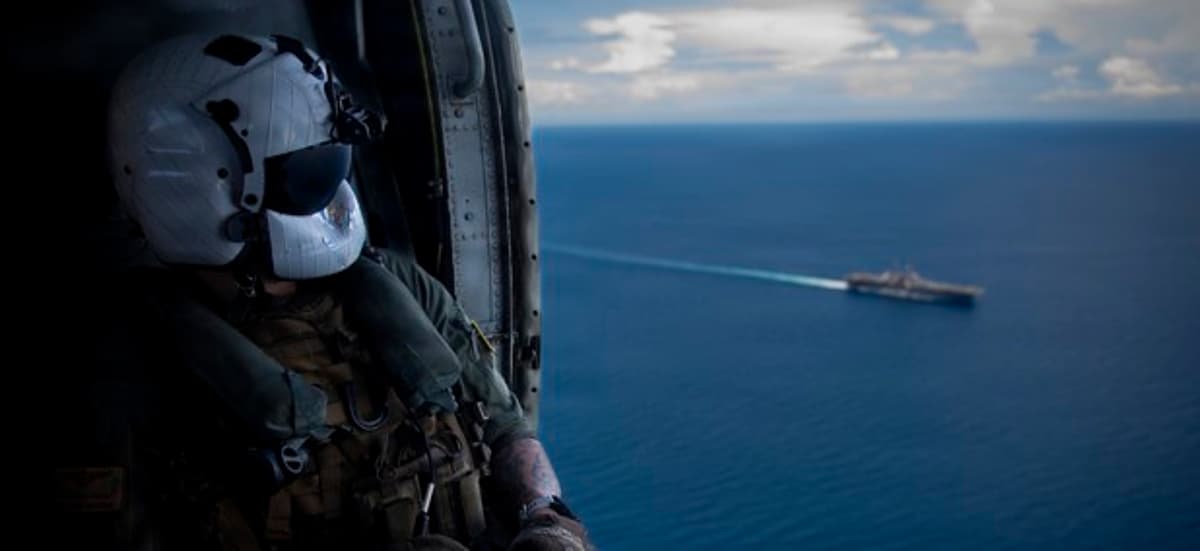
Marine Commandant: Every Combatant Command Has Requested an Amphibious Ready Group
Why It Matters
Insufficient amphibious lift limits the Marine Corps’ ability to project power and respond to crises globally, forcing a reassessment of force structure and budget priorities. The shortfall also pressures the Navy to speed up shipbuilding and maintenance reforms to meet emerging security demands.
Key Takeaways
- •All combatant commands request additional ARG-MEU beyond three
- •Only ~16 of 32 amphibious ships are deployable now
- •Marine Corps estimates need ~40 amphibious ships for desired presence
- •Navy's legal floor of 31 ships is insufficient for operational readiness
- •Maintenance backlog hampers ship availability; readiness board aims to fix
Pulse Analysis
The Marine Corps’ push for more amphibious ready groups reflects a broader shift in U.S. force posture. With the 22nd MEU conducting anti‑drug operations in South America and the 31st MEU enforcing a blockade in the Middle East, the service is already stretched across multiple theaters. Commandant Gen. Eric Smith’s admission that demand may be "well north of three" signals that the traditional three‑ARG model no longer aligns with the reality of near‑peer competition and distributed maritime threats.
Compounding the demand issue is the aging amphibious fleet. A 2024 GAO report found that only about half of the Navy’s 32 amphibious ships meet deployable standards, translating to roughly 16 vessels ready for immediate use. While law mandates a minimum of 31 ships, the Marine Corps argues that operational readiness requires closer to 40 hulls to sustain continuous presence on both U.S. coasts and the Indo‑Pacific. The gap forces the services to juggle maintenance backlogs, pre‑deployment training, and emergent mission requirements, exposing a vulnerability in the joint force’s expeditionary capability.
In response, the Navy is accelerating new construction under its 2027 shipbuilding request and launching the Amphibious Force Readiness Board to streamline repairs and prioritize modernization. Admiral Daryl Caudle highlighted recent fast‑track maintenance successes on the West Coast, but cautioned that sustained leadership is essential to overcome systemic delays. If the Navy can close the readiness gap, the Marine Corps will regain the flexibility to field multiple ARG‑MEU packages, reinforcing deterrence and rapid response across the globe. Conversely, prolonged shortfalls could compel policymakers to rethink amphibious force sizing, funding, and the strategic reliance on sea‑based power projection.
Marine commandant: Every combatant command has requested an amphibious ready group
Comments
Want to join the conversation?
Loading comments...