Marine Corps Considering Army’s MV-75 as an Attack Helo Replacement
Why It Matters
Adopting the MV‑75 would give the Marine Corps a versatile, high‑speed attack tilt‑rotor, filling capability gaps as legacy aircraft retire and enhancing joint‑service interoperability. It also signals a shift toward next‑generation vertical‑lift platforms across the U.S. armed forces.
Key Takeaways
- •Marine Corps evaluating Army's MV-75 for Future Attack Strike program
- •MV-75 could replace retiring AV-8 Harriers, UH-1 Venom, AH-1 Viper
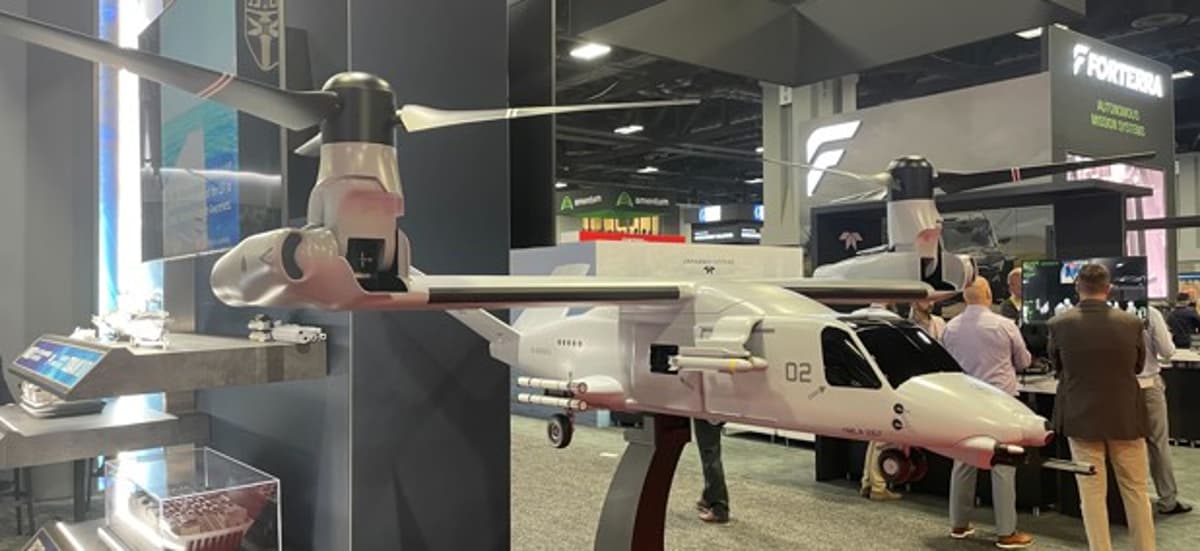
- •Bell-Textron displayed armed tiltrotor mock-up painted for HMLA-267
- •Army aims to field MV-75 prototypes by year-end for testing
- •Future plans include next-gen assault platform to succeed V-22 into 2050s
Pulse Analysis
The Marine Corps faces a looming capability gap as it retires its legacy AV‑8 Harriers, UH‑1 Venom and AH‑1 Viper attack helicopters. To maintain air‑ground integration and close‑air support for expeditionary forces, the service’s Future Attack Strike (FASt) program is scouting high‑performance alternatives. The MV‑75 Cheyenne II, originally conceived as the Army’s Future Long‑Range Assault Aircraft, offers a unique blend of tilt‑rotor speed, vertical lift and payload capacity that could bridge the gap between traditional helicopters and fixed‑wing jets, while preserving the operational flexibility the Corps values.
Developed by Bell‑Textron, the MV‑75 builds on the proven tilt‑rotor architecture of the V‑22 Osprey but is engineered for an attack role. Its design incorporates hardpoints for precision missiles, a modular sensor suite, and the ability to launch swarms of loitering drones, providing a multi‑domain strike capability from a single airframe. At the Modern Day Marine conference, Bell‑Textron displayed a miniature, weapons‑laden model painted for HMLA‑267, underscoring industry confidence that the platform can meet Marine specifications. The Army’s commitment to deliver prototypes for testing by the end of the year keeps the development timeline aggressive yet adaptable, allowing the Marines to shape requirements through early RFI feedback.
If adopted, the MV‑75 could reshape vertical‑lift procurement across services, fostering joint‑service logistics and training synergies. Its introduction would extend the relevance of tilt‑rotor technology well beyond the V‑22’s projected service life into the 2050s, potentially delaying the need for a wholly new assault platform. For defense contractors, the program opens a lucrative market for advanced avionics, weapons integration and unmanned‑air‑system partnerships, while the Marine Corps gains a high‑speed, survivable attack asset capable of supporting near‑peer, drone‑centric battlefields.
Marine Corps considering Army’s MV-75 as an attack helo replacement
Comments
Want to join the conversation?
Loading comments...