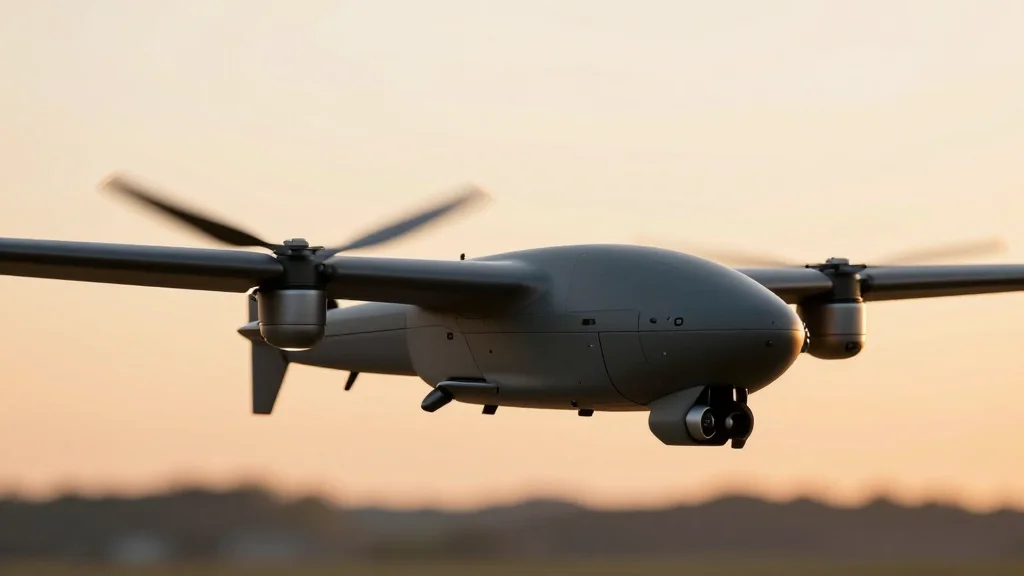
May Drone Digest: American Loitering Munition Spending Continues to Drive Market Growth
Companies Mentioned
Why It Matters
Accelerated U.S. spending fuels rapid innovation and expands the global loitering‑munition supply chain, reshaping how armed forces conduct precision strikes and counter‑air operations.
Key Takeaways
- •U.S. market forecast hits $18.57 billion by 2028
- •LASSO program narrows to fewer, higher‑performance drones
- •DARPA pursues 500‑drone swarm constellation concept
- •Contracts span tactical loiterers to large‑scale swarm systems
Pulse Analysis
The United States continues to cement its position at the forefront of loitering‑munition development, a niche that blends the persistence of a UAV with the lethality of a missile. Analysts at Defence Insight project the global market to swell to $18.57 billion, driven largely by American procurement budgets and the push for autonomous strike platforms. This growth reflects a doctrinal shift: commanders now value the ability to launch low‑cost, precision attacks that can loiter for hours, engage time‑sensitive targets, and reduce collateral damage.
In May 2026, the Army’s LASSO (Low‑Altitude Swarm System) program trimmed its candidate list, favoring drones that can operate in dense, contested environments while sharing sensor data in real time. Simultaneously, DARPA unveiled a roadmap for a “constellation” of up to 500 Group 1‑3 drones, a capability that could overwhelm enemy air defenses and saturate target sets. Recent contract awards to firms such as AeroVironment and others underscore a market eager to meet these specifications, spurring rapid prototyping, low‑rate production, and integration with existing command‑and‑control networks.
The strategic ripple effects extend beyond U.S. borders. Allied forces are watching closely, anticipating technology transfers and joint‑development opportunities that could standardize loitering‑munition tactics across NATO. However, the surge also raises policy questions around proliferation, rules of engagement, and the ethical use of autonomous weapons. Companies that can navigate regulatory landscapes while delivering scalable, interoperable swarm solutions stand to capture a sizable share of the expanding market, positioning themselves as essential partners in the next generation of kinetic AI‑driven warfare.
May drone digest: American loitering munition spending continues to drive market growth
Comments
Want to join the conversation?
Loading comments...