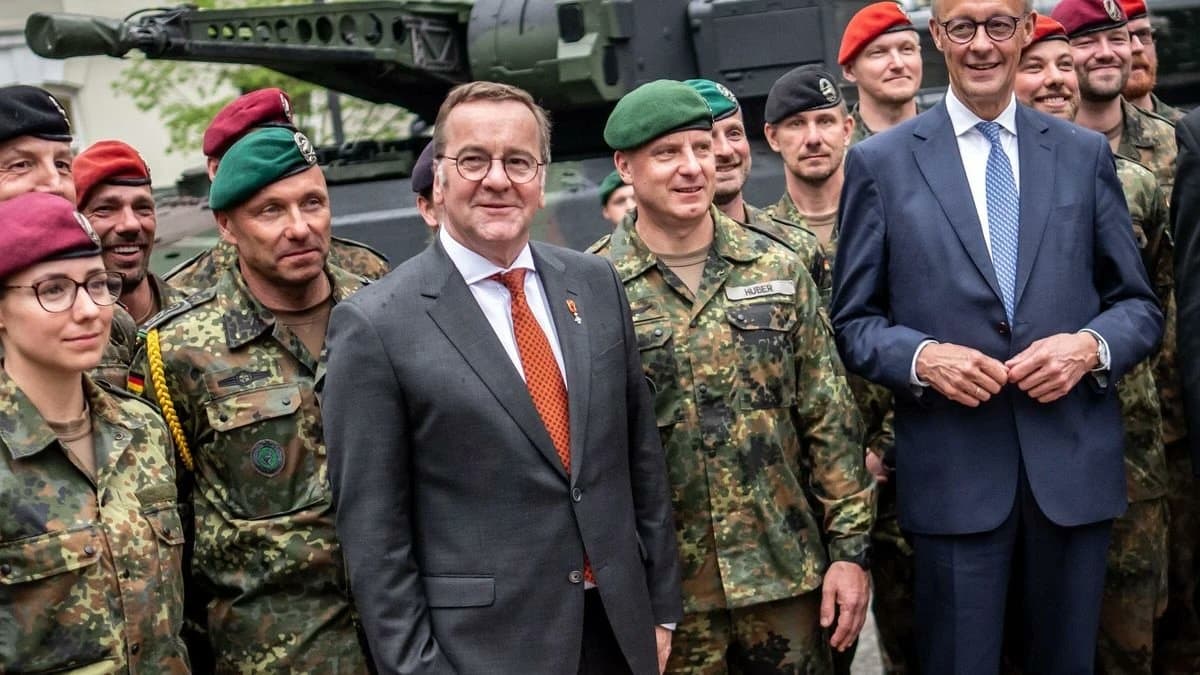
Merz Rearming Germany to Free Europe From Big Power Intimidation
Why It Matters
The overhaul reshapes Europe’s defence posture, potentially shifting NATO burden and influencing global power balances as Berlin seeks to act as a security hub independent of U.S. leadership.
Key Takeaways
- •Germany targets $1 trillion defense spend by 2035
- •Troop numbers to rise from 200k to 460k, including reservists
- •New AI‑driven air‑defence and long‑range strike systems planned
- •Strategy aims to reduce US reliance and counter Russia, China
- •Other NATO members lag behind Germany’s scale of upgrades
Pulse Analysis
Berlin’s $1 trillion re‑armament plan marks the most ambitious defence investment in Western Europe since the Cold War, reflecting Chancellor Friedrich Merz’s hawkish vision of a self‑sufficient continent. By pledging to double the Bundeswehr’s manpower and embed artificial‑intelligence across air‑defence, missile and drone platforms, Germany signals a decisive pivot from the post‑1990 low‑spending era that saw defence budgets dip to 1.3% of GDP. The policy is framed as a safeguard against Russian aggression in Ukraine and a strategic hedge against China’s growing military footprint, while also curbing reliance on an increasingly unpredictable United States.
The program’s core components—AI‑enhanced radar, long‑range precision strike rockets, and autonomous drones—are designed to give Europe a credible conventional edge. Expanding the force to 460,000 personnel, including a sizable reserve cadre, positions Germany as a logistical hub for NATO’s eastern flank. Domestic defence firms stand to benefit from a surge in contracts, spurring innovation in semiconductor‑based guidance systems and secure data‑link networks. At the same time, the emphasis on digital decision‑making aims to streamline procurement, reducing the bureaucratic delays that have historically hampered European arms projects.
Geopolitically, Berlin’s assertiveness could recalibrate transatlantic dynamics. A stronger German military may encourage other NATO members to upscale their own capabilities, potentially reshaping burden‑sharing formulas. Russia is likely to view the buildup as a direct challenge, possibly prompting heightened posturing in the Baltic region, while China may accelerate its own European outreach to counterbalance. For investors and policymakers, the German plan introduces both opportunities—such as increased demand for AI‑driven defence tech—and risks, including the prospect of an arms race that could destabilize the already tense security environment.
Merz rearming Germany to free Europe from big power intimidation
Comments
Want to join the conversation?
Loading comments...