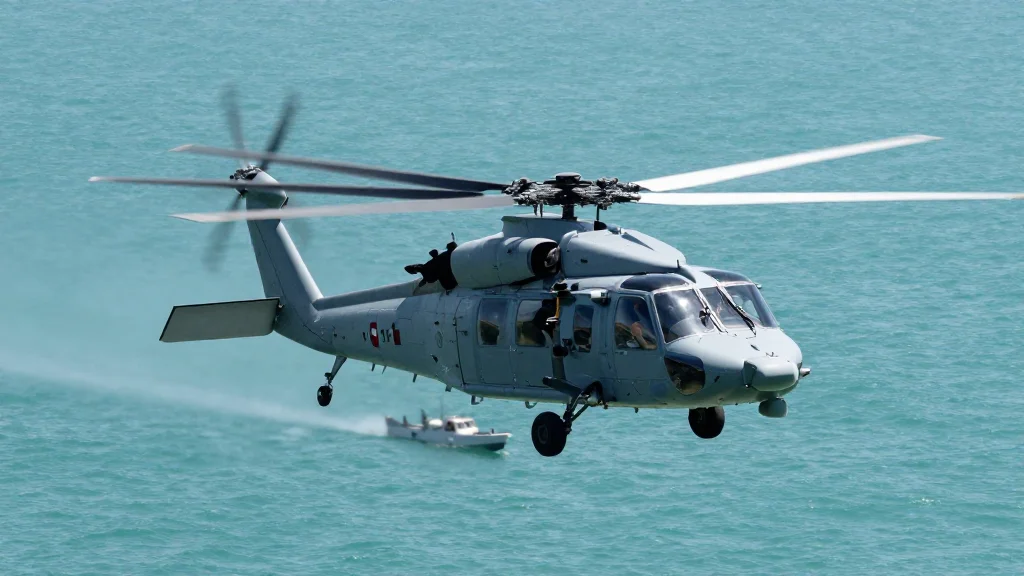
MH-60S Sea Hawks and AH-64 Apaches Destroy Six Iranian Boats
Why It Matters
The strike demonstrates U.S. ability to rapidly counter asymmetric naval threats, reinforcing freedom of navigation in a strategically vital waterway. It also signals escalating tensions between Tehran and Washington, with potential ripple effects on global energy markets.
Key Takeaways
- •MH-60S Sea Hawks and AH-64 Apaches engaged Iranian boats
- •Six Iranian fast‑attack craft were destroyed
- •Attack followed Iranian missile, drone, and boat swarm
- •U.S. forces prevented potential damage to naval vessels
- •Incident heightens tension in the Persian Gulf region
Pulse Analysis
The Persian Gulf remains a flashpoint where Iran’s asymmetric tactics clash with U.S. naval dominance. Recent Iranian attempts to overwhelm ships with cruise missiles, unmanned aerial systems, and swarming boats illustrate a shift toward low‑cost, high‑volume attacks designed to exploit gaps in traditional defense layers. By deploying the MH-60S Sea Hawk, a versatile maritime helicopter, alongside the battle‑tested AH-64 Apache, the U.S. demonstrated a layered response that can engage both surface and aerial threats in real time, preserving the integrity of its fleet.
The MH-60S Sea Hawk’s advanced sensors and precision‑guided munitions, combined with the Apache’s robust firepower, proved decisive against the six fast‑attack craft. These platforms can operate from destroyers and amphibious ships, extending the reach of carrier strike groups without relying solely on ship‑based guns. Their ability to rapidly identify, track, and neutralize small, fast‑moving targets mitigates the risk of damage to high‑value assets and maintains uninterrupted maritime traffic, a critical factor for the global oil supply chain that passes through the Strait of Hormuz.
Strategically, the encounter raises the stakes for regional stability. While the immediate threat was eliminated, the episode may prompt Tehran to refine its swarm tactics or increase missile launches, potentially drawing NATO and allied forces into a broader security dilemma. Shipping companies are likely to reassess insurance premiums and routing decisions, and policymakers in Washington may consider bolstering forward‑deployed air assets to deter future provocations. Understanding the interplay between advanced helicopter capabilities and Iran’s low‑tech aggression is essential for anticipating the next phase of Gulf confrontations.
MH-60S Sea Hawks and AH-64 Apaches Destroy Six Iranian Boats
Comments
Want to join the conversation?
Loading comments...