Milestone C for the T‑7A: A Turning Point Reshaping the Competitive Landscape for European Composite Aerostructures
Why It Matters
The T‑7A’s ramp‑up monopolises scarce U.S. composite manufacturing slots, potentially limiting material access for European trainer programs and signaling a shift in transatlantic supply dynamics.
Key Takeaways
- •Milestone C authorises Low‑Rate Initial Production of T‑7A.
- •Saab’s high‑modulus carbon‑epoxy aft fuselage uses out‑of‑autoclave process.
- •Planned output reaches 60 aircraft annually by 2030.
- •US composite capacity already committed to F‑35, CH‑53K, MQ‑25.
- •Airbus Defence & Space may face material lead‑time pressures.
Pulse Analysis
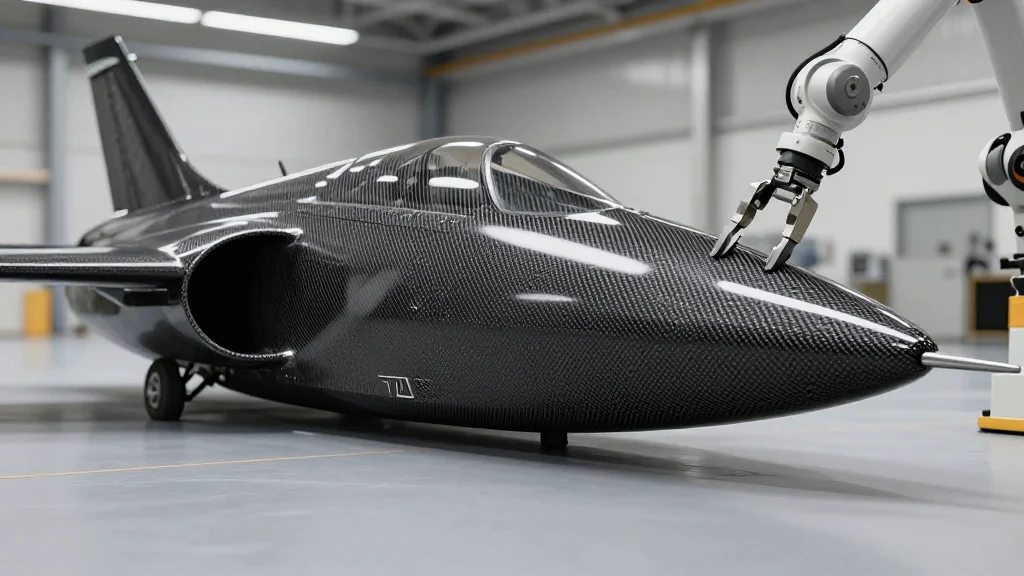
The approval of Milestone C marks a pivotal moment for the T‑7A Red Hawk, as it moves from development into low‑rate production. Saab’s aft fuselage leverages a high‑modulus carbon‑epoxy layup that can be cured out‑of‑autoclave, cutting tooling costs and eliminating numerous mechanical joints. By co‑moulding panels with stiffeners, the design delivers repeatable geometry essential for the trainer’s empennage and propulsion interfaces, while modular tooling and phased‑array ultrasonic inspection keep cycle times tight and quality consistent.
Ramp‑up to 60 aircraft per year by 2030 will make the T‑7A a heavyweight consumer of U.S. defense composites. That capacity is already heavily allocated to legacy platforms such as the F‑35 fighter, CH‑53K heavy‑lift helicopter, and the MQ‑25 unmanned refueler, as well as emerging ISR and hypersonic projects. Adding a new high‑volume line risks creating bottlenecks in resin supply, autoclave scheduling, and skilled labor, potentially driving up lead times and costs for all programmes sharing the same supply chain.
For European manufacturers, particularly Airbus Defence & Space in Toulouse, the Red Hawk’s progress sends a clear strategic signal. French suppliers that serve both civilian Airbus programmes and U.S. defense contracts may confront tighter material allocations and longer delivery windows. The situation underscores Europe’s push for greater industrial sovereignty in composite aerostructures, prompting discussions on alternative resin sources, domestic tooling investments, and collaborative R&D to mitigate reliance on transatlantic capacity. The T‑7A’s trajectory thus serves as an early barometer of how composite supply chains will be contested in the next decade.
Milestone C for the T‑7A: a turning point reshaping the competitive landscape for European composite aerostructures
Comments
Want to join the conversation?
Loading comments...