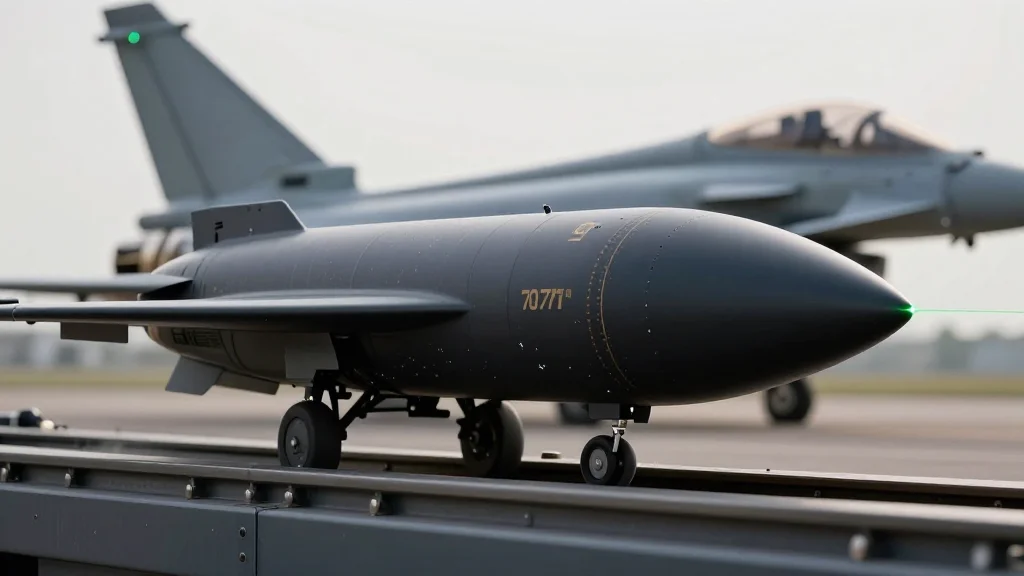
Missile Kit Lets Fighter Jets Down Drones on the Cheap
Companies Mentioned

Why It Matters
Affordable, precision‑guided munitions enable air forces to counter proliferating drone threats without inflating ammunition budgets, reshaping air‑to‑air combat economics.
Key Takeaways
- •APKWS kit converts 70‑mm rockets into guided missiles for $25k per shot
- •Typhoon can engage drones with laser‑guided rockets, cutting cost 95%
- •DASALS places four seekers on wings, eliminating nose‑mounted seeker
- •UK trials show integration feasibility for existing fighter fleets
- •Affordable anti‑drone solution may reshape air‑to‑air armament strategies
Pulse Analysis
The rapid expansion of unmanned aerial systems has forced militaries to rethink traditional air‑to‑air tactics. Legacy missiles such as the AIM‑9X Sidewinder deliver reliable kills but at a prohibitive price—often exceeding half a million dollars per engagement. In high‑intensity conflicts where swarms of inexpensive drones can overwhelm defenses, the cost per shot becomes a strategic liability, prompting a search for scalable, budget‑friendly alternatives.
Enter BAE Systems’ Advanced Precision Kill Weapon System, a retrofit kit that transforms a standard 70‑mm rocket into a precision‑guided weapon using Distributed Aperture Semi‑Active Laser Seeker (DASALS) technology. By distributing four optical sensors across deployable wings, the kit sidesteps the need for a nose‑mounted seeker, preserving the rocket’s original warhead and fuse. The result is an 80% probability of striking within a 2‑meter laser spot at a fraction of the cost—about US $25,000 per shot versus the $500,000 price tag of a Sidewinder. Successful integration with the RAF Typhoon during trials at Warton confirms the system’s compatibility with existing fighter platforms, offering a plug‑and‑play upgrade path.
The broader implications are significant for defense procurement. Nations facing tight budgets can now field a layered drone‑defense architecture that combines high‑end missiles for critical targets with low‑cost guided rockets for the bulk of threats. This cost‑effectiveness may accelerate adoption across NATO allies and other air forces, potentially standardizing the APKWS kit as a baseline anti‑drone capability. As drone technology continues to evolve, affordable precision weapons like APKWS will likely become a cornerstone of future air combat doctrine, ensuring that air superiority remains sustainable without eroding fiscal stability.
Missile kit lets fighter jets down drones on the cheap
Comments
Want to join the conversation?
Loading comments...