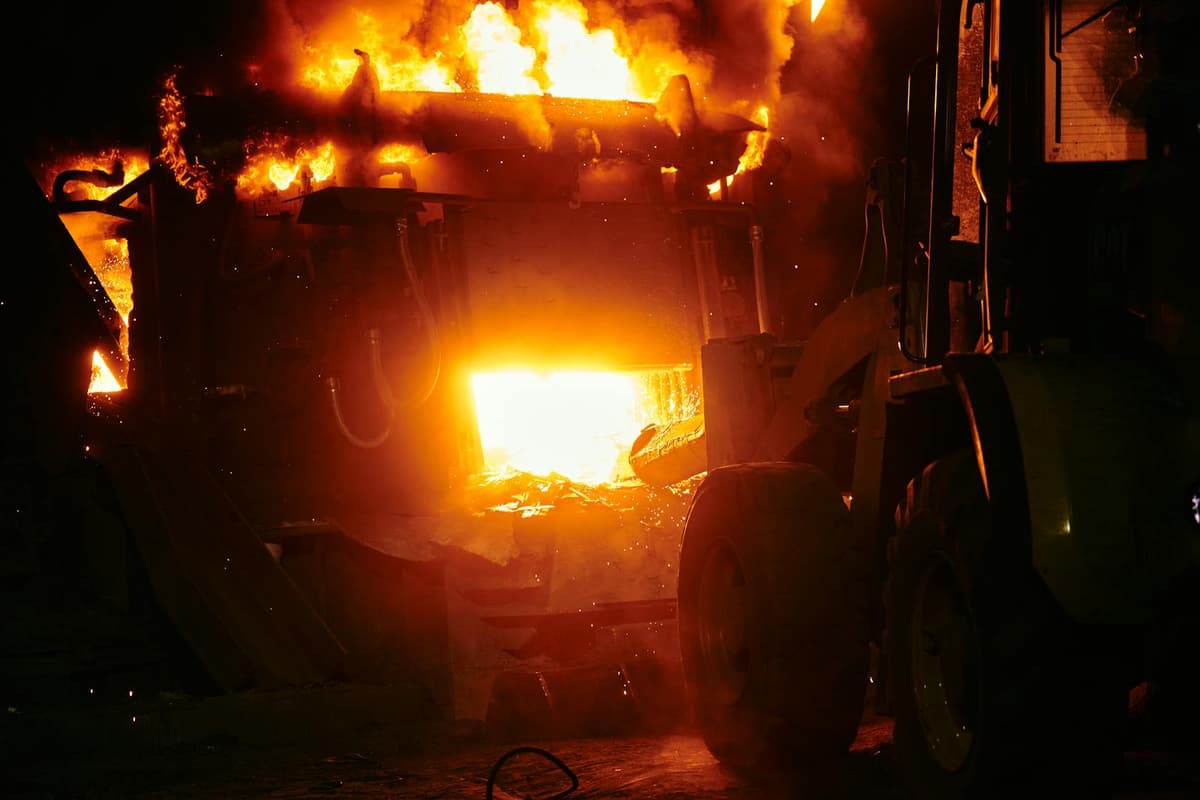
Moscow Threatens Continental Retaliation as Baltic Oil Terminals Burn
Why It Matters
The strikes threaten Russia’s oil revenue stream while the Russian threat raises the stakes for European policymakers who are now financing offensive Ukrainian capabilities, potentially widening the conflict’s geographic scope.
Key Takeaways
- •Ukrainian drones crippled Primorsk and Ust‑Luga oil terminals
- •Russia warns Europe of retaliation for funding Ukrainian strike programs
- •European funds now target long‑range Ukrainian drone capability, not just defense
- •Russia’s air defence lacks cheap, mobile interceptors against massed drones
- •Escalation risk includes sabotage of European infrastructure and hybrid attacks
Pulse Analysis
The recent wave of Ukrainian long‑range drone attacks marks a turning point in the Russia‑Ukraine war, shifting the focus from battlefield maneuvers to economic attrition. Satellite imagery confirms that the Primorsk terminal lost a sizable portion of its storage capacity, while Ust‑Luga’s throughput has similarly declined. Those ports handle a combined 1.5 million barrels per day, so even a modest disruption translates into billions of dollars in foregone export revenue for Moscow. By targeting the logistics chain rather than front‑line positions, Kyiv is forcing Russia to confront a loss of cash flow that could pressure its war‑financing.
European capitals have responded by redirecting aid from traditional defensive kits—air‑defence systems, artillery, and armored vehicles—to the very strike capabilities that are now inflicting those economic blows. Germany, Norway, the Netherlands and Belgium are funneling funds into Ukrainian drone production, effectively placing themselves inside Russia’s newly articulated threat perimeter. The Kremlin’s warning of "continental retaliation" signals a strategic escalation: Moscow may resort to hybrid tactics such as sabotage of undersea cables, rail networks, or critical energy infrastructure across Europe. This policy shift underscores the delicate balance European leaders must strike between supporting Ukraine’s offensive edge and avoiding a broader confrontation.
Russia’s inability to counter the drone threat stems from a systemic shortfall in low‑cost, mobile air‑defence assets. Its high‑value point‑defence systems, like S‑400 batteries, protect fixed installations but leave vast swaths of territory exposed. Ukraine’s drones exploit these gaps with swarms that can be launched from dispersed, hardened sites. The asymmetry in motivation—Ukrainian engineers operating under existential pressure versus Russian oil workers facing heightened risk—further skews the calculus. As the conflict drifts toward an economic war of attrition, the interplay between European funding, Ukrainian strike capability, and Russian retaliation will shape the next phase of European security policy.
Moscow Threatens Continental Retaliation as Baltic Oil Terminals Burn
Comments
Want to join the conversation?
Loading comments...