Enhanced coast guard collaboration will fill critical gaps in maritime security, deterring coercive activities and protecting trade routes vital to both economies. It also signals a rules‑based approach that can reassure smaller Indo‑Pacific states amid rising great‑power competition.
The 2020 comprehensive strategic partnership between Australia and India has delivered robust navy‑to‑navy collaboration, yet civil maritime cooperation lags behind. Both nations rely on their coast guards to monitor vast exclusive economic zones, enforce fisheries regulations, and respond to maritime incidents. Institutionalizing joint exercises would transform sporadic, issue‑based drills into a predictable framework, allowing shared tactics and interoperable communications. As the Indo‑Pacific faces increasingly complex security dynamics, a formalized coast guard partnership can fill the gap left by naval engagements alone.
Chinese grey‑zone activities—ranging from artificial island construction to the deployment of dual‑use vessels—have blurred the line between lawful presence and coercive behavior in the Indian Ocean. These tactics threaten freedom of navigation and create enforcement challenges that navies alone cannot resolve. The 2025 Quad‑at‑Sea Ship Observer Mission demonstrated how coast guard crews from Japan, Australia, India and the United States can share real‑time intelligence and harmonize response protocols. Scaling such multilateral initiatives will enhance regional maritime domain awareness and deter illicit activities before they escalate.
Despite the strategic rationale, Australia’s fragmented maritime security architecture and India’s limited expeditionary coast guard capacity pose practical hurdles. Coordinating multiple Australian agencies—Border Force, Maritime Border Command and the Defence Force—requires clear governance and dedicated funding, while the Indian Coast Guard must balance naval competition for resources. A joint interoperability framework, modeled on the Australian‑U.S. Coast Guard program, could provide a roadmap for regular training, shared logistics and joint patrols. By institutionalizing these mechanisms, the two countries can elevate their maritime partnership, counter hybrid threats, and reinforce a rules‑based Indo‑Pacific order.
By Rushali Saha · February 02, 2026


Credit: X/Narendra Modi
Since the announcement of a comprehensive strategic partnership (CSP) in 2020, Australia‑India ties have grown from strength to strength, with defense cooperation emerging as a key pillar of bilateral cooperation. As Indo‑Pacific states with shared interests and concerns, there has been a concerted effort to expand maritime security cooperation in line with the [Joint Declaration on a Shared Vision for Maritime Cooperation in the Indo‑Pacific] released during the CSP announcement.
The declaration committed the two countries to deepening navy‑to‑navy ties and strengthening maritime domain awareness (MDA) in the region through enhanced exchange of information. It also committed the countries to enhancing civil maritime cooperation between law‑enforcement agencies and coast guards. While progress on deepening navy‑to‑navy ties has so far exceeded expectations, civil maritime cooperation has lagged, especially at the coast guard level.
The clearest manifestation of growing navy‑to‑navy ties is the growing scope and complexity of the biennial AUSINDEX maritime exercises, which now regularly [focus] on anti‑submarine warfare. ASW falls in the highest rung of naval cooperation, as submarines are among the most sensitive assets of the navy. Such naval combat exercises have been important in strengthening both countries’ war‑fighting capabilities, but remain insufficient by themselves to address the full scope of maritime security challenges, which go beyond explicit state‑based threats. These include illegal, unreported and unregulated (IUU) fishing, maritime trafficking, piracy, irregular migration, and marine pollution, to name a few.
Adding to the complexity of the Indo‑Pacific maritime security landscape is the rise of “grey‑zone” activities, broadly understood as coercive and aggressive actions that are deliberately designed to remain below the threshold of conventional military conflict and open interstate war. China’s artificial island building and aggressive maneuvers by its coast guard and fishing boats in the South and East China Sea are prominent examples of such activities. These actions are meant to assert Chinese control and expand dominance in areas surrounding disputed features, while avoiding a conventional military response. Although Beijing does not have territorial disputes in the Indian Ocean, it has been using similar tactics there and has significantly increased the regular presence of its dual‑use vessels in these waters.
Increasing Chinese dependence on Indian Ocean sea lanes leaves open the possibility of it replicating its more aggressive maneuvers—currently confined to the South and East China Sea—in the Indian Ocean.
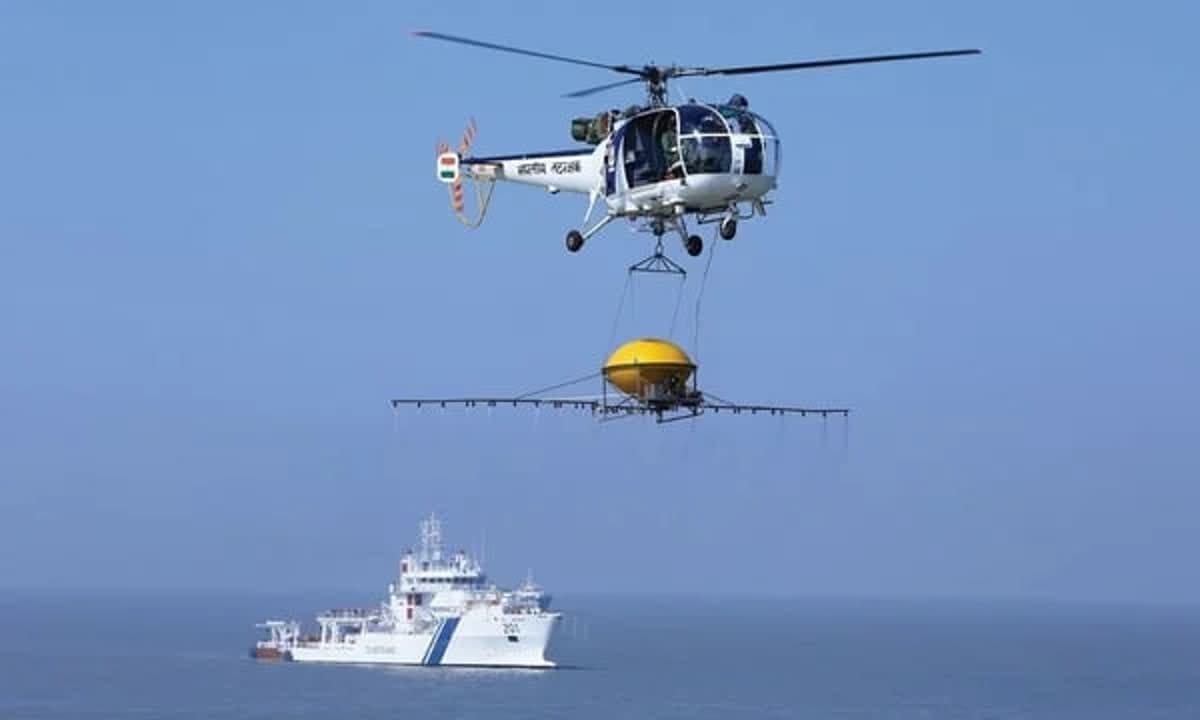
It is in the common interest of India and Australia to work together to deter activities that pose a threat to regional stability and order in the Indo‑Pacific. This requires them to develop capabilities to operate in conditions of increased ambiguity, involving not just navies but also maritime law agencies. Coast guards, as maritime law‑enforcement agencies, play an important role in ensuring law and order at sea through MDA, reporting maritime cyber‑attacks, protecting fisheries, combating piracy, and preventing illegal activities such as trafficking and poaching.
Institutionalizing engagements across their coast guard agencies can help strengthen the maritime security architecture of the Indo‑Pacific, without aggravating concerns about power competition, which smaller countries in the region are already wary of. There is precedent to this kind of cooperation: coast guard ships from both sides have previously conducted joint exercises, but these are often issue‑based and ad‑hoc. Australia’s participation as an observer in existing exercises, such as the Indian Coast Guard’s national‑level pollution response exercise conducted in October 2025, is a promising start, but more institutionalized cooperation is necessary.
A joint interoperability‑exercise format, similar to the one conducted between the Australian Border Force (ABF) and the United States Coast Guard, is ideally suited for this as it provides a valuable platform for sharing best practices and building coordination based on common values and operational priorities. This should take place alongside existing efforts to consolidate interoperability at the higher end of the spectrum of operations.
There are significant challenges to formalising Australia‑India bilateral coast guard cooperation, especially given Canberra’s multi‑jurisdictional approach to maritime security, with multiple agencies and departments coordinating responsibilities and competing for limited resources. Australia’s Maritime Border Command—enabled by ABF and the Australian Defence Force—is responsible for international cooperation with counterpart coast guards but has a predominantly domestic focus. The Indian Coast Guard also has limited expeditionary capability beyond the Indian Ocean waters and must compete with the Navy for resources necessary to expand international partnerships.
Nevertheless, growing Chinese assertiveness across the Indo‑Pacific has made like‑minded countries recognise the need for non‑maritime military cooperation, exemplified in the Quad‑at‑Sea Ship Observer Mission launched in 2025. The mission saw coast guard agencies from Japan, Australia, India, and the United States spend time on board a U.S. Coast Guard vessel operating in the Indo‑Pacific. This is aimed at improving interoperability and subsequently launching joint coast guard patrols and cooperative maritime operations across the region.
The future is poised to witness an increase in hybrid threats to maritime security across the Indo‑Pacific. A collaborative approach to law‑enforcement efforts in regional commons is crucial to secure shared interests. This necessitates expanding information sharing to combat transnational maritime crimes, facilitating coordinated search‑and‑rescue operations at sea, and conducting capacity‑ and capability‑building activities at the bilateral level. Such steps will elevate the maritime partnership and take the relationship to the next level.
Comments
Want to join the conversation?
Loading comments...