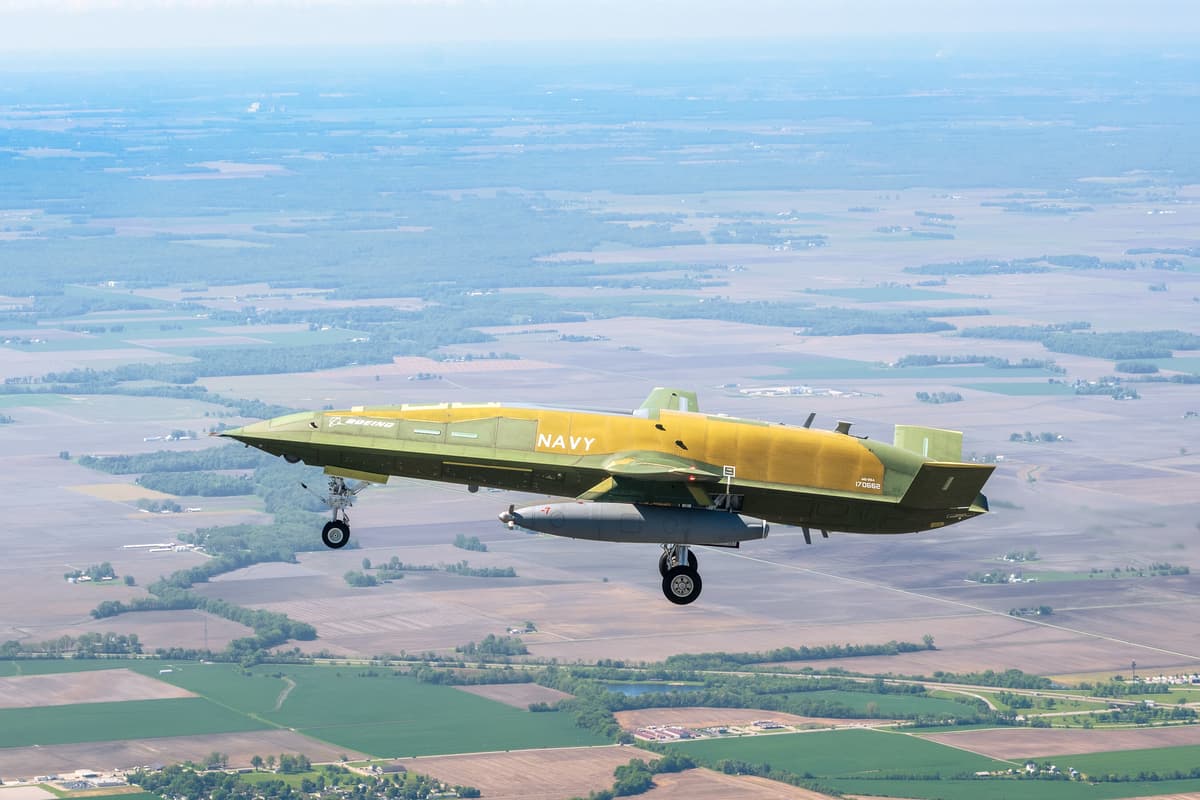
MQ-25A Stingray Cleared for Deployment, Says Cao
Companies Mentioned
Why It Matters
The MQ‑25A gives the Navy a decisive, cost‑effective way to extend carrier strike range while preserving valuable Super Hornet airframes, reshaping naval aviation logistics. Its deployment accelerates the shift toward unmanned support platforms across the fleet.
Key Takeaways
- •MQ-25A enters low-rate initial production after eight-year development.
- •Program aims for 72 drones at roughly $13 billion total cost.
- •First LRIP Lot will deliver three Stingrays this summer.
- •Unmanned refueling will free F/A‑18 Super Hornets for strike missions.
- •Carrier strike groups gain extended range and reduced aircraft wear.
Pulse Analysis
The MQ‑25A Stingray marks the Navy’s first operational carrier‑based unmanned aircraft, a milestone that follows nearly eight years of engineering, testing, and budget approvals. Developed by Boeing under an $805 million contract signed in 2018, the program has now reached Milestone C, authorizing transition from development to low‑rate initial production. This shift reflects a broader defense trend toward integrating autonomous systems for support roles, reducing reliance on manned platforms for routine tasks such as aerial refueling.
Financially, the Navy expects to spend roughly $13 billion to acquire 72 MQ‑25A drones, a figure that spreads the $805 million upfront investment across the fleet’s lifecycle. The first production lot of three aircraft, with options for additional units, is set for a summer award, signaling a rapid move toward fielding. By assuming the refueling burden, the Stingray frees F/A‑18 Super Hornets to concentrate on strike missions, extending the operational reach of carrier air wings while preserving airframe life and lowering maintenance costs.
Strategically, unmanned refueling enhances carrier strike group lethality, offering persistent, flexible fuel delivery without exposing crewed aircraft to additional risk. The technology paves the way for future unmanned logistics, such as cargo transport and electronic warfare pods, reshaping naval doctrine. Industry observers note that Boeing’s success could spur competition for the next generation of carrier‑based drones, while the Navy must address integration challenges, including command‑and‑control bandwidth and carrier deck handling procedures. Overall, the MQ‑25A’s deployment signals a decisive step toward a more autonomous, resilient maritime force.
MQ-25A Stingray cleared for deployment, says Cao
Comments
Want to join the conversation?
Loading comments...