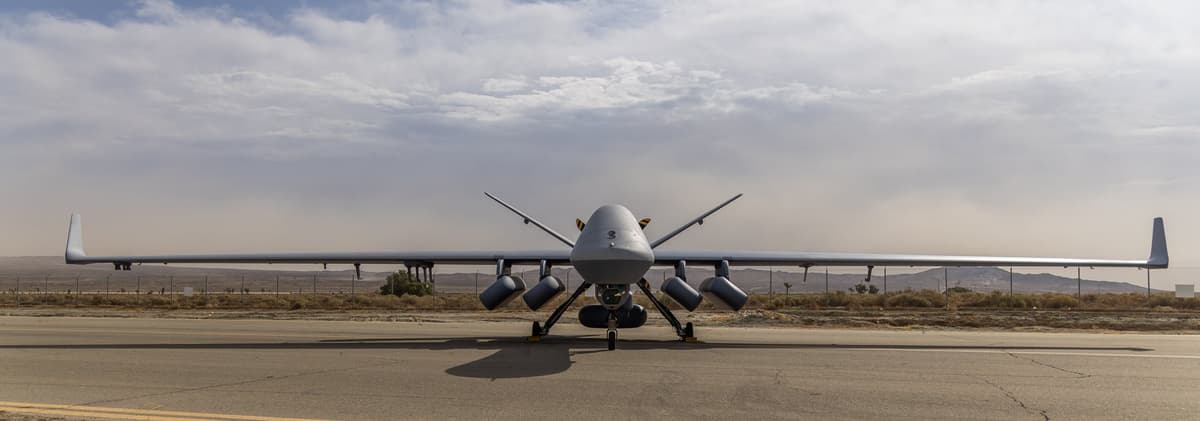
MQ-9B SeaGuardian: Enhancing Naval and Marine Corps Operations
Why It Matters
SeaGuardian delivers persistent, multi‑domain intelligence and affordable strike options, sharpening U.S. maritime superiority while easing budget pressures. Its modularity and allied adoption make it a force multiplier for joint and coalition missions.
Key Takeaways
- •MQ-9B provides 40‑hour endurance, longest in its class
- •First UAV to release multi‑static active coherent sonobuoys in 2025
- •STOL variant enables operations from short or improvised runways
- •Integrates LRASM and torpedoes for long‑range strike and anti‑submarine missions
- •Adopted by UK, Germany, Poland, Japan, Taiwan, India, boosting coalition interoperability
Pulse Analysis
The MQ‑9B SeaGuardian’s standout attribute is its endurance—up to 40 hours aloft—allowing continuous surveillance over vast maritime domains. Coupled with a multi‑mode radar, electro‑optical/infrared sensors, and signals‑intelligence payloads, the platform delivers real‑time, multi‑domain awareness that supports pre‑conflict deterrence and rapid decision‑making. Its ability to integrate seamlessly with carrier strike groups and expeditionary forces means commanders can maintain a persistent picture of littoral and open‑ocean activity without exposing crewed assets to risk.
In combat scenarios, the SeaGuardian’s versatility shines. The UAV became the first to dispense multi‑static active coherent sonobuoys, doubling its payload to 40 buoys and enhancing anti‑submarine warfare alongside P‑8A Poseidon aircraft. A forthcoming STOL version will operate from improvised runways, expanding reach into contested or disaster‑stricken regions. Weapon integration plans—including the AGM‑158C LRASM and torpedoes—transform the drone from a pure ISR platform into a lethal strike asset capable of engaging surface and underwater threats from beyond defended airspace.
Beyond capability, the SeaGuardian offers a cost‑effective path to modernizing naval ISR and strike. Its mature airframe and open‑architecture payloads lower lifecycle expenses compared with new manned platforms, a critical advantage amid tightening defense budgets. Adoption by allies such as the United Kingdom, Germany, Japan, and India deepens interoperability, ensuring coalition forces can share data and coordinate actions seamlessly. As the U.S. pivots toward distributed maritime operations, the MQ‑9B stands out as a strategic enabler that balances performance, affordability, and partnership value.
MQ-9B SeaGuardian: Enhancing Naval and Marine Corps Operations
Comments
Want to join the conversation?
Loading comments...