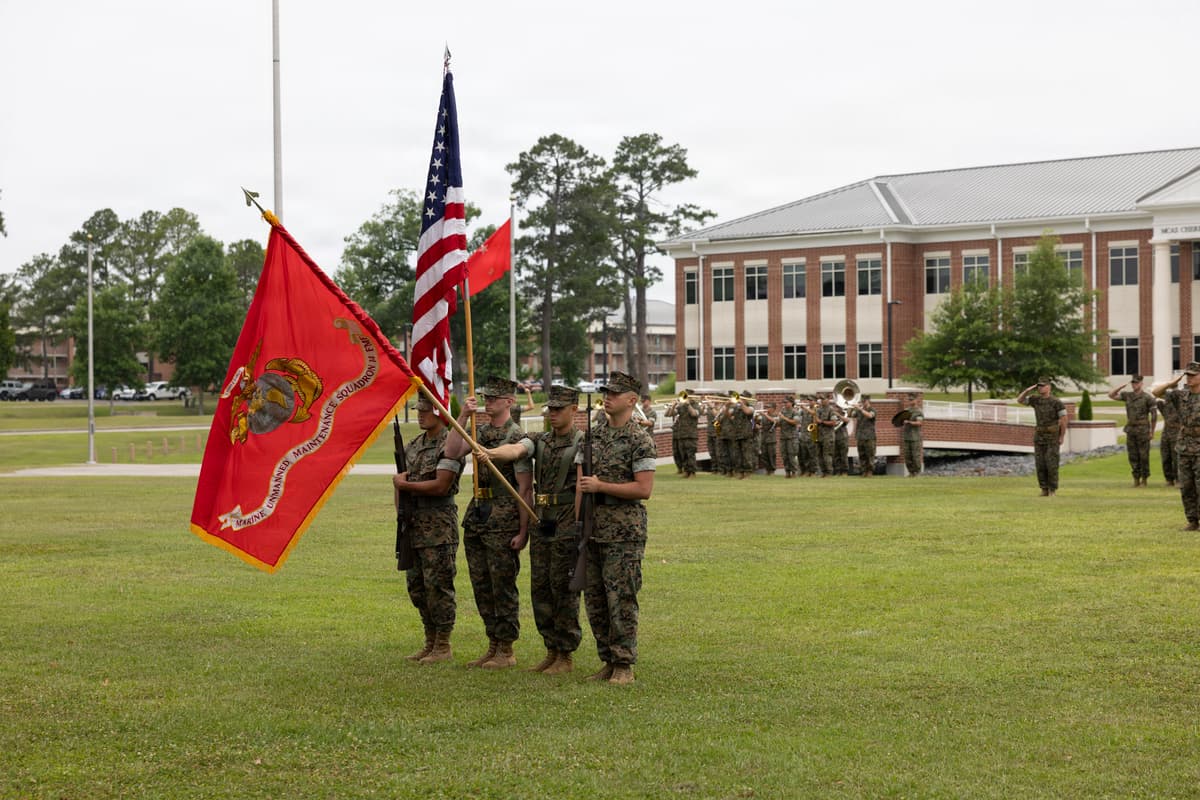
‘MUMS’ the Word: Corps Stands up First Ever Marine Unmanned Maintenance Squadron
Why It Matters
Embedding UAV maintenance within the Marine Corps reduces reliance on external logistics, boosting aircraft availability and intelligence‑gathering speed for forward‑deployed operations.
Key Takeaways
- •MUMS-14 is Marine Corps' first dedicated UAV maintenance squadron
- •Unit supports MQ‑9 Reaper operations across forward‑deployed combat zones
- •Enhances expeditionary ISR, surveillance, and targeting for Marine Air‑Ground Task Force
- •Led by Lt. Col. Jeffrey Carben with Sgt. Maj. Tavaris Douglas
- •Reduces downtime, improves UAV readiness and deterrence posture
Pulse Analysis
The activation of Marine Unmanned Maintenance Squadron 14 marks the first time the Marine Corps has created a unit solely devoted to keeping its unmanned aerial systems flight‑ready. Historically, UAV upkeep has relied on joint logistics or ad‑hoc detachments, which can introduce delays when aircraft are needed in austere environments. By embedding maintenance expertise within the 2nd Marine Aircraft Wing, the service gains a dedicated cadre of technicians trained on the MQ‑9 Reaper’s complex airframe, sensors, and weapons interfaces. This structural change reflects a broader trend toward self‑sufficiency in expeditionary aviation.
From an operational standpoint, MUMS‑14 directly enhances the Marine Air‑Ground Task Force’s intelligence, surveillance, reconnaissance and targeting (ISTAR) capabilities. The MQ‑9’s long endurance and payload flexibility make it a force multiplier for forward‑deployed units, but only if the aircraft can be serviced quickly after each sortie. With a squadron stationed at Cherry Point, maintenance cycles can be compressed, aircraft availability increased, and mission‑critical data delivered faster to ground commanders. The unit also provides a training pipeline for Marines to master UAV diagnostics, fostering a skilled workforce that can be deployed alongside combat elements.
The establishment of a dedicated unmanned maintenance squadron signals a shift in how the U.S. services will field autonomous platforms in the coming decade. As the Pentagon pushes for greater integration of drones across all domains, having organic sustainment capabilities reduces reliance on Army or Air Force support and shortens the logistics tail. It also positions the Marine Corps to expand its UAV portfolio beyond the MQ‑9, potentially incorporating smaller tactical drones for close‑in support. However, scaling this model will require sustained investment in training, spare‑parts supply chains, and cyber‑resilience to protect mission‑critical software.
‘MUMS’ the word: Corps stands up first ever Marine unmanned maintenance squadron
Comments
Want to join the conversation?
Loading comments...