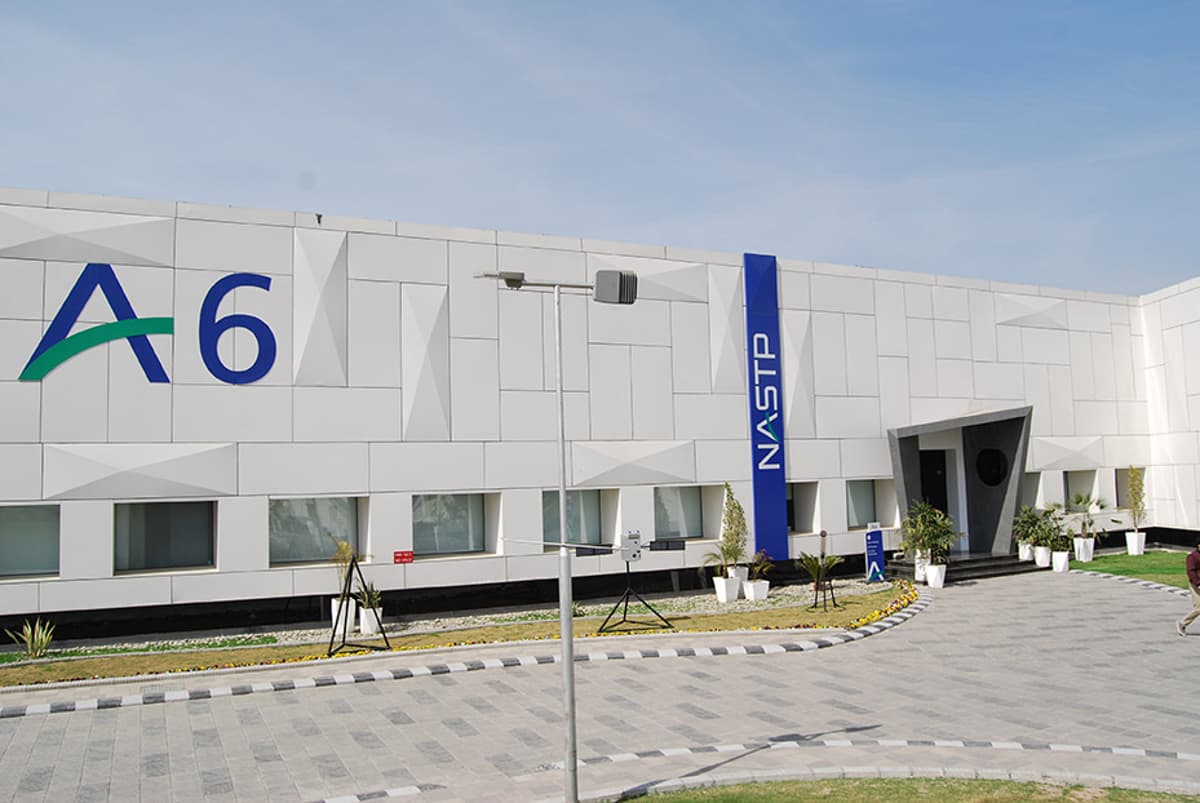
NASTP Is the Pakistan Air Force’s Lead Integrator
Companies Mentioned
Why It Matters
By centralizing design and integration, NASTP reduces reliance on foreign OEMs and positions the PAF to indigenously field advanced avionics, radar and unmanned systems, reshaping regional defence self‑sufficiency.
Key Takeaways
- •NASTP proposes structural upgrades for F‑16, JF‑17, Saab 2000
- •New AESA radar concept unveiled for JF‑17 platform
- •Radar and EW programs use common GaN modules
- •Inside‑out model shifts R&D inward, production outward
Pulse Analysis
The Pakistan Air Force’s National Aerospace Science and Technology Park (NASTP) is rapidly becoming the service’s go‑to design and integration house. Recent low‑resolution sketches reveal a three‑track upgrade strategy: modest structural and subsystem refreshes for legacy F‑16s, a more ambitious AESA radar retrofit for the JF‑17, and similar enhancements for the Saab 2000. These proposals align with recent U.S. approvals for new tactical datalinks, suggesting that NASTP is not only modernising airframes but also weaving the PAF into emerging network‑centric warfare architectures.
NASTP’s broader portfolio underscores a deliberate shift toward an “inside‑out” defence model. By consolidating radar, electronic warfare, and loitering‑munition development under one bureau, the PAF can standardise on gallium‑nitride (GaN) transmit/receive modules across land‑based, airborne and platform‑specific radars. This commonality accelerates production, cuts costs, and densifies low‑altitude surveillance—critical for closing coverage gaps in the country’s ISTAR network. Moreover, the bureau’s work on one‑way attack munitions and EW suites gives the PAF a proprietary edge in autonomous strike and electronic‑counter‑measure capabilities.
Looking ahead, NASTP’s trajectory hints at a future where Pakistan not only integrates foreign systems but also designs and possibly manufactures its own aircraft. Partnerships with firms like Baykar could provide the technology transfer needed for a domestic UCAV programme, while the separation of NASTP’s R&D from Pakistan Aeronautical Complex’s (PAC) maintenance focus streamlines the value chain. If successful, this model will lower lifecycle costs, retain engineering talent, and position the PAF as a more self‑reliant player in South Asian air power dynamics.
NASTP Is the Pakistan Air Force’s Lead Integrator
Comments
Want to join the conversation?
Loading comments...