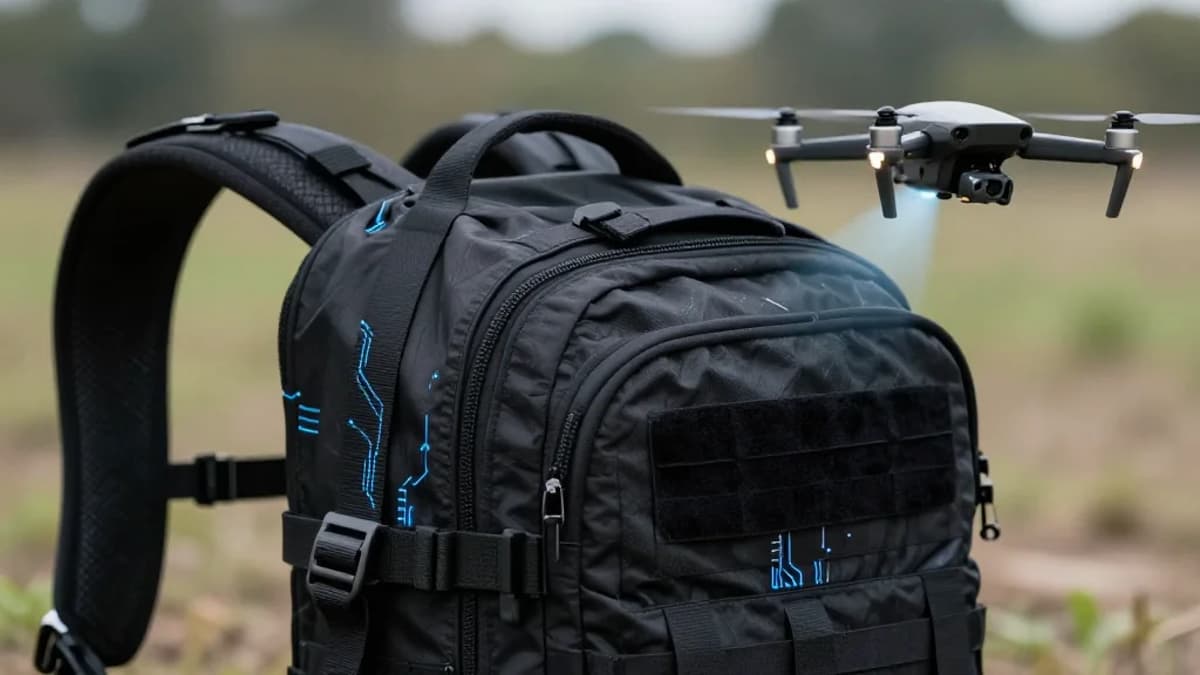
National Guard Member’s Invention Allows Cyber Warfare Training on the Go
•March 3, 2026
0
Why It Matters
ACTE democratizes cyber‑range access, boosting training frequency and readiness across dispersed units. Its portability addresses critical capability gaps in rapid threat response.
Key Takeaways
- •Portable ACTE fits in a backpack
- •Enables on‑the‑move cyber training
- •Reduces infrastructure and approval delays
- •Supports drone photogrammetry for image analysis
- •Adopted by Massachusetts Air Guard, joint exercises
Pulse Analysis
The modern battlefield increasingly relies on digital dominance, yet traditional cyber ranges demand extensive infrastructure, secure networks, and lengthy approval processes. These constraints slow the pace at which service members can practice emerging threat scenarios, creating a readiness gap. Mobile solutions like the Agile Cyber Training Environment (ACTE) directly confront this bottleneck by compressing a full‑scale cyber lab into a transportable package, allowing squads to train in field conditions without waiting for centralized facilities.
ACTE’s design leverages off‑the‑shelf hardware, open‑source software, and integrated photogrammetry capabilities to ingest drone‑captured imagery for realistic scenario building. By simulating both offensive and defensive tactics, the system provides a sandbox where airmen, Army personnel, and law‑enforcement partners can rehearse coordinated responses to cyber incidents. Its affordability and ease of deployment mean training hours can increase dramatically, turning previously idle periods into valuable practice windows. Moreover, the ability to process aerial data on‑site enhances situational awareness, bridging the gap between physical reconnaissance and cyber analysis.
Beyond immediate training benefits, ACTE signals a shift toward decentralized, agile cyber readiness across the U.S. military. As other branches observe the Massachusetts Guard’s success, similar portable labs could become standard issue, fostering inter‑service interoperability and faster innovation cycles. The system’s alignment with the Air Force’s Spark Tank initiative underscores a broader institutional push to empower enlisted innovators, ensuring that cutting‑edge tools keep pace with the rapidly evolving threat landscape.
National Guard member’s invention allows cyber warfare training on the go
0
Comments
Want to join the conversation?
Loading comments...