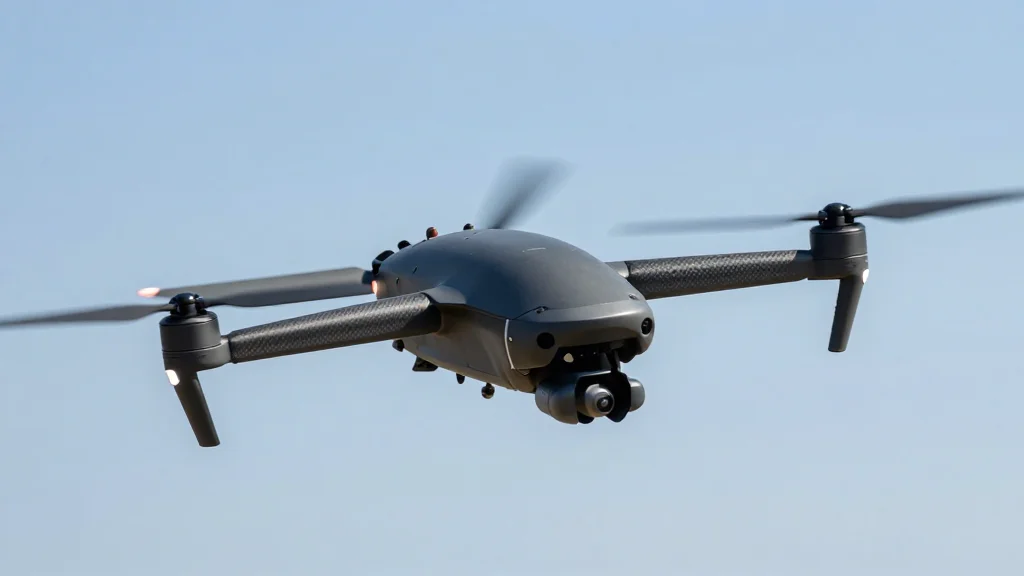
NATO Countries Test Canadian-Made, High-Speed “Cannibal” Drone
Why It Matters
Anuri gives NATO a rapid, cost‑effective tool against the surge of fast, low‑cost drones, bolstering collective air‑defence resilience. Its adoption could set a new standard for affordable CUAS solutions across allied forces.
Key Takeaways
- •NATO evaluates Canada’s Anuri drone for high‑speed UAV threats
- •Anuri intercepts drones up to 400 km/h within 80 seconds
- •Operational range reaches 5 km, suitable for frontline protection
- •INKAS markets the system as an affordable CUAS option
- •First joint NATO testing follows CANSEC 2026 debut
Pulse Analysis
The rapid proliferation of commercial and hobbyist drones has forced militaries to rethink air‑defence strategies. Traditional surface‑to‑air missiles are costly and often over‑kill for low‑tech threats, prompting a surge in dedicated counter‑uncrewed aerial systems (CUAS). Canada’s INKAS Aerospace entered this niche with the Anuri, a “cannibal” drone that uses a smaller interceptor to chase and destroy hostile UAVs. By leveraging off‑the‑shelf components and a modular design, Anuri promises a lower price point than legacy solutions while maintaining the speed needed to engage fast‑moving first‑person‑view (FPV) drones that can exceed 400 km/h.
NATO’s decision to test Anuri reflects a broader alliance shift toward interoperable, budget‑friendly defenses. The 5‑kilometer engagement envelope and sub‑80‑second time‑to‑target align with the rapid‑reaction requirements of forward operating bases and critical infrastructure. If the trials prove successful, member states could integrate Anuri into existing air‑defence networks, complementing radar‑based detection with a kinetic kill option that scales to both small‑scale incursions and coordinated swarm attacks. This could also stimulate competition among CUAS vendors, driving innovation and price reductions across the market.
Beyond the immediate tactical benefits, Anuri’s development underscores Canada’s growing role in the global defense supply chain. By showcasing the system at CANSEC 2026, INKAS positioned the country as a hub for agile, export‑ready military tech. Successful NATO adoption would not only generate export revenue but also encourage further investment in domestic research and manufacturing capabilities. For allied forces, the prospect of a cost‑effective, high‑speed drone interceptor could reshape procurement strategies, prioritizing flexibility and affordability over legacy, high‑cost platforms.
NATO countries test Canadian-made, high-speed “cannibal” drone
Comments
Want to join the conversation?
Loading comments...