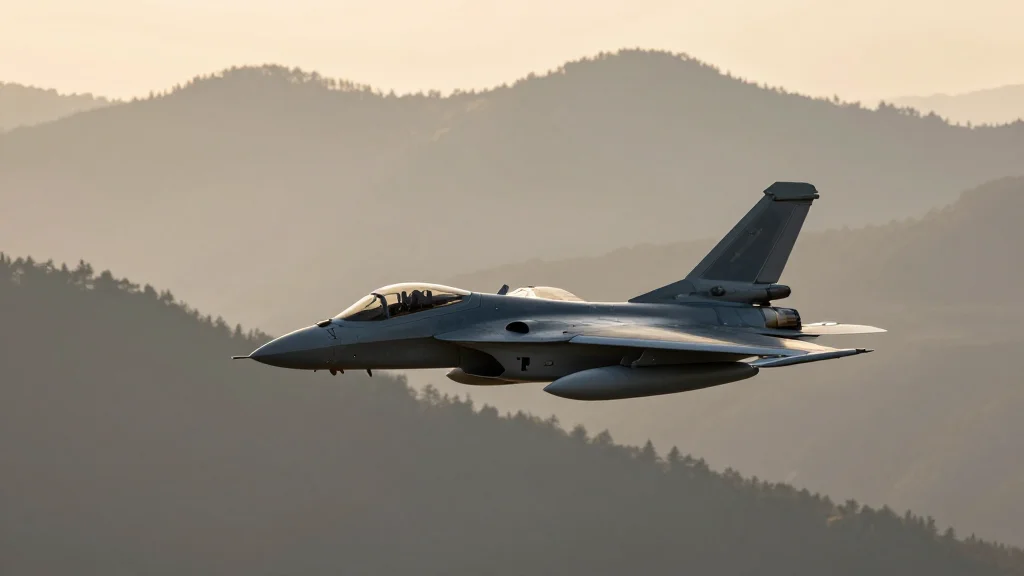
NATO Launches Ramstein Flag 2026 Near Russia as Israel‑Iran Tensions Ease

Why It Matters
The Ramstein Flag 2026 exercise signals NATO’s commitment to collective defense on its eastern flank, directly confronting Russian strategic calculations. By staging a large‑scale, multi‑domain operation near Russia, the alliance demonstrates readiness to respond to any aggression, reinforcing the credibility of Article 5 commitments. Simultaneously, the Israel‑Iran cease‑fire temporarily stabilizes global energy markets, but the underlying rivalry threatens to reignite, potentially drawing in regional powers and complicating U.S. diplomatic efforts. The juxtaposition of European and Middle Eastern flashpoints underscores the interconnected nature of modern security challenges, where actions in one theater reverberate across global supply chains and geopolitical alignments.
Key Takeaways
- •NATO’s Ramstein Flag 2026 involves >200 aircraft from 18 allies, operating near Russia’s border.
- •Exercise includes a northern component targeting Russian airspace and a southern hub in Spain for maritime interdiction.
- •Israel and Iran announced a mutual halt to attacks on June 9, easing oil prices by >2 % and stabilizing gold.
- •Brent crude fell to $92.33 per barrel; spot gold steadied at $4,329.44 per ounce.
- •Azerbaijan denied hosting Israeli operations against Iran, calling claims "entirely baseless."
Pulse Analysis
NATO’s decision to launch Ramstein Flag 2026 at a time of heightened East‑West tension is a calculated risk. Historically, large‑scale drills near an adversary’s border have served both as training and signaling tools—think of the 1983 Able Archer exercise that nearly sparked a nuclear alert. This time, the alliance appears intent on showcasing a seamless integration of air, land, and sea assets, a response to Russia’s own emphasis on hybrid warfare and rapid mobilization. By embedding a maritime interdiction scenario in the southern component, NATO is also rehearsing enforcement of the EU’s sanctions regime, a non‑kinetic lever that has become increasingly central to Western strategy.
The Israel‑Iran cease‑fire, while welcomed by markets, is fragile. Both sides have demonstrated a willingness to launch precision strikes that can quickly spiral. The pause may reflect a tactical recalibration rather than a strategic shift, especially as each side tests the other's red lines. For the United States, the dual challenge of supporting NATO’s deterrence posture while managing a volatile Middle East requires a delicate balance of diplomatic outreach and credible military backing. Any misstep could reignite a broader conflict that would strain NATO’s resources and test the alliance’s resolve.
Looking ahead, the key question is whether NATO can convert the show of force into sustained pressure that deters Russian aggression without provoking a direct confrontation. In the Middle East, the durability of the Israel‑Iran truce will hinge on external mediation—potentially by the United States or regional actors like Qatar—and on the ability of both sides to manage domestic political pressures that favor a hardline stance. The convergence of these two flashpoints illustrates the modern security environment: multi‑theater, high‑speed, and deeply interlinked, demanding coordinated responses across diplomatic, economic, and military domains.
NATO Launches Ramstein Flag 2026 Near Russia as Israel‑Iran Tensions Ease
Comments
Want to join the conversation?
Loading comments...