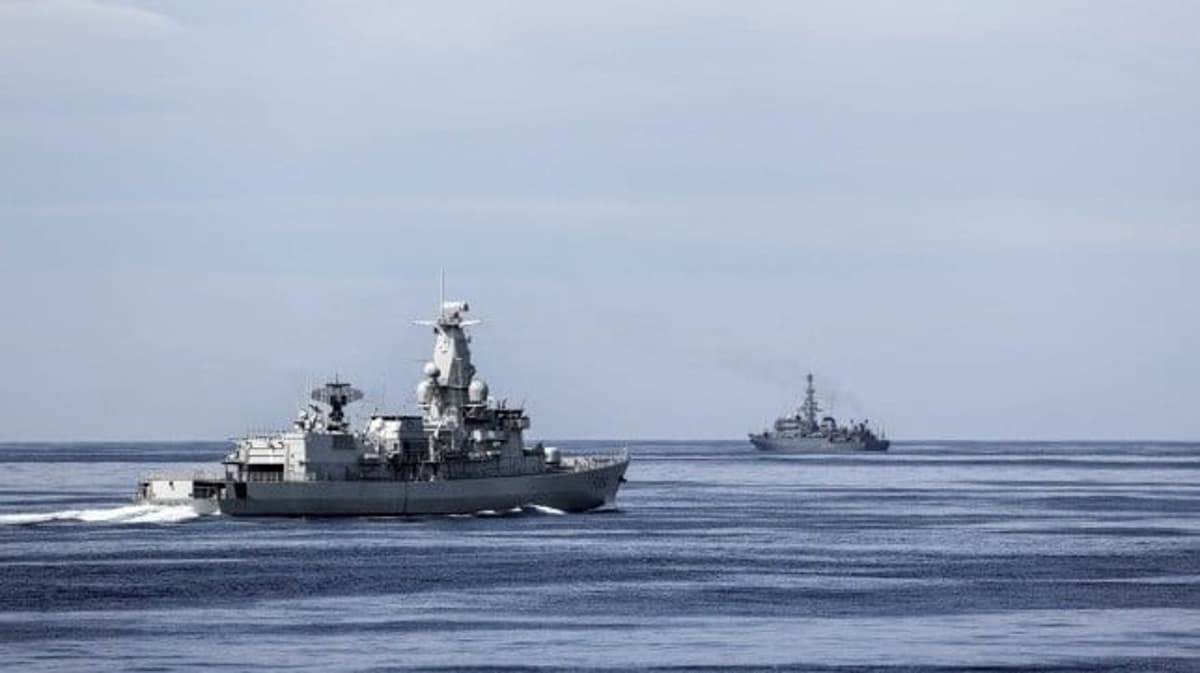
NATO Monitors Russian Surveillance Ship Loitering Near NATO Exercise
Why It Matters
The encounter reveals how Russian intelligence assets seek real‑time data during NATO’s high‑profile drills, prompting tighter counter‑surveillance measures and highlighting maritime security challenges in the North Atlantic and Arctic regions.
Key Takeaways
- •Yuri Ivanov, a 4,000‑ton Russian intelligence ship, shadowed NATO drills
- •Dynamic Mongoose 2026 involves nine NATO allies in Norway's cold waters
- •NATO assigned Portuguese frigate and UK Merlin helicopter to monitor the vessel
- •The ship’s sister vessel operates in the Black Sea, targeted by Ukraine
Pulse Analysis
Dynamic Mongoose 2026, NATO’s most demanding maritime exercise this year, kicked off on May 18 off Norway’s coast and will run through May 26. The drill brings together warships, submarines and maritime patrol aircraft from nine member states, testing anti‑submarine warfare, surface combat and joint command capabilities in the frigid Norwegian Sea. By staging such a large‑scale operation, NATO aims to demonstrate interoperability and deter aggression in a region where Russian naval activity has been increasing. The exercise also integrates live‑fire scenarios, reinforcing NATO’s rapid response posture.
During the exercise NATO identified the Russian intelligence‑collection vessel Yuri Ivanov, a 95‑meter, 4,000‑ton ship commissioned in 2015 with a crew of roughly 120. The vessel, one only two of its class, lingered near the NATO fleet, prompting commanders to task the Portuguese frigate Francisco De Almeida and a Merlin Mk2 helicopter from HMS Prince of Wales with close monitoring. Its sister ship operates in the Black Sea, where it has already been targeted by Ukrainian forces, underscoring Moscow’s reliance on maritime surveillance platforms. Such monitoring allows NATO to assess potential electronic warfare threats posed by the vessel.
The presence of Yuri Ivanov highlights the cat‑and‑mouse dynamic that accompanies high‑profile NATO drills, where adversaries seek real‑time intelligence while allies sharpen detection skills. By assigning dedicated assets to shadow the Russian ship, NATO not only gathers data on its electronic‑reconnaissance capabilities but also sends a clear signal of vigilance to Moscow. Analysts expect future exercises to feature even tighter counter‑surveillance measures, as the Baltic and Arctic theatres become increasingly contested and the need for robust maritime domain awareness grows. Enhanced tracking of foreign intelligence ships will likely become a standard element of NATO’s maritime training syllabus.
NATO Monitors Russian Surveillance Ship Loitering Near NATO Exercise
Comments
Want to join the conversation?
Loading comments...