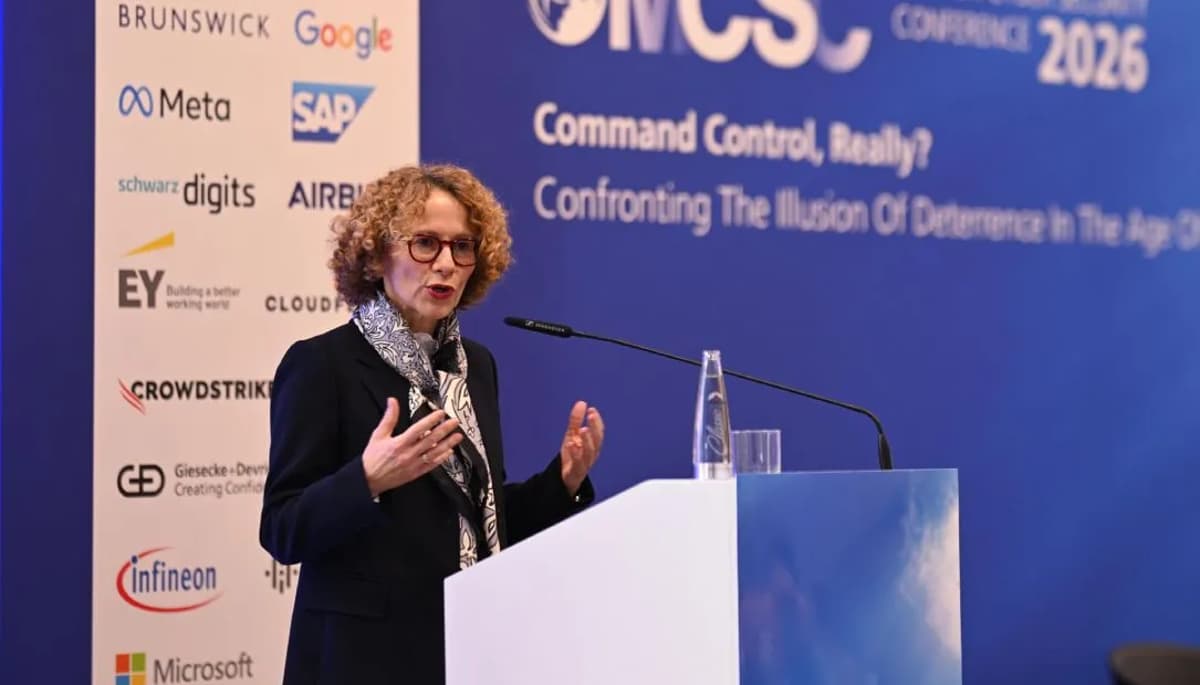
NATO Must Impose Costs on Russia, China over Cyber and Hybrid Attacks, Says Deputy Chief
•February 13, 2026
0
Why It Matters
The statement signals NATO’s shift from passive cyber defence to active deterrence, reshaping security budgets and alliance coordination in the digital domain.
Key Takeaways
- •NATO targets costlier cyber attacks from Russia, China
- •Poland’s energy grid faced December cyber disruption attempt
- •Allies pledge 5% GDP defense spending, 1.5% for cyber resilience
- •New integrated cyber defense center to unite military, civilian, industry
- •Ambiguities in resilience spending risk creative accounting
Pulse Analysis
NATO’s cyber strategy is entering a new phase as adversaries blend physical and digital aggression. Russia and China are increasingly sharing dual‑use technologies and offensive cyber tools, creating a "blurred" responsibility landscape that complicates attribution. Recent incidents, such as the thwarted attack on Poland’s power grid, illustrate how cyber‑enabled hybrid tactics can threaten critical infrastructure and erode public confidence. By publicly committing to impose costs on hostile actors, NATO aims to shift the risk calculus, signalling that retaliation will be swift and coordinated.
The alliance’s financial roadmap reflects this strategic pivot. At the Hague summit, NATO members agreed to lift total defence spending to 5% of GDP within a decade, allocating an additional 1.5% to indirect defence and resilience, including cyber capabilities. However, the lack of a standardized definition for resilience spending raises concerns about “creative accounting,” where existing programmes might be re‑labelled rather than expanded. Transparent metrics and audit mechanisms will be essential to ensure that new funds translate into genuine capability growth rather than budgetary gymnastics.
Operationally, NATO is bolstering its cyber posture through institutional innovations. The newly announced integrated cyber defence centre will co‑locate military, civilian, and industry experts to assess vulnerabilities, analyse threats, and advise commanders on both battlefield and civilian network risks. This collaborative model seeks to break down silos, accelerate information sharing, and foster rapid, coordinated responses. As cyber threats continue to evolve, NATO’s emphasis on partnership, investment, and deterrence aims to safeguard member states’ critical infrastructure and maintain strategic stability in the digital age.
NATO must impose costs on Russia, China over cyber and hybrid attacks, says deputy chief
0
Comments
Want to join the conversation?
Loading comments...