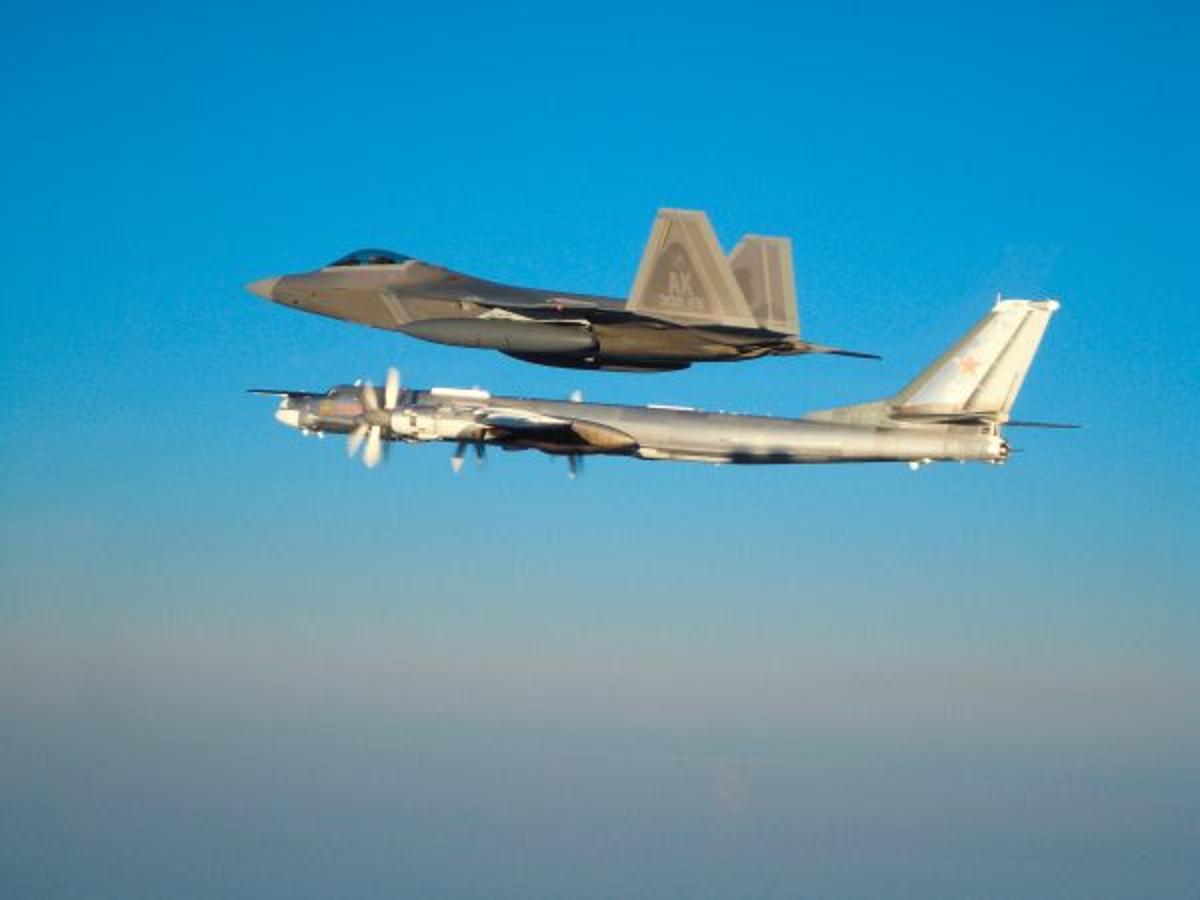
NATO Scrambles a Dozen Aircraft as Russian Warplanes Approach Alaska
•March 5, 2026
0
Why It Matters
The sizable scramble signals heightened NATO vigilance in the Arctic and underscores U.S. resolve amid escalating U.S.–Russia tensions, while reinforcing the strategic value of the ADIZ as a buffer zone.
Key Takeaways
- •NORAD deployed twelve aircraft, including F‑35s and F‑22s.
- •Two Russian Tu‑142s entered Alaska and Canada ADIZ.
- •First joint F‑35/F‑22 scramble since 2024.
- •Response coincides with Operation Epic Fury, Arctic Edge 26.
- •Russian aircraft stayed outside sovereign airspace, deemed non‑threatening.
Pulse Analysis
The Alaskan and Canadian Air Defense Identification Zones (ADIZ) serve as the first line of detection for any aircraft approaching North American airspace. By intercepting two Russian Tu‑142 maritime patrol planes before they could breach sovereign airspace, NORAD demonstrated the effectiveness of its integrated surveillance network, which blends radar, satellite, and airborne early‑warning assets. The inclusion of fifth‑generation fighters such as the F‑35A and F‑22 underscores a shift toward rapid, high‑performance response capabilities in a region where distances are vast and reaction times are critical.
Beyond the immediate tactical success, the deployment carries strategic weight. The joint scramble of U.S. and Canadian assets, especially the rare pairing of F‑35s with F‑22s, sends a clear message to Moscow that NATO’s northern flank remains resolute. This posture aligns with broader U.S. objectives, including Operation Epic Fury’s focus on deterring Iranian aggression, and reflects a coordinated effort to project power across multiple theaters simultaneously. By matching the scale of the 2024 Russian‑Chinese bomber interception, the response also signals that any perceived escalation in the Arctic will be met with proportionate force.
The incident occurs during Arctic Edge 26, a multinational exercise that tests interoperability among U.S., Canadian, and allied forces in extreme environments. As climate change opens new maritime routes, the Arctic’s strategic importance is rising, prompting both NATO and Russia to increase their presence. The measured yet robust reaction by NORAD not only safeguards North American airspace but also reinforces the credibility of collective defense commitments, setting a precedent for future engagements in a region where geopolitical competition is intensifying.
NATO Scrambles a Dozen Aircraft as Russian Warplanes Approach Alaska
0
Comments
Want to join the conversation?
Loading comments...