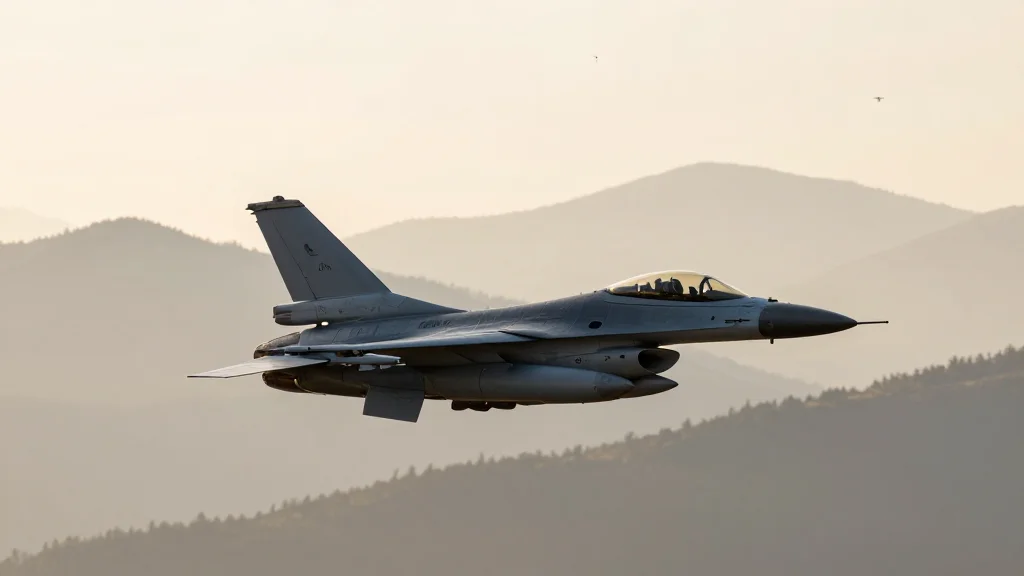
NATO Scrambles Fighter Jets as Russian Drones Violate Romanian Airspace

Why It Matters
The surge in Russian drone activity near Romania highlights a widening of the conflict beyond Ukraine’s borders, testing NATO’s collective defence commitments under Article 5. Repeated airspace violations force the alliance to allocate valuable fighter resources to a peripheral front, potentially stretching air‑defence coverage elsewhere in Europe. If unchecked, the growing tempo could embolden Moscow to target other NATO members’ airspace, raising the risk of accidental engagements and a broader escalation. Strengthening radar, interceptor capabilities, and rules of engagement now could prevent a future crisis that forces NATO into a direct combat role against Russian unmanned systems.
Key Takeaways
- •Romania recorded 7 Russian drone airspace violations by April 28, 2026
- •18 NATO "Air Policing" fighter scrambles occurred in the same period
- •Incursions stem from 25 Russian attacks on Ukrainian targets near the Danube
- •2026 figures already approach 2025’s record highs for violations and scrambles
- •NATO is reviewing air‑defence posture on its southeastern flank
Pulse Analysis
The Romanian data points to a strategic shift in Russia’s use of unmanned aerial systems: from a Ukraine‑centric campaign to a broader pressure tool against NATO’s periphery. By exploiting the thin Danube corridor, Moscow forces the alliance to divert air assets that would otherwise support operations in Central Europe or the Baltic region. This diffusion of effort could dilute NATO’s rapid‑response capability, especially if similar patterns emerge along other frontiers.
Historically, NATO’s air‑policing missions have been reactive, scrambling fighters only after a breach is detected. The current trend suggests a need for a more proactive posture—integrating forward‑deployed AWACS, layered surface‑to‑air missiles, and perhaps autonomous interceptors to counter swarms of cheap, low‑observable drones. Such investments would not only protect member airspace but also send a deterrent signal to Moscow that any spill‑over will be met with a coordinated, high‑cost response.
In the medium term, the alliance may consider formalising engagement rules that allow member states to neutralise hostile UAVs over their own territory without awaiting NATO‑wide approval. This would reduce decision‑making latency and limit the risk of a drone slipping through the defensive net. As the conflict in Ukraine drags on, the Romanian experience serves as a bellwether for how unmanned threats could reshape NATO’s collective defence doctrine, compelling a recalibration of resources, doctrine, and political resolve.
NATO Scrambles Fighter Jets as Russian Drones Violate Romanian Airspace
Comments
Want to join the conversation?
Loading comments...