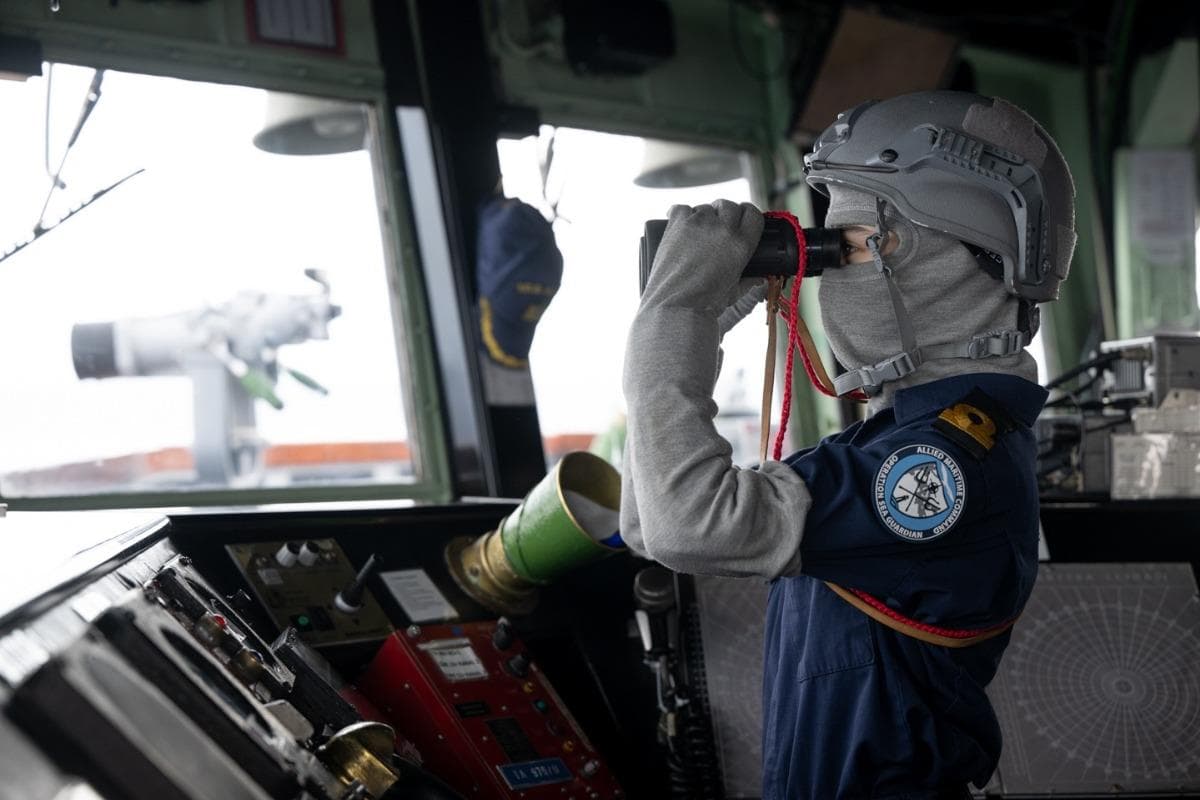
NATO Warships and Submarines Patrol Eastern Med
•February 12, 2026
0
Key Takeaways
- •NATO completed first 2026 Sea Guardian deployment, Eastern Mediterranean
- •Turkish flagship Gaziantep logged 300+ ISR hours, 100+ hailings
- •Greece, Italy, Turkey submarines provided undersea surveillance
- •US, Greece, Turkey contributed 50+ flight hours air support
- •Georgian Coast Guard trained on NATO boarding aboard Gaziantep
Summary
NATO completed its first focused Operation Sea Guardian deployment of 2026, patrolling the Eastern Mediterranean from 21 January to 9 February. The Turkish frigate TCG Gaziantep led a mixed force of surface ships, submarines and air assets, delivering over 300 hours of ISR and more than 100 hailings of commercial vessels. Air support from Greece, Turkey and the United States added roughly 50 flight hours, while submarines from Greece, Italy and Turkey provided under‑sea surveillance. The mission also incorporated Georgian Coast Guard personnel for joint boarding training, underscoring alliance‑wide cooperation.
Pulse Analysis
The Eastern Mediterranean has become a focal point for geopolitical competition, energy projects, and migration flows, prompting NATO to reinforce its maritime posture. Operation Sea Guardian, the alliance’s standing Mediterranean security mission, was launched in 2016 to deter terrorism, protect sea lanes, and improve situational awareness. The 2026 deployment, running from 21 January to 9 February, marked the first focused sortie of the year, underscoring NATO’s commitment to a coordinated presence amid rising regional tensions. By integrating surface ships, submarines, and air platforms, the alliance seeks a layered defence that can respond swiftly to emerging threats.
The Turkish frigate TCG Gaziantep served as the flagship, conducting more than 300 hours of intelligence, surveillance and reconnaissance and issuing over 100 hailings to commercial vessels in English and Arabic. Air support from Greece, Turkey and the United States added roughly 50 flight hours, including airborne early‑warning and maritime patrol missions that expanded the detection envelope. Submarines from Greece, Italy and Turkey operated beneath the surface, providing under‑sea surveillance that complemented surface and aerial data. This multi‑domain approach generated a comprehensive operational picture, enhancing NATO’s ability to identify illicit activity and potential terrorist movements.
The deployment also highlighted NATO’s partnership model, with a Georgian Coast Guard team joining the Turkish crew for boarding and weapons‑familiarisation drills. Such joint training builds interoperability and signals to regional actors that the alliance can integrate non‑member forces into its security framework. By maintaining a visible, capable presence, NATO aims to deter hostile actions, safeguard critical energy corridors, and reassure member states of collective defence commitments. Looking ahead, the alliance is likely to expand Sea Guardian’s scope, incorporating more advanced ISR platforms and deeper engagement with Mediterranean partners to address evolving maritime challenges.
Comments
Want to join the conversation?