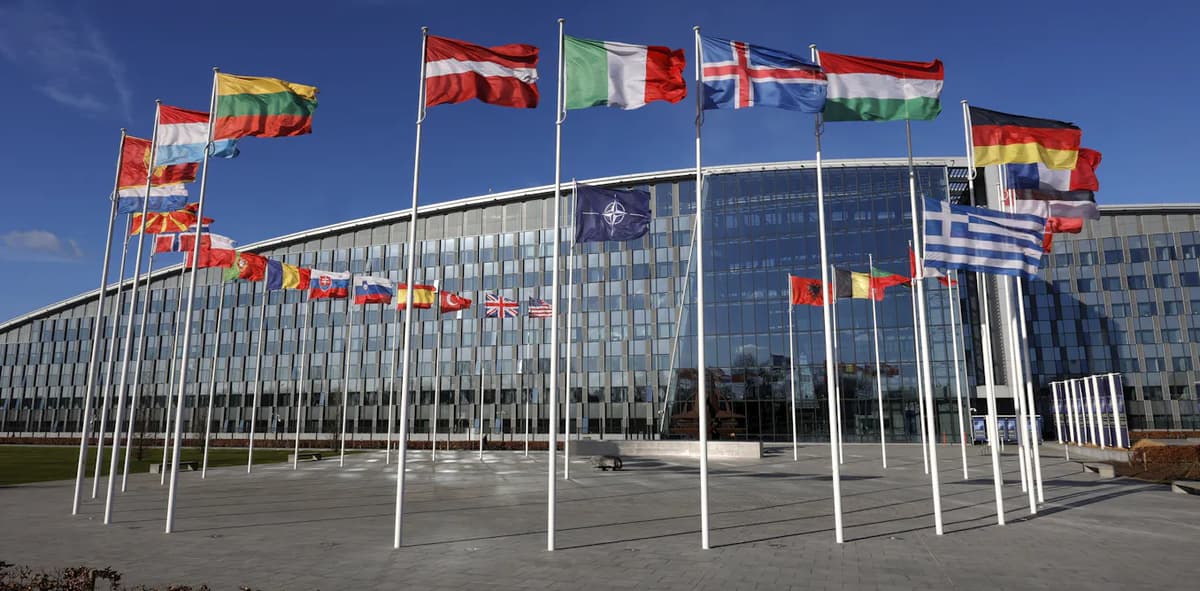
NATO Would Survive a US Withdrawal. But What Kind of Alliance Would It Become?
Why It Matters
NATO’s ability to deter Russia and manage regional crises hinges on whether Europe can effectively replace U.S. security guarantees, reshaping the alliance’s relevance in a multipolar security environment.
Key Takeaways
- •US pullout of 5,000 troops from Germany strains NATO cohesion
- •Europe pushes “NATO 3.0” to assume larger conventional deterrence role
- •E3 and E5 minilateral groups accelerate coordination among leading European militaries
- •Alliance may narrow focus to collective defence, sidelining crisis management
- •Indo‑Pacific IP4 partnership ties defence industry cooperation to NATO’s deterrence
Pulse Analysis
Washington’s recent decision to withdraw 5,000 troops from Germany, halt a 4,000‑person deployment to Poland and consider suspending Spain has forced NATO to confront an unprecedented leadership vacuum. While the Trump administration frames these moves as a push for European self‑reliance, the abrupt reduction of American boots on the ground erodes the credibility of the alliance’s extended deterrence guarantee that has underpinned European security since the Cold War. Member states now face the practical question of how to fill the operational gaps left by Washington’s retreat.
Washington’s “NATO 3.0” blueprint, unveiled by Under‑Secretary Elbridge Colby, envisions Europe shouldering the bulk of conventional deterrence while the United States concentrates on strategic competition with China. The proposal has accelerated the emergence of minilateral clubs such as the E3 (Britain, France, Germany) and the newer E5 (adding Italy and Poland), which aim to synchronize procurement, training and rapid‑reaction forces. Yet, without a unifying American strategic anchor, these groups must navigate divergent threat perceptions—from Russian aggression in the east to instability on the southern flank—making coherent alliance policy increasingly fragile.
The long‑term shape of NATO will hinge on whether Europe can translate greater fiscal and operational autonomy into a credible collective defence posture. A narrowed focus on deterring Russia could preserve the core purpose of the alliance, but it risks marginalising crisis‑management and cooperative‑security tasks that many southern members deem essential for addressing migration, terrorism and maritime threats. Meanwhile, the Indo‑Pacific IP4 partnership—linking Japan, South Korea, Australia and New Zealand with NATO’s defence‑industrial base—offers a pathway to retain a global security footprint without direct US involvement. How effectively these strands are woven will determine NATO’s relevance in a multipolar world.
NATO would survive a US withdrawal. But what kind of alliance would it become?
Comments
Want to join the conversation?
Loading comments...