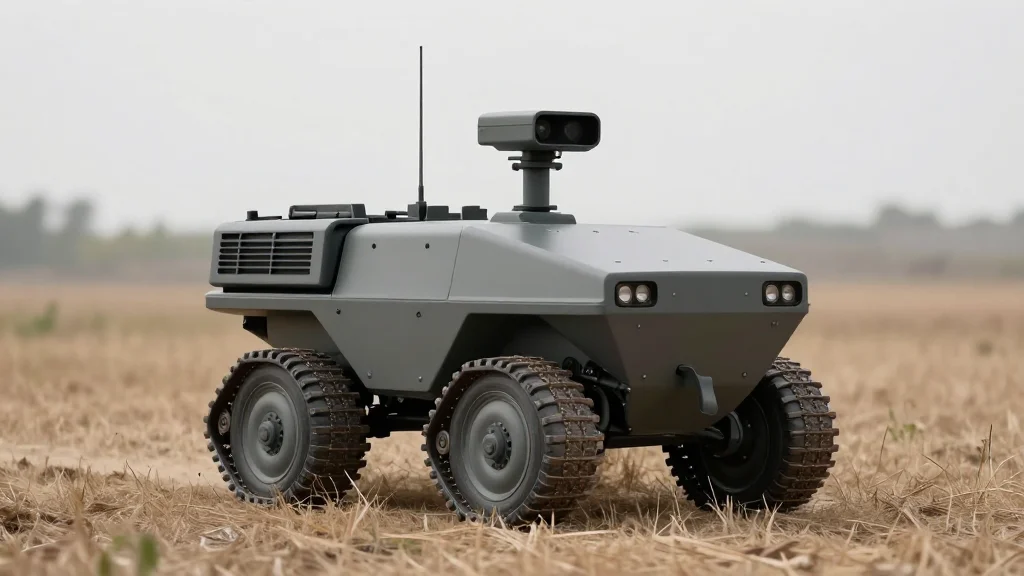
NATO’s Crystal Arrow Factors in Ukrainian UGV Lessons as European Interest Grows
Why It Matters
The exercise signals NATO’s strategic pivot toward autonomous ground robotics, enhancing operational resilience and prompting accelerated European defense spending on such technologies.
Key Takeaways
- •NATO tested Ark‑1 UGV as a one‑way effector in Crystal Arrow
- •Exercise highlighted UGV roles: logistics, reconnaissance, casualty evacuation
- •Ukraine expects >150 Milrem THeMIS units by year‑end
- •European nations accelerating procurement of autonomous ground platforms
Pulse Analysis
The Ukraine‑Russia conflict has turned uncrewed systems from niche tools into core combat assets, prompting NATO to reassess its own capabilities. While aerial drones have dominated headlines, the war’s logistics challenges have highlighted the value of uncrewed ground vehicles (UGVs) for resupply, scouting and casualty evacuation. European allies, observing Ukraine’s rapid fielding of platforms like the Milrem THeMIS, recognize that autonomous ground robotics can reduce personnel exposure and sustain operations in contested environments.
Exercise Crystal Arrow, held under NATO’s auspices, served as a live‑fire laboratory for these concepts. Participants deployed the Ark‑1 UGV from Ark Robotics as a one‑way effector, mirroring first‑person view drone tactics, and evaluated the THeMIS tracked hybrid system, which is expected to reach more than 150 units in Ukrainian service by the end of the year. The drills focused on integrating UGVs into existing command structures, testing data links, and refining mission profiles ranging from supply runs to medical evacuation. Lessons learned emphasized the need for standardized interfaces, robust cybersecurity, and operator training to translate experimental success into battlefield reliability.
The broader implication for Europe is a surge in procurement and industrial collaboration on autonomous ground platforms. Nations are allocating budgetary resources to domestic firms and joint ventures, aiming to field interoperable UGVs that align with NATO doctrine. This shift not only bolsters collective defense but also spurs a competitive market for AI‑driven navigation, modular payloads, and ruggedized designs. As the technology matures, policymakers must balance rapid acquisition with rigorous testing to ensure that the next generation of ground robots delivers the promised tactical advantage without compromising safety or strategic cohesion.
NATO’s Crystal Arrow factors in Ukrainian UGV lessons as European interest grows
Comments
Want to join the conversation?
Loading comments...