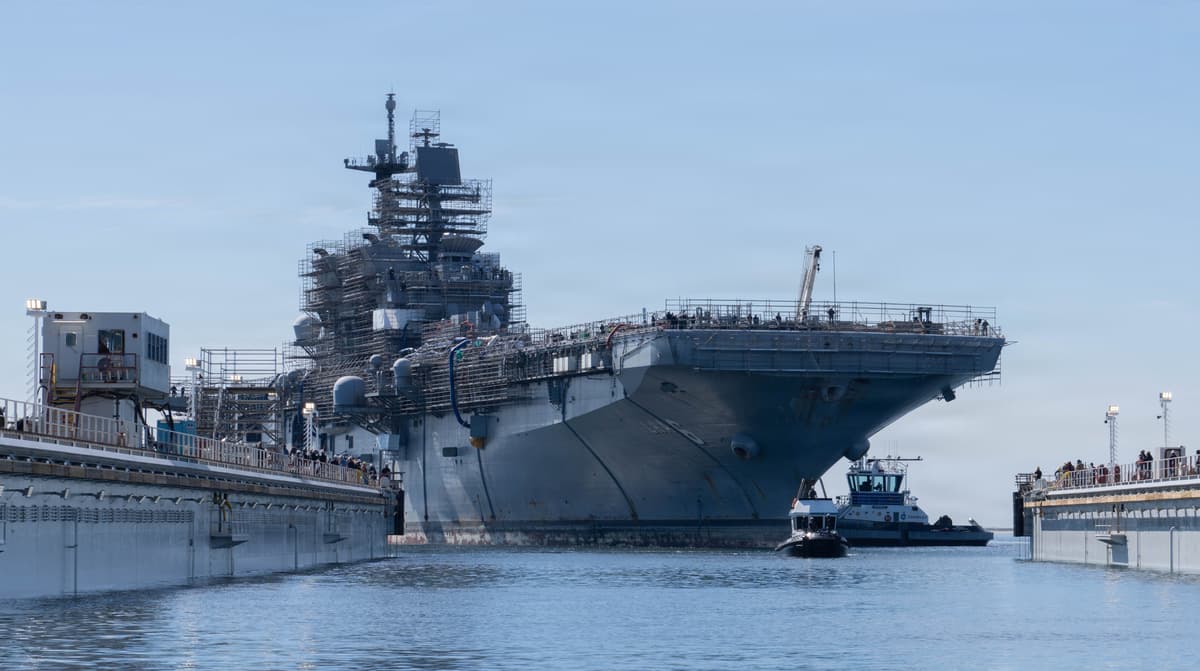
Navy ‘Going to Study’ Possibility of Building Ships Outside US, Phelan Says
Why It Matters
Leveraging overseas shipyards could accelerate fleet expansion while easing U.S. labor shortages, preserving strategic shipbuilding capabilities. The move signals a shift in defense procurement that may reshape the maritime industrial base and allied partnerships.
Key Takeaways
- •U.S. Navy explores foreign shipbuilding to offset domestic labor shortage
- •South Korean firms secured three MRO contracts for 7th Fleet vessels
- •Contractors cutting build time by 8‑11 months on multi‑ship orders
- •FY2027 budget proposes $65.8 B for 34 new battle and auxiliary ships
Pulse Analysis
The Navy’s consideration of foreign shipyards reflects a growing strain on America’s shipbuilding workforce, which has struggled to keep pace with the Pentagon’s ambitious fleet‑growth targets. By looking to allies such as South Korea—already handling maintenance for the 7th Fleet—the service hopes to tap mature industrial capacity without sacrificing quality or security. This approach also aligns with broader defense‑industry trends that favor multinational supply chains to mitigate domestic bottlenecks.
Incentive‑driven contracting is a central pillar of the Navy’s strategy. Secretary Phelan’s proposal to award schedule‑bonus payments that are shared with workers aims to accelerate delivery timelines and improve morale on the shop floor. Early data suggests that contractors handling multi‑ship orders can reduce build cycles by up to 11 months, a gain that could be decisive as the fleet seeks to add 81 ships by 2056. Such mechanisms may also encourage innovation in modular construction and digital shipbuilding techniques.
The fiscal backdrop underscores the urgency: the FY2027 defense budget earmarks $65.8 billion for 34 new battle and auxiliary vessels under the Golden Fleet initiative, part of a $1.5 trillion overall defense request. Meeting these procurement goals without expanding the domestic labor pool will likely depend on a blend of foreign partnerships, streamlined contracting, and technology‑led efficiencies. If successful, the Navy could set a precedent for other services facing similar capacity challenges, reshaping how the United States sustains its maritime dominance.
Navy ‘going to study’ possibility of building ships outside US, Phelan says
Comments
Want to join the conversation?
Loading comments...