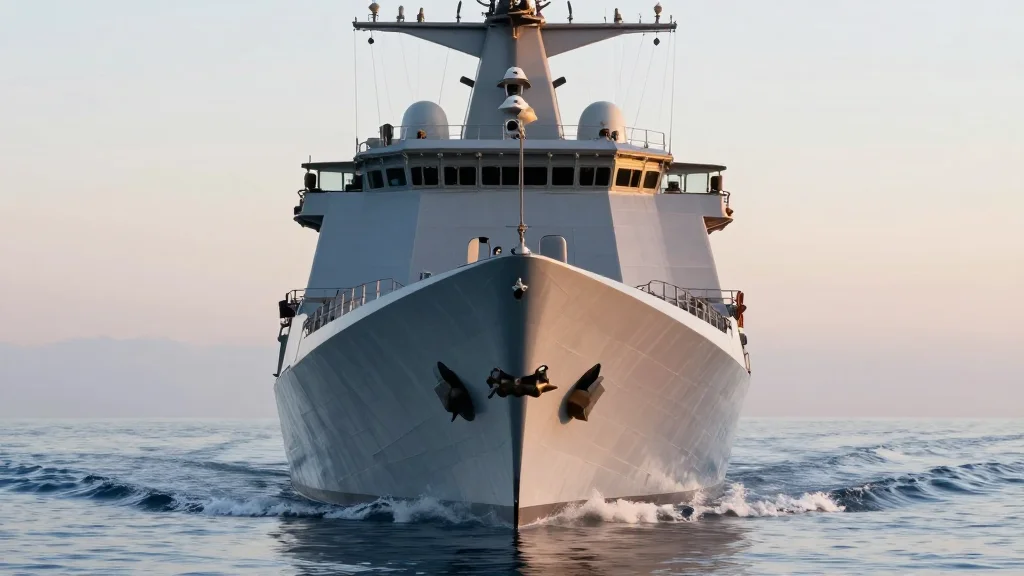
Navy Grants $282.9 Million to Huntington Ingalls for Lead Yard Work on FF(X) Frigate

Why It Matters
The FF(X) frigate is intended to fill a critical gap in the Navy’s surface‑warfare lineup, providing a platform capable of anti‑submarine warfare, air defense, and surface strike in contested environments. By awarding the lead yard contract now, the Navy accelerates the timeline for fielding a ship that can operate alongside larger destroyers and carriers, enhancing fleet resilience against peer competitors. Beyond capability, the contract reinforces the U.S. shipbuilding industrial base, preserving skilled jobs and sustaining a supply chain that is essential for national security. Successful execution could set a precedent for future large‑scale naval programs, demonstrating that early engineering investment can reduce downstream cost growth and schedule delays.
Key Takeaways
- •U.S. Navy awards Huntington Ingalls Industries $282.9 million for lead yard work on FF(X) frigate.
- •Contract covers detailed design, engineering, and early construction for the first two ships.
- •Targeted first‑ship delivery is 2029, with keel‑laying expected in early 2027.
- •FF(X) aims to replace aging Oliver Hazard Perry‑class frigates with a modular, electric‑drive platform.
- •Award strengthens the U.S. naval shipbuilding base and may influence future low‑rate production contracts.
Pulse Analysis
The Navy’s decision to allocate $282.9 million to Ingalls for lead yard work reflects a strategic shift toward front‑loading engineering risk. Historically, programs like the LCS suffered from late‑stage redesigns that ballooned costs and delayed fielding. By investing heavily in the design and tooling phase, the Navy hopes to lock in performance metrics early, creating a more predictable production line for the FF(X). This approach aligns with the Department of Defense’s broader acquisition reform agenda, which emphasizes early prototyping and rapid iteration.
From a market perspective, the contract solidifies Huntington Ingalls Industries’ position as the premier U.S. surface‑warfare shipbuilder. The firm now controls a critical portion of the Navy’s next‑generation frigate pipeline, giving it leverage in future negotiations for low‑rate and full‑rate production contracts. Competitors such as Fincantieri Marinette Marine, which is building the Navy’s new littoral combat ships, may find it harder to break into the frigate market unless they can demonstrate comparable cost efficiencies or unique technology.
Looking ahead, the success of the lead yard work will be judged on two metrics: schedule adherence and cost containment. If Ingalls can deliver the first hull on time and within the $800 million per‑unit cost ceiling, the FF(X) program could become a benchmark for future surface‑combat acquisitions. Conversely, any overruns could reignite debates over the viability of a single‑yard production model versus a distributed approach that spreads risk across multiple shipyards. The next 12‑18 months will be pivotal as the Navy moves from design to low‑rate production, and the outcomes will shape the composition of the U.S. surface fleet for the next decade.
Navy Grants $282.9 Million to Huntington Ingalls for Lead Yard Work on FF(X) Frigate
Comments
Want to join the conversation?
Loading comments...