Navy Pushes AI From Experiments to Everyday Warfighting Functions
•February 24, 2026
0
Why It Matters
Embedding reliable AI into everyday operations will boost the Navy’s decision‑making speed and operational flexibility, reshaping naval warfare dynamics. It signals a major shift toward autonomous, data‑driven combat capabilities across the defense sector.
Key Takeaways
- •AI transitioning from labs to daily warfighting tasks
- •Trusted AI requires unified taxonomy and consistent terminology
- •Hybrid fleet vision blends manned ships with autonomous platforms
- •Reduced bandwidth needs enable broader autonomous system deployment
- •Data quality hinges on agreed modeling of adversary, friendly forces
Pulse Analysis
The Navy’s AI acceleration reflects a strategic pivot from isolated experiments to pervasive, mission‑critical tools. By institutionalizing trustworthy AI, the service aims to cut the time between data collection and actionable insight, a critical advantage in contested environments. This shift also aligns with the Department of Defense’s broader push for responsible AI, emphasizing transparency, robustness, and ethical safeguards while integrating machine‑learning models into intelligence, logistics, and command‑and‑control processes.
A central hurdle is data fidelity, which hinges on a shared taxonomy and precise lexicon. Page’s analogy—"a cruiser is a cruiser, a rowboat is a rowboat"—highlights the necessity for uniform definitions across platforms and services. Consistent labeling ensures that AI models accurately represent both friendly and adversary capabilities, reducing misinterpretation risks. Additionally, the Navy must address bandwidth constraints as autonomous systems proliferate; lighter data streams and edge‑processing are essential to sustain real‑time operations without overloading shipboard networks.
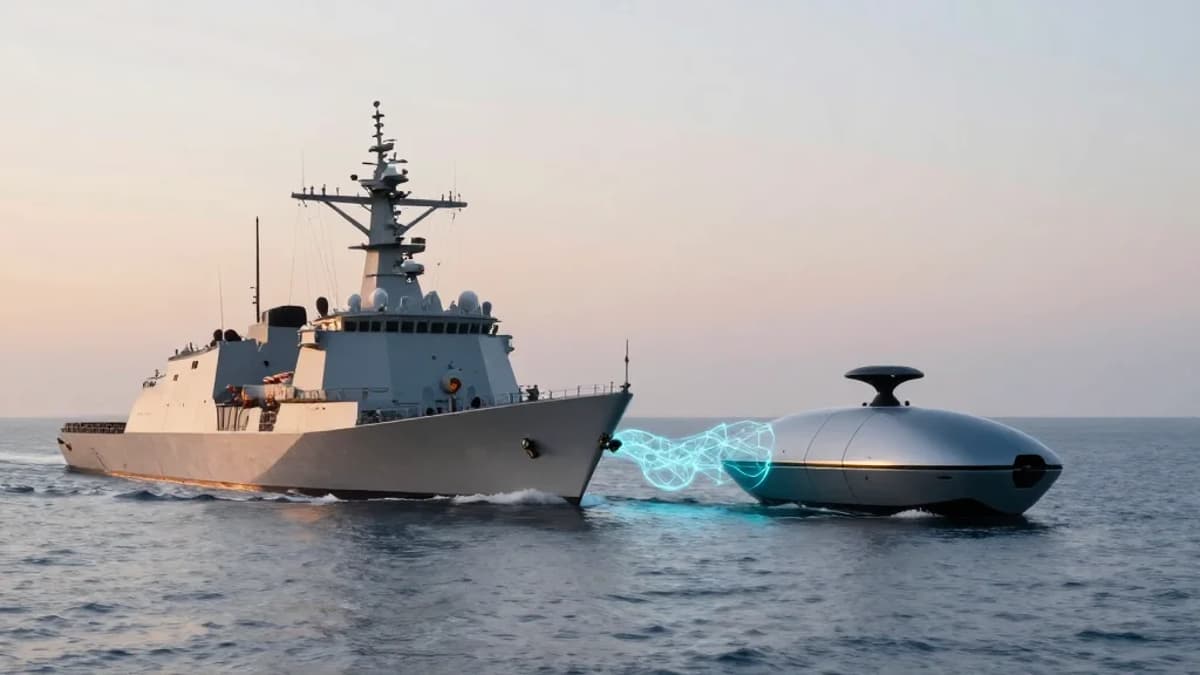
Looking ahead, the envisioned hybrid fleet will merge traditional warships with swarms of unmanned vessels, drones, and undersea robots. This integration promises heightened situational awareness, faster targeting cycles, and reduced crew workloads. For industry partners, the Navy’s roadmap opens opportunities in AI model development, secure data pipelines, and low‑latency communications. As the service demonstrates operational success, other services and allied navies are likely to adopt similar AI‑centric doctrines, accelerating the transformation of maritime warfare worldwide.
Navy Pushes AI from Experiments to Everyday Warfighting Functions
0
Comments
Want to join the conversation?
Loading comments...