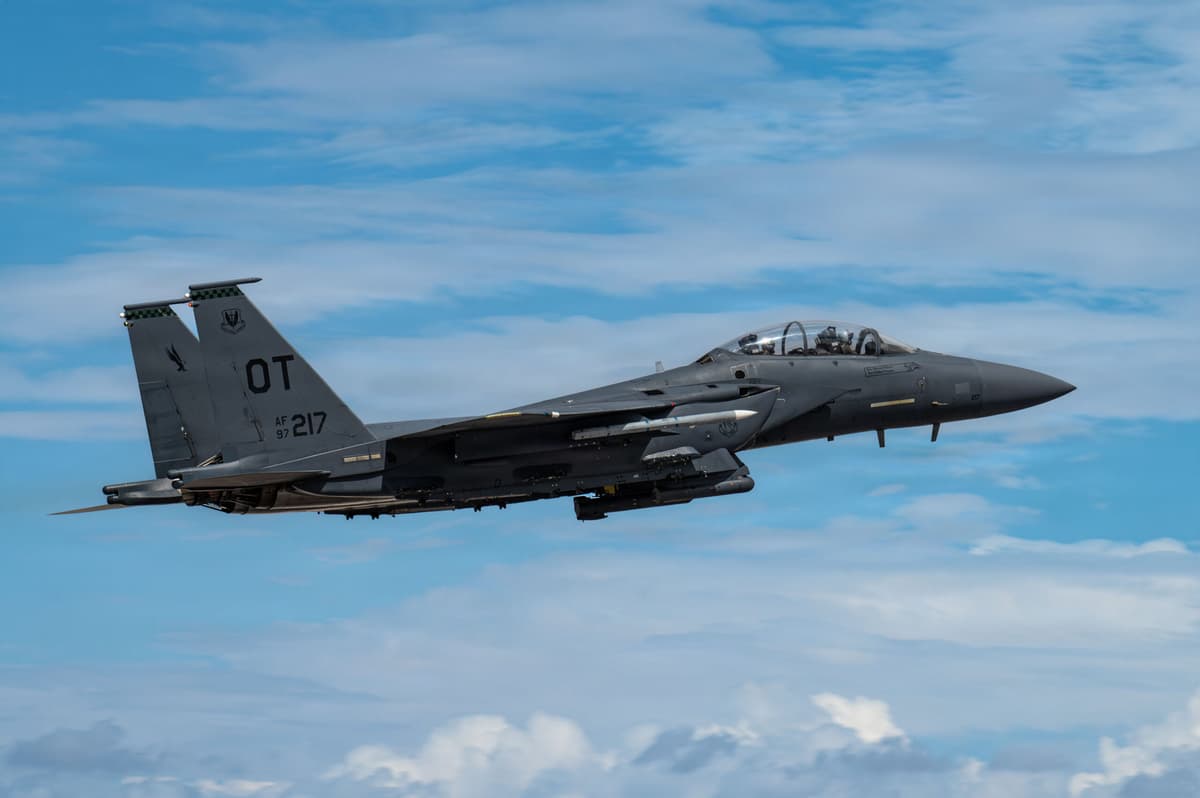
New F-15E Depot Line Will Speed Up Installs of EW System
Companies Mentioned

Why It Matters
Accelerating EPAWSS installs preserves the combat relevance of the F‑15E fleet and enhances U.S. air superiority against peer adversaries with advanced electronic threats. The faster rollout also reduces downtime and cost compared with waiting for scheduled depot overhauls.
Key Takeaways
- •Speedline starts June, accelerating EPAWSS installs on F-15E fleet.
- •EPAWSS will be fitted to 99 F-15E strike Eagles.
- •New line bypasses 5‑7‑year depot schedule, cutting lead time.
- •BAE Systems' EPAWSS replaces Cold‑War analog EW suite.
- •F-15EX enters service with EPAWSS built‑in, expanding fleet to 267.
Pulse Analysis
The newly created "speedline" at Warner Robins Air Logistics Complex represents a shift in how the Air Force modernizes its legacy platforms. By establishing an independent installation track, the service can insert the Eagle Passive Active Warning Survivability System (EPAWSS) into F‑15E airframes months rather than years, sidestepping the traditional 5‑7‑year depot cycle. This approach not only accelerates fielding but also reduces aircraft downtime, allowing squadrons to maintain higher sortie rates while the Air Force ramps up its EW capabilities.
EPAWSS, developed by BAE Systems, equips the F‑15E with a modern radar‑warning receiver, internal countermeasures, and a sophisticated dispenser set. The suite replaces the Cold‑War era Tactical Electronic Warfare System, delivering integrated situational awareness, geolocation, and automated self‑protection. By providing rapid threat detection and electronic counter‑measures, EPAWSS effectively grants the fourth‑generation fighter a level of electronic resilience comparable to newer fifth‑generation aircraft, extending the platform’s operational life well into the 2030s.
The speedline initiative fits within a broader Air Force EW modernization push that includes the F‑16 Integrated Viper suite, the EPAWSS‑ready F‑15EX, and a planned near‑doubling of the EA‑37 electronic attack fleet—an effort valued at over $3 billion. Together, these programs aim to counter increasingly sophisticated adversary radar and communications networks, ensuring U.S. airpower retains dominance in contested electromagnetic environments. By fast‑tracking upgrades on existing airframes while fielding new, fully integrated jets, the service balances cost‑effectiveness with the need for cutting‑edge electronic warfare capabilities.
New F-15E Depot Line Will Speed Up Installs of EW System
Comments
Want to join the conversation?
Loading comments...