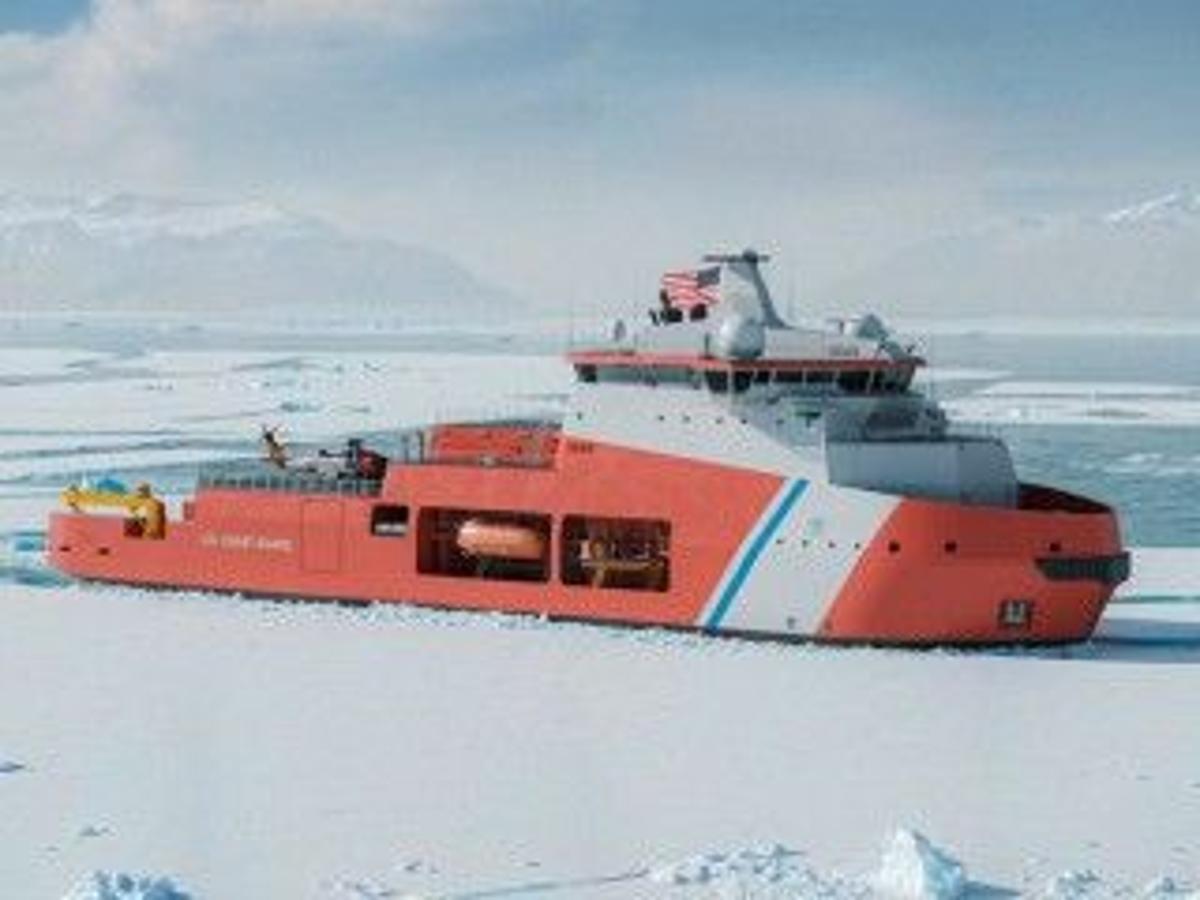
New Icebreaker Deal Deepens U.S.-Finland Arctic Ties
Companies Mentioned
Why It Matters
The expanded icebreaker fleet strengthens U.S. strategic reach in the increasingly contested Arctic, supporting security, scientific research and emerging commercial routes. Partnering with Finland accelerates capability delivery and jump‑starts domestic shipbuilding capacity.
Key Takeaways
- •$3.5 billion contract adds five ASC icebreakers to USCG fleet.
- •Fleet size grows to 11 icebreakers, first entering service 2028.
- •Two vessels built in Finland, three in Texas under ICE Pact.
- •Partnership revives US shipbuilding and deepens US‑Finland Arctic ties.
- •New cutters enhance US capability in harsh polar conditions.
Pulse Analysis
The Arctic is fast becoming a focal point for national security and economic opportunity, prompting the United States to reassess its maritime assets in the region. With only three icebreakers currently operational—USCGC Polar Star, USCGC Healy and USCGC Storis—the Coast Guard has faced criticism for limited reach in a climate where melting sea ice opens new shipping lanes and resource extraction prospects. Adding five modern ASC‑class vessels will more than triple the service’s ice‑breaking capacity, allowing year‑round patrols, search‑and‑rescue missions, and support for scientific expeditions.
The $3.5 billion agreement with Davie Defense reflects a hybrid production model that blends American shipyard capacity with Finnish expertise. Under the 2024 Icebreaker Collaborative Effort (ICE) Pact, two hulls will be fabricated at a Finnish subsidiary, leveraging the nation’s reputation for robust, ice‑class vessels, while three will be built at Davie’s Gulf Copper facilities in Galveston and Port Arthur. Admiral Kevin E. Lunday highlighted that this approach “leverages foreign capacity to bring more work back to the United States,” signaling a strategic effort to rebuild the domestic defense industrial base while meeting urgent operational timelines.
Beyond bolstering military readiness, the new icebreakers have broader economic implications. As Arctic sea routes become navigable for longer periods, reliable ice‑breaking support is essential for commercial shipping, tourism, and offshore energy projects. The expanded fleet also positions the United States to lead multinational Arctic governance, countering growing Russian and Chinese activity. By deepening ties with Finland, the U.S. not only secures advanced shipbuilding know‑how but also reinforces a trusted alliance that could shape the future of Arctic policy and commerce.
New icebreaker deal deepens U.S.-Finland Arctic ties
Comments
Want to join the conversation?
Loading comments...