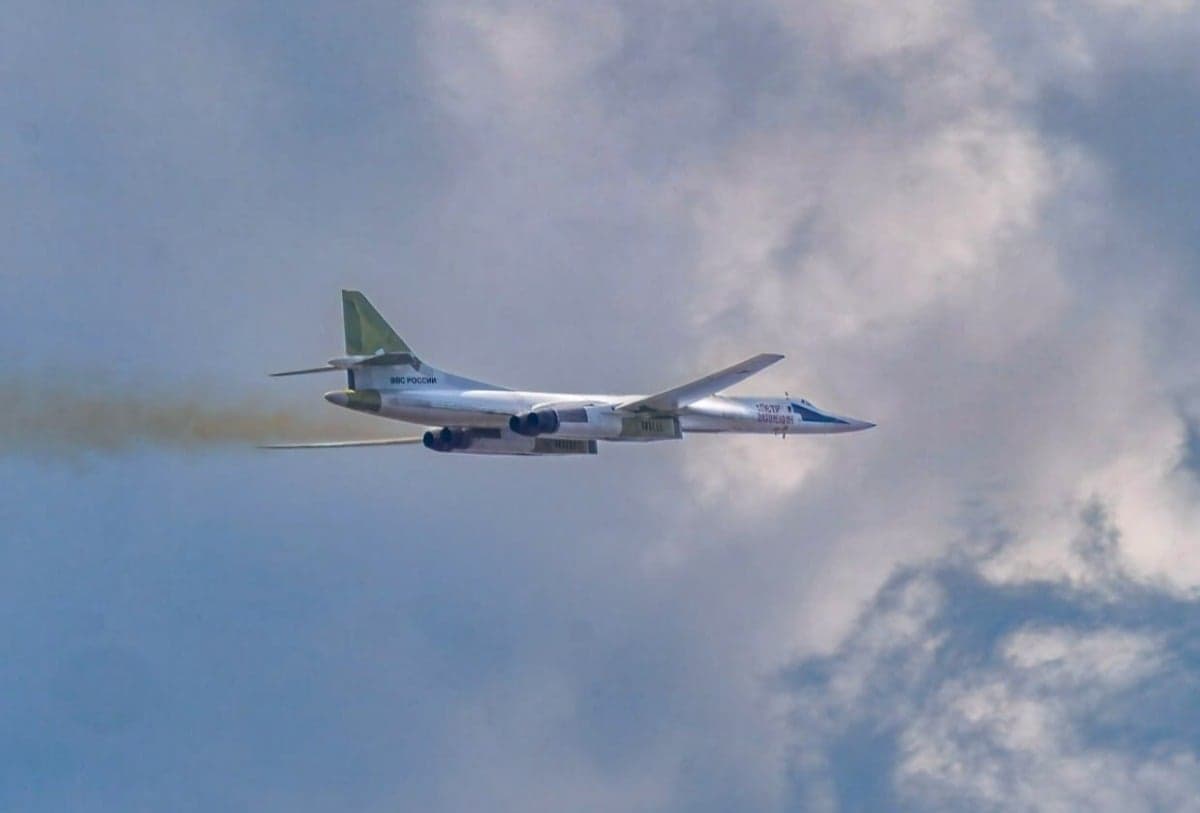
New Tu-160M Photo Confirms Russia’s Slow but Steady Bomber Upgrades
Why It Matters
The limited combat availability of Russia’s strategic bombers highlights constraints on its long‑range strike capability, while the slow but steady modernization underscores the challenges of sustaining a credible nuclear‑capable fleet.
Key Takeaways
- •Photo shows Tu‑160 serial 8‑04 upgraded to M standard
- •Russia now has six modernized Tu‑160M and three new Tu‑160M2
- •Only seven of 18 Tu‑160M are flying combat missions
- •Seven to nine bombers are constantly in Kazan workshops
- •New production hall became operational in early 2026 after 2020 start
Pulse Analysis
The Tu‑160, NATO’s Blackjack, remains the world’s heaviest supersonic bomber and the cornerstone of Russia’s nuclear‑capable strategic force. A recent photograph released by the Fighterbomber Telegram channel shows tail‑number 8‑04, nicknamed Deynekin, emerging from the Kazan Aircraft Production Association after a five‑year conversion to the Tu‑160M standard. The upgrade adds modern avionics, digital communications and engine refinements while preserving the swing‑wing airframe and its twelve‑missile payload capacity. With six modernized Tu‑160M and three newly built Tu‑160M2 now visible, the fleet’s technical baseline is finally catching up with Kremlin rhetoric.
Open‑source analysis by AviVector reveals that only a third of the 18‑aircraft fleet is actively employed against Ukraine. Seven bombers conduct combat sorties, typically loading Kh‑55 or Kh‑101/102 cruise missiles at Engels‑2 before striking from either Engels‑2 or the far‑eastern Ukrainka base. The remaining aircraft rotate through testing, training, or extensive maintenance, reflecting a high workload for the limited number of serviceable airframes. This constrained availability limits Russia’s ability to sustain a high‑tempo strategic bombing campaign despite the platform’s long‑range capability.
Kazan’s new production hall, whose construction began in 2020 and became operational in early 2026, signals a modest expansion of Russia’s bomber manufacturing capacity. Satellite imagery shows two Tu‑160M units moved into the hall, while others await work in open‑air bays, suggesting a pipeline that can accommodate both modernization and fresh Tu‑160M2 builds. However, with seven to nine aircraft perpetually in the workshop, the pace remains slow, and the true output rate of the facility remains uncertain. Analysts will watch the next batch of upgraded bombers to gauge whether Russia can accelerate its strategic bomber renewal before the next defense budgeting cycle.
New Tu-160M photo confirms Russia’s slow but steady bomber upgrades
Comments
Want to join the conversation?
Loading comments...