Why It Matters
Affordable locally‑produced MRAPs could reshape African counter‑insurgency procurement, while lingering reliance on foreign designs limits Nigeria’s strategic autonomy.
Key Takeaways
- •Vanquisher APCs show growing local manufacturing.
- •MRAPs cost $180k versus $650k–$725k foreign equivalents.
- •Private firms like Proforce expand Nigeria's defence sector.
- •Reliance on foreign designs remains for many platforms.
- •Low‑cost MRAPs could attract Sahel states' purchases.
Pulse Analysis
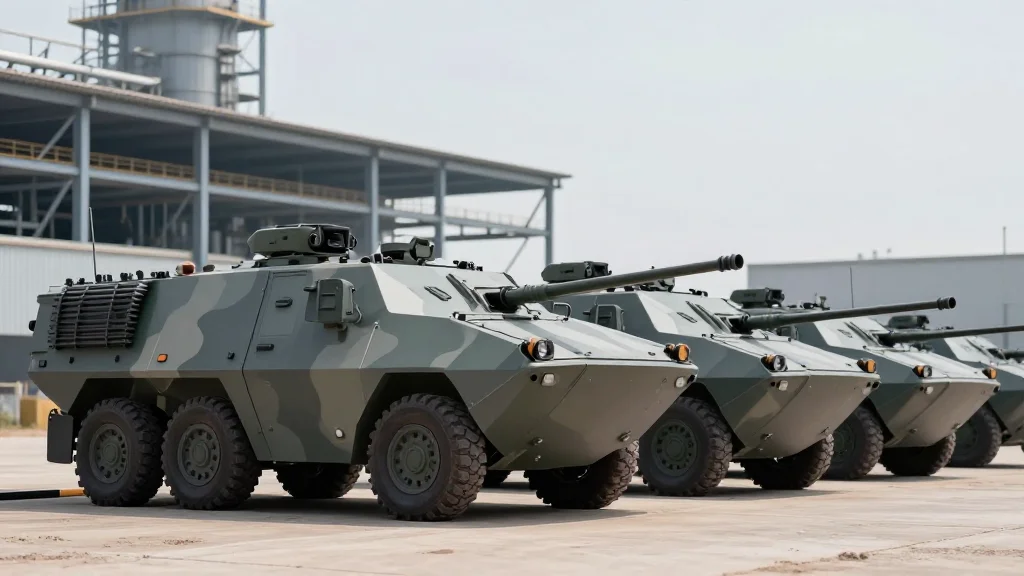
Nigeria’s defence industrial base is transitioning from a modest license‑production model to a broader portfolio that includes armoured vehicles, MRAPs, and unmanned aerial systems. DICON, founded in 1964 and run by the armed forces, leveraged its experience with licensed firearms to co‑develop the Vanquisher APC and the Ezugwu MRAP, both tailored for counter‑insurgency (COIN) missions against groups like Boko Haram. The Ezugwu’s unit price of roughly $180,000—driven by low labour and manufacturing costs—offers a stark contrast to imported Turkish or South African MRAPs that can exceed $700,000, positioning Nigeria as a potential low‑cost supplier for neighbouring Sahel states facing similar security challenges.
The emergence of private‑sector players such as Proforce, which produces the PF Ara and PF Hulk, signals a diversification of the domestic supply chain and a gradual shift toward indigenous innovation. These firms complement DICON’s capabilities, creating a nascent ecosystem that can respond more quickly to local operational requirements and reduce dependence on external procurement cycles. Moreover, the development of the Tsaigumi UAV, with a 100‑km range for ISR tasks, illustrates an expanding technological horizon that could enhance situational awareness for both national and regional forces.
Nonetheless, Nigeria’s defence industry remains constrained by its reliance on foreign designs and technology transfers, as highlighted by the simultaneous acquisition of French‑made Arquus Dagger 4×4 APCs. To achieve true self‑sufficiency, sustained investment in research and development, stronger public‑private partnerships, and clearer export‑oriented policies are essential. If these hurdles are addressed, Nigeria could evolve from a cost‑effective buyer to a competitive exporter of affordable, COIN‑focused platforms across Africa.
Nigeria’s evolving defence industry
Comments
Want to join the conversation?
Loading comments...