No Lift: Pakistan Army Aviation’s Helicopter Needs
Why It Matters
Without a modern rotary fleet, the Pakistan Army lacks rapid‑mobility and close‑air‑support options, limiting its ability to respond to conventional or insurgent threats efficiently.
Key Takeaways
- •PAA has not acquired new transport helicopters since 2015
- •T129 program collapsed due to U.S. engine export denial
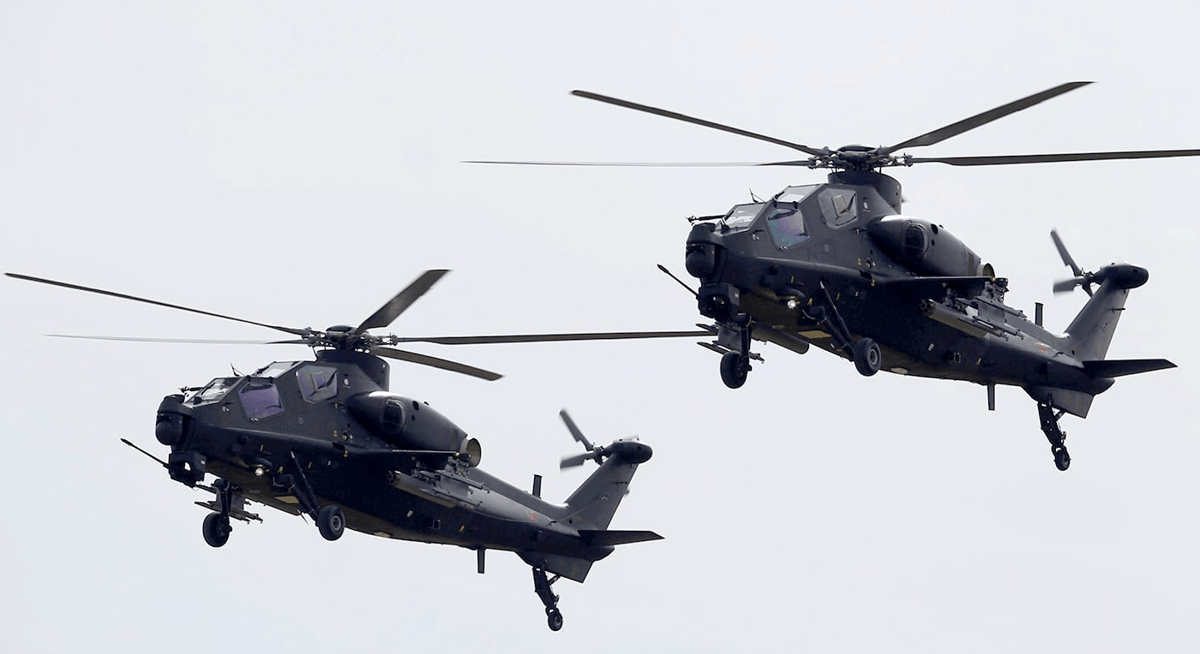
- •Only one Z‑10ME attack helicopter is operational
- •Aging Puma, Mi‑17 and Bell‑412 fleets face high maintenance costs
- •Helicopter overhead makes scaling impractical for Pakistan’s defense budget
Pulse Analysis
The Pakistan Army’s current modernization narrative showcases a robust land‑combat overhaul, yet its aviation wing tells a different story. While the army invests heavily in main battle tanks and self‑propelled artillery, the PAA remains anchored to legacy platforms such as the Puma and Mi‑17, many of which have logged two decades of service. This aging inventory not only inflates lifecycle expenses but also erodes operational readiness, especially as regional rivals field newer attack helicopters with advanced avionics and precision‑strike capabilities.
Financial realities compound the procurement dilemma. The $1.5 billion Turkish T129 deal, once a promising avenue for modern attack helicopters, unraveled after the United States blocked the LHTEC CTS800 engine export, leaving Pakistan without a viable replacement. Subsequent attempts to diversify—like the single Z‑10ME from China—have not translated into fleet‑wide capability. With limited defense budgets, the high fixed costs of training, maintenance infrastructure, and spare parts for a small rotary fleet become prohibitive, prompting senior leadership to prioritize ground‑based firepower over air mobility.
Strategically, the PAA’s marginalization could constrain Pakistan’s rapid‑response options in both conventional and counter‑insurgency scenarios. Helicopters provide essential close‑air‑support, troop insertion, and casualty evacuation functions that ground assets cannot replicate. As the Indian military expands its own attack‑helicopter inventory, Pakistan may find its deterrence posture weakened unless it re‑evaluates the PAA’s role, perhaps by integrating unmanned aerial systems or pursuing cost‑effective joint‑venture procurement models that spread overhead across multiple regional partners.
No Lift: Pakistan Army Aviation’s Helicopter Needs
Comments
Want to join the conversation?
Loading comments...