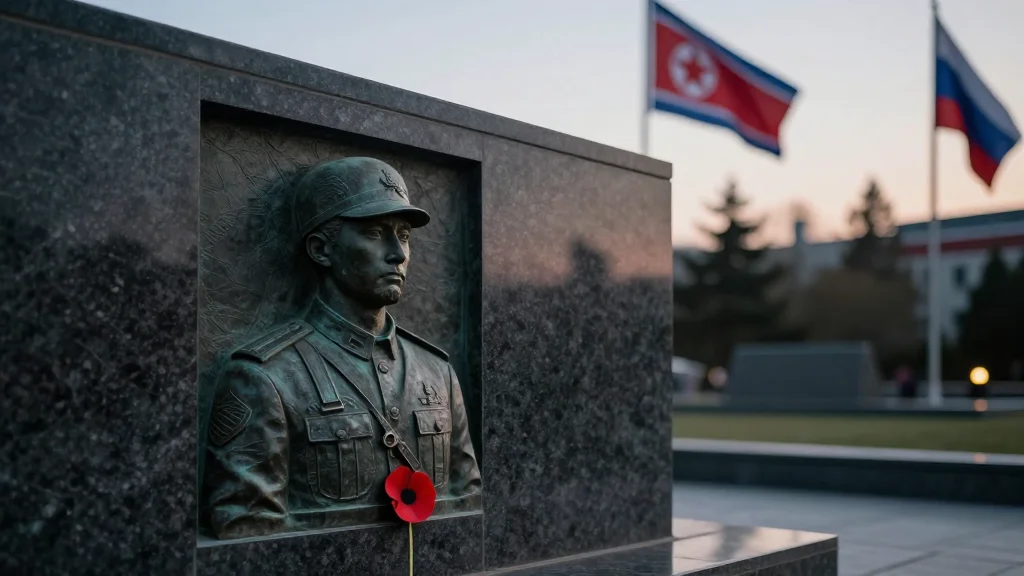
North Korea Opens Memorial Museum, Signals Deepening Military Ties with Russia

Why It Matters
The museum and the new cooperation plan mark a rare instance of a small, isolated regime openly aligning its military posture with a major power engaged in a high‑intensity conflict. For regional actors, it raises the prospect of more sophisticated DPRK weaponry and deeper Russian influence on the Korean Peninsula. For the United States and its allies, the development forces a reassessment of deterrence strategies, intelligence sharing, and diplomatic outreach to prevent further escalation. Moreover, the public commemoration of DPRK casualties signals a willingness by Pyongyang to sustain high‑cost deployments, suggesting that future Russian requests for manpower or materiel could be met with fewer political constraints. This could embolden Moscow’s war effort and complicate diplomatic efforts to isolate both regimes.
Key Takeaways
- •North Korea inaugurated a memorial museum for ~6,000 soldiers killed fighting for Russia in Ukraine
- •Senior Russian officials attended; a five‑year defence cooperation plan for 2027‑2031 was discussed
- •DPRK has sent an estimated 15,000 combat troops to Russia since 2024, with ~6,000 casualties
- •Kim Jong‑un quoted saying the partnership should become a "powerful bulwark" against fascism
- •Belousov said the two sides will place military cooperation on a sustainable, long‑term footing
Pulse Analysis
The museum’s opening is more than a symbolic gesture; it institutionalises the DPRK‑Russia alliance at a time when both regimes face mounting international pressure. For Pyongyang, the partnership offers a rare avenue to acquire advanced Russian weapons, potentially accelerating its ballistic‑missile program and narrowing the technology gap with regional rivals. For Moscow, the steady flow of DPRK troops and the political endorsement from Kim provide a narrative counterweight to Western criticism, reinforcing the image of a united front against NATO.
Historically, North Korea’s military assistance to Russia has been episodic, limited to advisory roles and small‑scale equipment transfers. The current trajectory—public memorials, high‑level diplomatic visits, and a formalised five‑year plan—suggests a transition to a more integrated defence relationship. This could reshape the strategic calculus in Northeast Asia, prompting South Korea and Japan to deepen their own security cooperation with the United States and consider bolstering missile‑defence capabilities.
In the broader context of the Ukraine war, the DPRK’s involvement adds a new layer of complexity. While the 6,000 casualties underscore the human cost, the willingness to sustain such losses indicates that Pyongyang views the conflict as a proxy battlefield for its own geopolitical ambitions. If the 2027‑2031 agreement includes joint development of weapons systems, the international community may see an uptick in illicit technology transfers, further destabilising regional security and complicating sanctions enforcement.
North Korea Opens Memorial Museum, Signals Deepening Military Ties with Russia
Comments
Want to join the conversation?
Loading comments...